


For generations, the heavy scent of woodsmoke hanging over clay-walled, thatch-roofed dwellings has been the rhythmic, comforting backdrop of family life in rural sub-Saharan Africa. Built with walls of woven wooden poles packed with thick wet earth and sealed with dried grass, these traditional rustic structures offer a deep, ancestral connection to the land. Yet beneath their cozy, earthly charm lies an invisible physical vulnerability that exacts an unbearable toll on the region’s most precious resource: its children. Every year, roughly 2.5 million infants and young children across sub-Saharan Africa lose their lives before celebrating their fifth birthdays. Driven by the unrelenting onslaught of malaria, severe diarrheal epidemics, and lower respiratory infections like pneumonia, this crisis of childhood survival is directly linked to the physical design of the shelters they inhabit. Because traditional rural homes do not physically segregate areas for resting, cooking, and waste management, their cramped indoor spaces frequently transform into breeding grounds for pathogen-carrying insects, toxic soot, mud-borne parasites, and infectious surface droplets. Recognizing that childhood health is fundamentally tethered to human architecture, a dedicated coalition of international and Tanzanian scientists asked a radical question: what if we could design a home that acts not merely as a basic shelter, but as a life-saving, preventative medical shield?
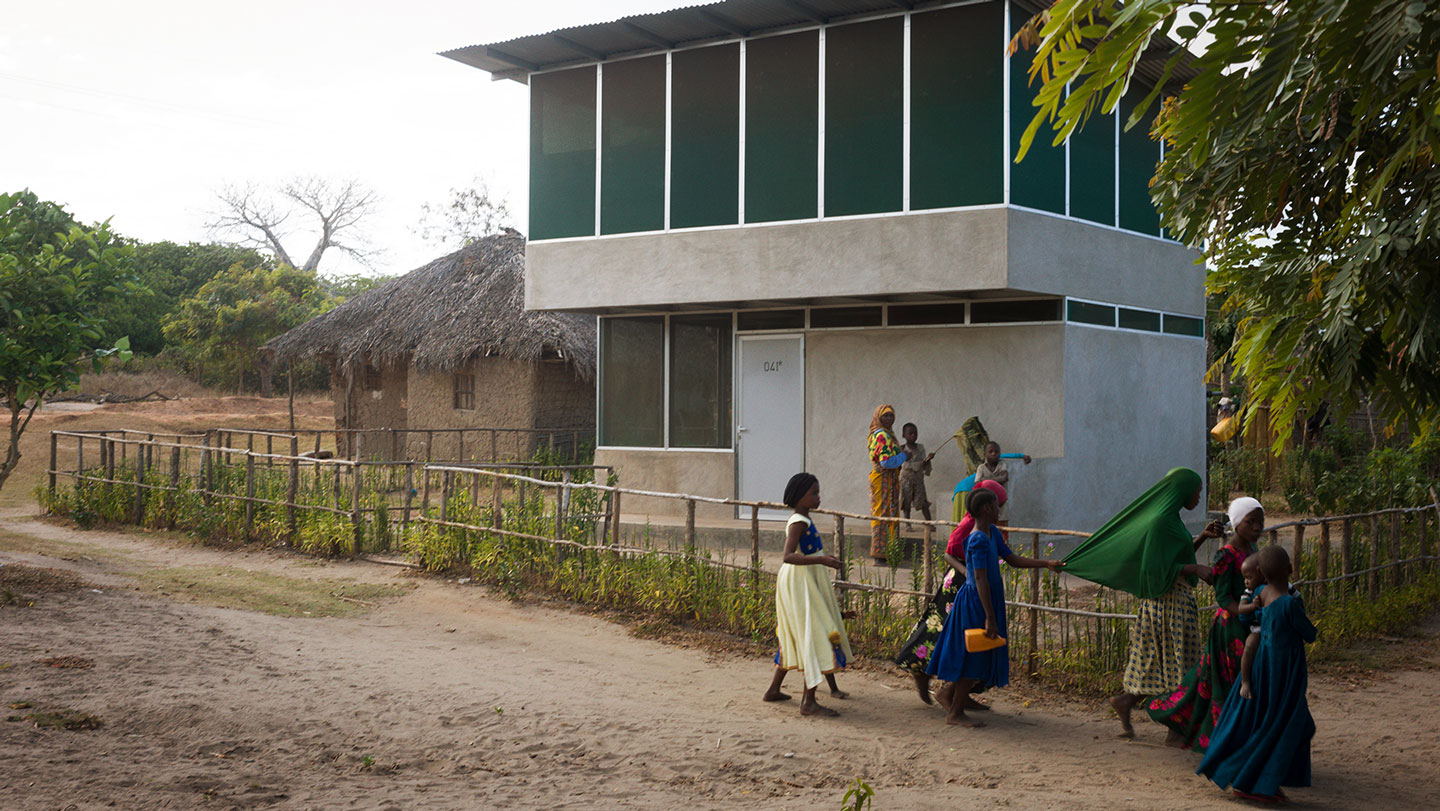
The physical answer to this profound question materialized in the form of the “Star Home,” an innovative, experimental double-story house engineered to blend modern disease-prevention with cherished local Swahili customs. At first glance, a Star Home looks strikingly futuristic compared to neighboring mud dwellings, yet it intentionally preserves cultural anchors like the baraza—the deep, communal outdoor sitting bench where families gather to socialize and watch the sunset, now safely integrated inside the house’s screened envelope. Unlike standard rural homes, these elevated structures feature a raised, reinforced concrete ground floor that can be easily swept and washed clean, immediately keeping damp, soil-transmitted parasites and moisture-loving bacteria at bay. The walls are crafted with lightweight, semi-transparent plastic netting that maximizes cross-ventilation, transforming hot tropical nights from suffocating, stagnant spaces into cool, breezy retreats. Over the windows and structural openings, tightly woven mosquito screening creates an impenetrable physical barrier against nocturnal insects, while self-closing doors prevent malaria-carrying pests from slipping inside in the wake of playing children. Overhead, lightweight composite roofs with partially closed eaves deny pooling water to breeding mosquitoes, while concurrently serves as clean rainwater harvesting systems that channel pristine drinking water directly into hygienic household storage containers.
To rigorously test this architectural hypothesis, researchers launched an ambitious three-year clinical trial in Tanzania, tracking the daily struggles and triumphs of hundreds of local youngsters. Led by Salum Mshamu of the University of Oxford’s Center for Tropical Medicine and Global Health, alongside epidemiology statistician Mavuto Mukaka, the research team initially followed 247 children under the age of thirteen living in 110 newly erected Star Homes, comparing their health outcomes to 936 children residing in traditional mud-and-thatch shelters. Week after week, for thirty-six consecutive months, field researchers diligently visited these rural households, knocking on doors to check on the children and document telltale signs of childhood illness, such as burning fevers, breathing difficulties, or persistent diarrhea. When the massive dataset was compiled and published in the prestigious journal Nature Medicine, the findings were nothing short of extraordinary: children raised in the Star Homes suffered 44 percent fewer cases of malaria compared to their peers in traditional homes. Epidemiological calculations revealed that for every thousand children presenting with a fever, 6.4 in standard mud houses tested positive for malaria, while that number dropped to an astonishing 3.6 for those safeguarded by the Star Homes. Furthermore, the risk of stomach infections causing diarrhea was slashed by 30 percent, and incidences of lower respiratory infections fell by 18 percent, delivering undeniable statistical proof that thoughtful spatial design can directly preserve young lives.
Yet, as with any grand social experiment, the true test of innovation lay in its direct collision with the intimate, deep-seated rhythms of human culture and daily habit. The designers of the Star Homes had thoughtfully equipped each household with advanced, smokeless cooking stoves to eliminate indoor air pollution and protect the developing lungs of infants from toxic wood ash. However, the participating Tanzanian families quickly encountered a deep culinary friction with this modern convenience, feeling an ancestral pull toward the traditional open-air hearth known as the “three-stone fire.” For centuries, the gathering of family around three stones holding a cooking pot above flickering open wood flames had been the emotional and social anchor of the African household. Reluctant to abandon this sensory ritual, many mothers opted to ignore the indoor, enclosed stoves entirely, choosing instead to prepare meals outside on their traditional stone fires or build separate, open-air wooden kitchens in their yards. While this choice preserved their cultural norms, it unfortunately exposed mothers and young children to the evening air exactly when malaria-transmitting Anopheles mosquitoes are most active. This poignant friction highlights a universal truth in international public health: successfully protecting lives requires more than just installing cold, clinical hardware; it demands a patient, evolutionary dialogue that honors the warm, lived experiences of the communities themselves.
Beyond the cultural adaptations, the project also highlights a towering pragmatic hurdle: the steep financial investment required to bring these protective sanctuaries to scale. At approximately $8,800 per unit, building a Star Home is an astronomical, almost impossible fortune for households in rural Tanzania, where seasonal agricultural wages barely cover day-to-day survival. However, experts like Tiaan de Jager, an environmental scientist with the Institute for Sustainable Malaria Control at the University of Pretoria, argue that these results must be viewed through a broader macro-economic lens rather than a simplistic micro-budget analysis. Across sub-Saharan Africa, international funding for clinical malaria control—such as drug treatments, rapid tests, and synthetic mosquito nets—has dangerously plateaued, even as malaria parasites develop fierce resistance to standard medications. In this volatile healthcare landscape, investing in permanent housing improvements addresses the upstream, structural social determinants of health rather than continuously pouring money into the downstream, temporary treatment of acute diseases. A well-built home with a concrete floor and screened gutters operates as a decades-long health policy, saving families from the devastating economic cycle of medical emergencies, lost workdays, and expensive pharmaceutical treatments.
The true legacy of this study, however, is not found in academic journals or economic equations, but in the physical landscape of the Tanzanian communities where families continue to live under their new roofs. The participating parents and children who lived in the Star Homes during the trial did not have to say goodbye to their houses when the research concluded; they continue to sleep safely inside them, listening to the harmless hum of mosquitoes trapped outside their bedroom nets. Even more beautiful is the ripple effect of equity the study created: the neighboring families who served as the control group in traditional mud houses were not left behind, but instead received a wealth of construction materials to retrofit and customize their own homes with screens, cement floors, and metal roofing. This thoughtful gesture ensures that the entire community moves forward together, fostering a sense of shared ownership and agency in their own wellbeing. As researchers continue to study how rural populations adapt to and claim these modern structures, the humble African home is being redefined. It is no longer viewed as a passive site of physical vulnerability, but rather as an active, sustainable sanctuary of health where children can dream, play, and safely grow into the future.