


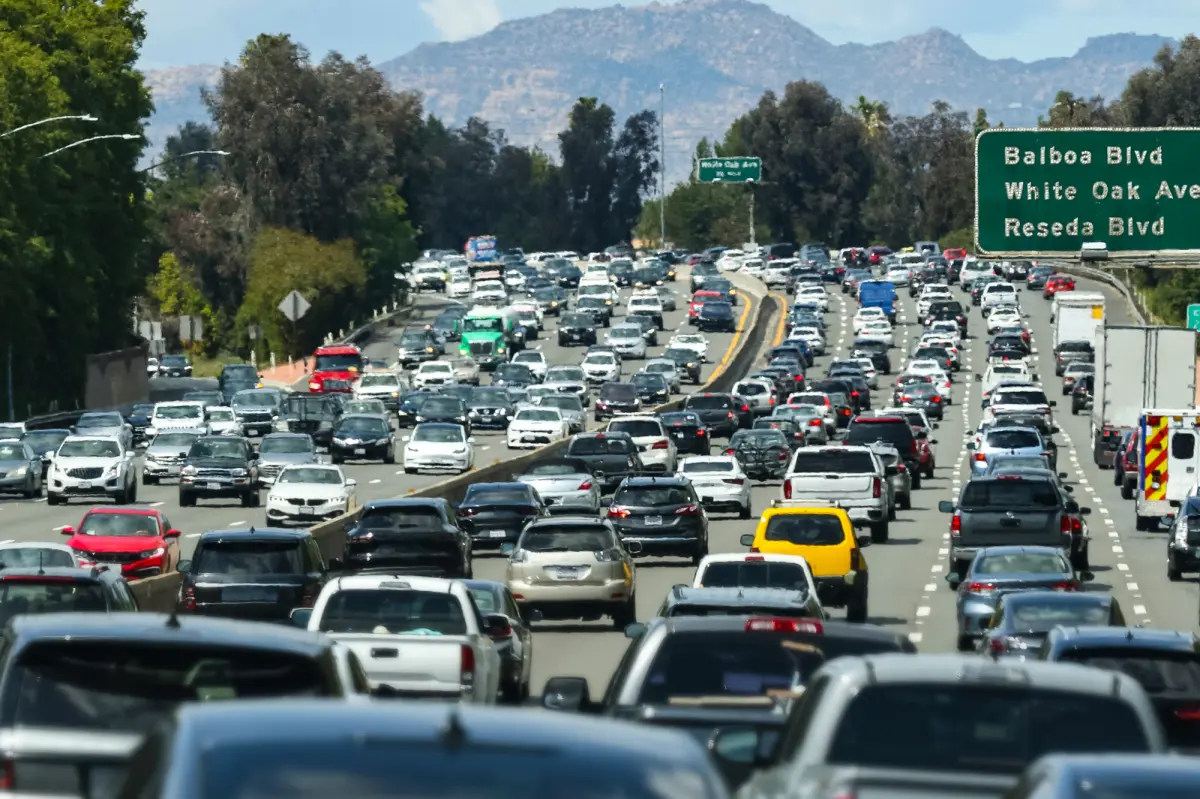
As the final days of spring begin to merge into the warm promise of early summer, a familiar, nationwide restlessness takes hold. Memorial Day weekend has arrived, acting as the unofficial starting gun for the season of sunshine, backyard barbecues, and much-needed getaways. For millions of Americans, this long-awaited three-day weekend represents a highly anticipated opportunity to escape the routine of the daily grind, pack up the family vehicle, and seek refuge in nature, at the beach, or with far-flung loved ones. However, this collective yearning for freedom comes with a significant catch: we are all planning to do it at the exact same time. The scale of this seasonal migration is truly staggering, with the American Automobile Association predicting that a historic 45 million Americans will journey at least 50 miles away from home between Thursday and Monday. Out of this massive horde, a whopping 39.1 million travelers are opting to take to the open highway, transforming the nation’s paved arteries into packed corridors of red brake lights. In California, this phenomenon is amplified to a spectacular degree. In the southern half of the Golden State alone, the Auto Club of Southern California projects that a jaw-dropping 3.6 million residents will pack their bags and head out of town. The vast majority of these Southern California travelers—about 2.9 million individuals—will be behind the wheel of a motor vehicle. Meanwhile, another 388,000 residents will take to the skies, and 279,000 will rely on trains, buses, cruise ships, or other alternative modes of transport to reach their holiday destinations. For those heading out on the road, the dream of a relaxing escape begins with a grueling survival test on some of the busiest asphalt on the planet.
To successfully navigate this imminent automotive deluge, travelers must approach their departure times with the tactical precision of a grandmaster playing chess. The data provided by traffic analysts paint a vivid picture of specific hours where the highways will resemble slow-moving parking lots rather than open corridors. According to comprehensive transportation data, the worst possible windows to embark on your journey are concentrated during peak commuting hours when holiday travelers collide with ordinary workers. Specifically, you will want to avoid being on the road between the hours of noon and 9:00 p.m. on Thursday, as well as the notoriously painful stretch from 11:00 a.m. to 8:00 p.m. on Friday. The travel headaches do not end with the departure, either; the return trips present their own severe obstacles, with heavy gridlock anticipated between noon and 5:00 p.m. on both Sunday and Monday. For those who value their sanity and wish to avoid the agonizing crawl of stop-and-go traffic, the key lies in operating on an alternative schedule. The absolute best times to hit the road are during the quiet, unconventional hours: after 9:00 p.m. on Thursday evening when the roads finally begin to clear, before 11:00 a.m. on Friday morning or Saturday, and early on Monday morning before 10:00 a.m. Making the deliberate choice to pack the car late at night or drag the children out of bed at the crack of dawn can make the difference between a peaceful, smooth cruise and hours spent staring desperately at the bumper of the car in front of you.
Nowhere are these warnings more critical than on the legendary desert highways of Southern California, which serve as the primary conduits to the sun-drenched sanctuary of Palm Springs. For Los Angeles residents, the journey eastward along the Interstate 10 Freeway is projected to be the single most congested bottleneck in the entire region. Those brave enough to embark on this route on Friday evening will face the absolute zenith of congestion around 5:30 p.m., as thousands of weary workers attempt to flee the metropolis. Traffic analysts predict that this drive will take an agonizing 4 hours and 21 minutes to complete—a grueling 88% longer than a typical, hassle-free commute. Meanwhile, San Diego drivers trying to escape to the desert via the northbound Interstate 15 Freeway will face a remarkably similar obstacle course. Traffic on the Interstate 15 is expected to peak just fifteen minutes later, at 5:45 p.m. on Friday, stretching the journey to a prolonged 4 hours and 17 minutes, which represents a 54% increase over normal driving times. These numbers represent more than just statistics on a screen; they translate to real human experiences of restless children asking if they are there yet, overheating engines, and the slow, exhausting drainage of holiday enthusiasm before the vacation has even formally begun.
A similar story of high-stakes patience will play out in Northern California, where the scenic routes of wine country will attract thousands of urbanites looking to trade concrete for vineyards. The drive from the bustling metropolis of San Francisco to the tranquil estates of Napa Valley along the eastbound Interstate 80 Freeway is historically beautiful, but on Friday evening, it will turn into a tests of resolve. Traffic experts anticipate that this particular route will hit its absolute worst peak at 6:15 p.m. on Friday, right as the weekend officially commences. Vacationers caught in this bottleneck should prepare for a commute lasting approximately 2 hours and 47 minutes, a staggering 78% longer than what they would experience on an ordinary day. This slow crawl through the East Bay and up into the rolling hills of Napa symbolizes the painful irony of modern holiday travel: the closer we get to our places of rest, the harder we must work to arrive there. For the driver stuck in this crawl, looking at the clock as the minutes tick away, the dream of sipping a crisp glass of Sauvignon Blanc under a canopy of oak trees can feel agonizingly out of reach while trapped behind a wall of commercial trucks and fellow travelers.
Beyond the mental and physical toll of long hours spent sitting in motionless traffic, California drivers are also facing an unprecedented financial hurdle this holiday weekend. The cost of fuel in the Golden State has reached astronomical heights, meaning that every mile traveled comes with a hefty, premium price tag. As of Thursday afternoon, the average price of a single gallon of regular unleaded gasoline in California sat at a budget-straining $6.143. To put this figure into perspective for hard-working families trying to balance their vacation budgets, this is more than a dollar and fifty cents higher than the national average. This extreme price discrepancy means that filling up a standard family SUV can easily climb into the triple digits, forcing many travelers to engage in some stressful kitchen-table math before they even turn the key in the ignition. For many, this record-high fuel cost requires a series of difficult economic trade-offs, such as choosing to cook meals at their vacation rental rather than dining out at local restaurants, or scale back on paid recreational activities to offset the price of the journey itself. The visual of the dollar counter spinning wildly at the gas pump has become a sobering modern prelude to the classic American road trip.
Yet, despite the frightening traffic forecasts, the potential for agonizing highway delays, and the undeniable sting of paying over six dollars a gallon for fuel, millions of Californians will still choose to pack up and go. They do so because the human urge to connect, explore, and break free from the monotonous cycle of daily life is ultimately more powerful than any logistical headache or financial barrier. Memorial Day is, at its heart, a time to pause, remember those who made the ultimate sacrifice for our freedoms, and express gratitude for the lives we are privileged to live. Whether that gratitude is expressed around a quiet campfire in the Sierra Nevadas, over a family meal in the desert, or during a sunset walk along the coast, the destination remains worth the journey. By shifting our mindsets, preparing for the delays, curating the perfect car ride playlist, packing a cooler full of snacks, and practicing a healthy dose of patience, we can transform the drive from an obstacle into an essential part of the adventure. After all, the memories we construct with the people we love will far outlast the fleeting frustration of a long Friday evening spent on California’s historic highways.