

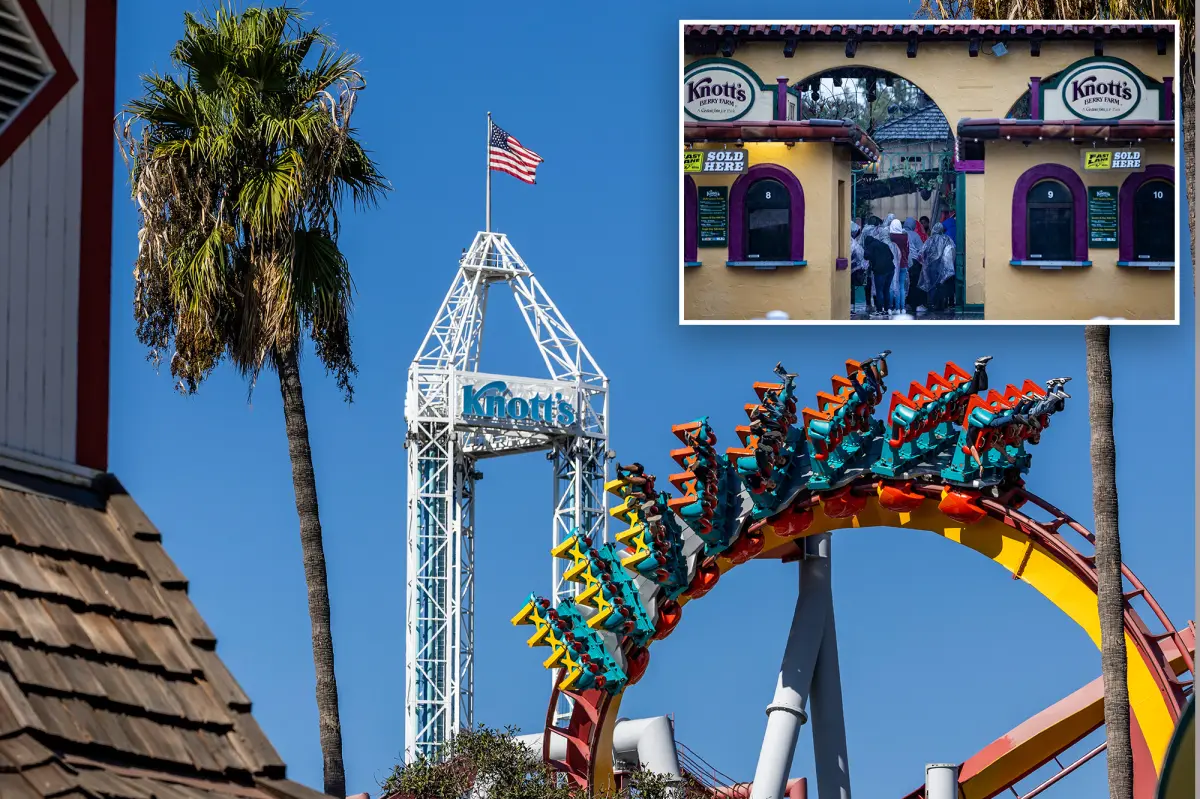
Amusement parks are supposed to be places where worries evaporate, where the biggest decision of the afternoon is whether to ride the coaster again or finally try that funnel cake. They trade in joy, adrenaline, and the kind of family memories that are supposed to last forever. But for Six Flags, the company behind beloved parks like Knott’s Berry Farm, the last few years have been anything but carefree. The North Carolina-based entertainment giant has agreed to settle a massive $11.24 million lawsuit, and the reason is not a malfunctioning ride or a wild accident. Instead, the company has been accused of quietly charging parkgoers a processing fee at checkout that was never properly disclosed upfront. In the eyes of California law, that kind of hidden charge is what consumer advocates call a junk fee, a sneaky add-on that appears at the end of an online transaction without clear warning. The law requires businesses to show all mandatory charges before a customer completes a purchase, not after the customer has already committed to the price. Six Flags has denied any wrongdoing, as companies often do in settlement agreements, but it has agreed to pay millions to make the issue go away. For the families who saved up for a day of fun, the fee may have seemed small, but multiplied across thousands and thousands of online ticket sales, it added up to a serious pile of money. It is a reminder that even the most magical places sometimes fail the basic test of honesty with their customers. This amusement park, as the saying goes, is no laughing matter.
The settlement, however, is not going to make anyone rich. In fact, eligible consumers will only receive about eight dollars each, which might buy a small soda or a souvenir keychain, if that. For many people, the question is whether it is even worth the effort. But class action lawsuits are not just about individual payouts; they are about accountability and putting a price tag on questionable business practices. To qualify for a piece of the settlement, you must be a California resident who purchased non-season tickets through either knotts.com or cagreatamerica.com during a specific window of time. The covered purchases took place between June 28, 2020, and July 1, 2024, and they had to be for admission to Knott’s Berry Farm, Knott’s Soak City, or California’s Great America. You also must have been charged the processing fee, which is the whole point of the lawsuit, and you must have entered a California ZIP code for your billing address. In other words, this is not a windfall for anyone who happened to visit the parks once while passing through the state. The settlement is aimed at California residents who were actually harmed by the hidden charge. If you are among them, you can file a claim and receive your eight dollars either as cash, through an electronic payment, or as a mailed check. If you choose not to file a claim at all, the proposed arrangement still allows you to receive the eight dollars as a credit toward future purchases on SixFlags.com. It is not exactly a golden ticket, but it is a small acknowledgment that something went wrong.
As with anything involving the courts, nothing happens instantly. If you want to receive the cash payment, you must file your claim by December 22, 2026. That date also applies to people who want to opt out of the settlement entirely and keep their right to pursue legal action on their own. If you do nothing, you will likely be included in the class and bound by the terms of the deal, which means you give up the right to sue Six Flags separately over the same processing fee. There is also a final approval hearing, sometimes called a fairness hearing, scheduled for March 30, 2027. At that hearing, a judge will decide whether the settlement amount is fair, reasonable, and adequate for everyone involved. The judge could approve the deal as it stands, or the amount could be reconfigured if the court believes it is not just. For many people, the idea of waiting until 2027 for eight dollars might feel absurd, especially in a world where everyone wants things immediately. But the legal process moves slowly, partly because it is designed to protect the rights of all class members, including people who may not even realize they are part of the lawsuit yet. If you think you qualify, it is worth paying attention, setting a reminder, and submitting your claim before the deadline. Otherwise, the money simply stays with the company, and the lesson about transparency becomes just another forgotten headline.
Yet the hidden fee lawsuit is not the only reason Six Flags has found itself in the news. In a tragedy that shook the amusement park world, a father plunged to his death while riding the Goliath roller coaster at Six Flags Over Georgia. The victim was Hassan Jihad Ibn Kariem, a 42-year-old teacher from Atlanta, who was thrown from the ride during what should have been a thrilling experience. The coaster towers two hundred feet above the park and reaches speeds of roughly seventy miles per hour, making it one of the park’s most intense attractions. According to reports, riders on the Goliath are secured not by traditional seatbelts but by padded, U-shaped restraints often described as clamshell lap bars. These bars lock across the thighs and are designed to hold riders in place, but in this horrifying instance, they failed to keep him safe. Ibn Kariem was pronounced dead at the scene, leaving behind a family devastated by an unimaginable loss and a community of fellow teachers and students mourning a man who had dedicated his life to education. The tragedy also rattled parkgoers everywhere, because it shattered the quiet assumption that amusement park rides, though scary by design, are ultimately safe. Roller coasters are built to feel dangerous, but nobody expects them to actually be dangerous. The fact that a simple lap bar was the only thing standing between a rider and a two-hundred-foot fall raised serious questions about ride design, inspection procedures, and whether enough was being done to protect the public.
In the wake of the accident, Six Flags President and CEO John Reilly announced a series of additional safety precautions designed to restore public confidence. The most visible change was the decision to add seatbelts to the Goliath ride and to other coasters across the company’s parks that use similar restraint systems. Seatbelts would provide an extra layer of security, a backup in case a lap bar somehow failed or was not properly locked. Reilly spoke directly to the emotional weight of the incident, saying in a press release that “what happened has deeply affected all of us at Six Flags.” He went on to stress that the company’s commitment to safety demands what he called “constant vigilance and determination to continually improve.” Those are strong words, but for grieving families and nervous riders, they are only meaningful if they are followed by real action. Adding seatbelts is a positive step, but it also raises a question that is hard to answer: why weren’t they there in the first place? Amusement park rides are heavily regulated and inspected, but no amount of regulation can eliminate every risk. The industry is built on the idea that people will trust the machinery, the engineers, and the operators who send thousands of riders hurtling down steep drops every single day. When that trust is broken, it takes more than a press release to repair it. It takes a demonstrated, ongoing commitment to safety that goes beyond the minimum required by law and puts human life at the center of every decision.
At the end of the day, Six Flags is facing two very different kinds of crises, but they are connected by one common thread: trust. The hidden processing fee was a small violation of trust, a moment where the company chose convenience and profit over clear communication. The Goliath tragedy was a catastrophic violation of trust, a moment where a ride that was supposed to be thrilling ended in death. Together, they paint a picture of a company that has, at times, lost sight of what matters most to its customers. People go to amusement parks to escape the ordinary, to feel the wind in their faces, to scream with laughter and fear at the same time. They do not go to be tricked into paying extra fees, and they certainly do not go to say goodbye to a loved one. For consumers, the lesson is to stay informed, to read the fine print, to know your rights, and to participate in legal claims when they arise. For Six Flags, the lesson is simpler and more profound: be honest, be careful, and never forget that every ticket sold represents a person’s hope for a great day. The $11.24 million settlement may reimburse a few dollars to thousands of people, but it cannot undo the inconvenience or the sense of being taken advantage of. And no amount of new safety equipment can bring back a father, a teacher, or a beloved member of a community. As the company moves forward, it will have to prove through its actions that it understands the weight of both of these failures. Because in the world of amusement parks, where the goal is to make people smile, nothing should ever be taken lightly. This is no laughing matter, and it never was.