





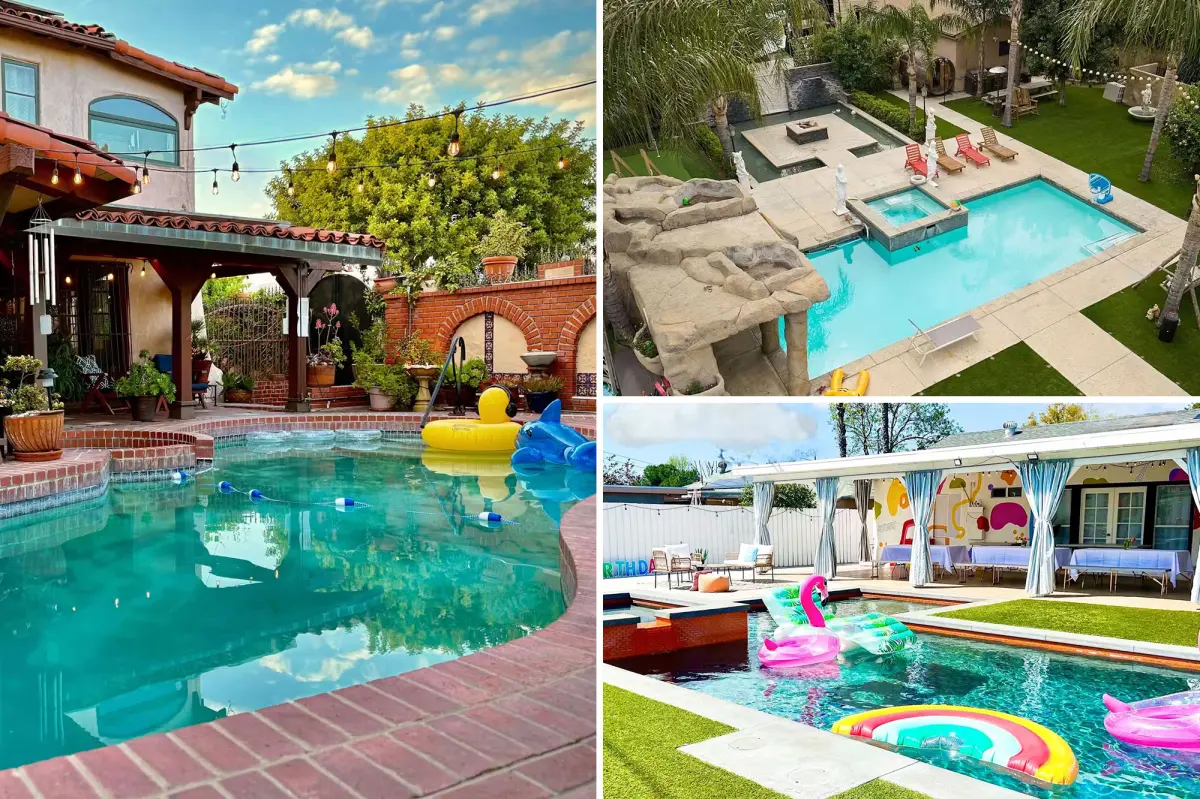
As the golden California sun beats down on the pavement of Los Angeles, summer brings both the promise of blissful beach days and the harsh reality of soaring utility bills, high mortgage payments, and an increasingly challenging cost of living. For many Angelenos, navigating this seasonal shift requires a bit of financial creativity, prompting a growing wave of enterprising homeowners to look directly out their back windows for a fresh stream of income. Nestled behind privacy fences and surrounded by lush palm trees, a quiet revolution is taking place in the gig economy: the rise of hourly backyard pool rentals. This brilliant side hustle, facilitated by platforms like Swimply, has transformed the traditional, underutilized symbol of suburban luxury into a highly lucrative micro-business. Across the sprawling neighborhoods of Southern California, what was once merely a costly maintenance liability is now paying off handsomely, offering clever hosts a remarkable opportunity to offset their own housing expenses while providing their landlocked neighbors with a cool, private escape from the relentless summer heat.
To understand the sheer scale of this phenomenon, one only has to look at the staggering numbers being generated by some of the city’s most celebrated backyard oases, which have achieved almost legendary status among local swimmers. In the highly competitive world of hourly pool sharing, curation and presentation are everything, and a few high-earning hosts have managed to turn their properties into miniature design masterpieces that draw crowds season after season. Take, for instance, the famous “Orange Pool” in the Hollywood Hills, hosted by Natalie and Alex Bykov; this vibrant, retro-chic destination has graced local television screens on programs like “Good Day LA” and FOX 11, racking up an astonishing $264,772 in total earnings. Not far behind in both popularity and revenue is “Dino’s Hollywood Hills Oasis,” hosted by Dino Baglioni, which has charmed visitors and secured $276,295 in bookings by pairing sweeping panoramic views of the city skyline with an incredibly relaxed, welcoming atmosphere. Meanwhile, commanding the top spot on the local leaderboard is the whimsical “Disney+ Dive-In Theater” pool hosted by Amit Janweja, a themed wonderland inspired by the film “Camp Rock” that has captured the hearts of families and pop-culture enthusiasts alike, generating a jaw-dropping $299,395 in lifetime bookings.
What makes this modern hustle so attractive to the everyday resident is that it does not require running a traditional, high-stress, full-time business; instead, it operates as a flexible, self-guided venture that respects the host’s personal schedule and privacy. Homeowners retain absolute control over their domains, deciding exactly when their gates are open to the public, setting their own hourly rates—which typically range from a modest $50 to well over $150 depending on the property’s luxury level—and tailoring the guest experience to their liking. To sweeten the deal and maximize their earnings, hosts often offer a delightful array of customizable add-ons, including premium lounge chairs, high-end barbecue grills, themed party decorations, and even specialized time slots where guests are welcome to bring their four-legged friends along for a refreshing doggy paddle. Because the facilitation platform handles the complex logistics of digital payment processing, booking schedules, and liability insurance coverage, the daily operations remain relatively seamless and hands-off once the initial profile setup is complete. Remarkably, this lucrative opportunity is no longer exclusive to those who hold a deed; resourceful renters are also riding this wave, carving out their own profitable niches in the marketplace by obtaining explicit, written authorization from their landlords, a process that Swimply actively verifies to maintain trust, safety, and legal compliance across its community.
Despite the alluring allure of six-figure earnings and glowing reviews, experienced hosts are quick to point out that maintaining a top-tier rental pool is far from a passive walk in the park; rather, it demands a high level of dedication, mechanical awareness, and rigorous daily discipline. While the concept of sharing residential amenities has gained massive traction, the reality of hosting strangers requires a deep dive into the unglamorous mechanics of water sanitation and property management. A compelling cautionary yet triumphant tale comes from Jim Battan of West Linn, Oregon, an early pioneer of the movement who originally invested $110,000 to construct his dream in-ground pool, only to find that it quickly paid for itself and funded a brand-new “man cave” thanks to the magic of hourly rentals. However, Battan is candid about the sheer volume of labor hidden beneath the sparkling, picture-perfect surface, warning prospective hosts that unless they have substantial free time or are retired, managing the delicate chemistry of a heavily used pool can easily become a second job. He emphasizes that relying on a standard, once-a-week professional pool service simply will not cut it when dozens of different families are cycling through the water, revealing that he personally tests and adjusts his pool’s chemical balance five to ten times a day to ensure absolute safety and clarity for his guests.
The true beauty of this blossoming ecosystem, however, lies in its profound ability to democratize luxury and bring diverse groups of people together in a city that can often feel deeply isolated and segmented. In a sprawling metropolis like Los Angeles, where private green spaces are a premium and public pools are frequently overcrowded, these backyard rentals serve as a beautiful bridge between different communities and lifestyles. On any given afternoon, a single pool might host a multi-generational family celebrating a grandmother’s birthday with a homemade feast, a group of creative freelance influencers collaborating on a vibrant fashion photoshoot, a local business taking a break from the office for an informal team-building barbecue, or a pet owner overjoyed to watch their rescue dog experience the water for the very first time. For the guests, paying a reasonable hourly fee grants them temporary access to a level of privacy, tranquility, and opulence that might otherwise be entirely out of financial reach, allowing them to craft beautiful, lasting summer memories without the burden of a country club membership or a steep hotel tab. By opening up their gates, hosts are not just collecting a paycheck; they are actively sharing a slice of the classic California dream with people who appreciate it most.
Looking ahead, as weather patterns bring warmer temperatures and the desire for curated, experiential outings continues to rise, the trend of hourly pool sharing appears poised to become a permanent fixture of the modern suburban landscape. It represents a fascinating evolution of the sharing economy, proving once again that when local residents are faced with financial pressures, they will find innovative, community-oriented ways to adapt, thrive, and make the absolute most of their resources. For the lucky folks with a patch of sparkling blue water in their backyards, a swimming pool is no longer just a quiet place to float on a lazy Sunday afternoon or a costly luxury that drains the household budget. Instead, it has transformed into a powerful engine of financial independence, a beloved neighborhood gathering spot, and a shining testament to the creative, entrepreneurial spirit that has always defined the vibrant culture of Southern California. As the sun sets over the Hollywood Hills, casting a warm golden glow across hundreds of shimmering, rented pools, it is clear that this quirky backyard side hustle is doing much more than just helping people beat the heat—it is redefining the very nature of home, hospitality, and community in the modern age.