







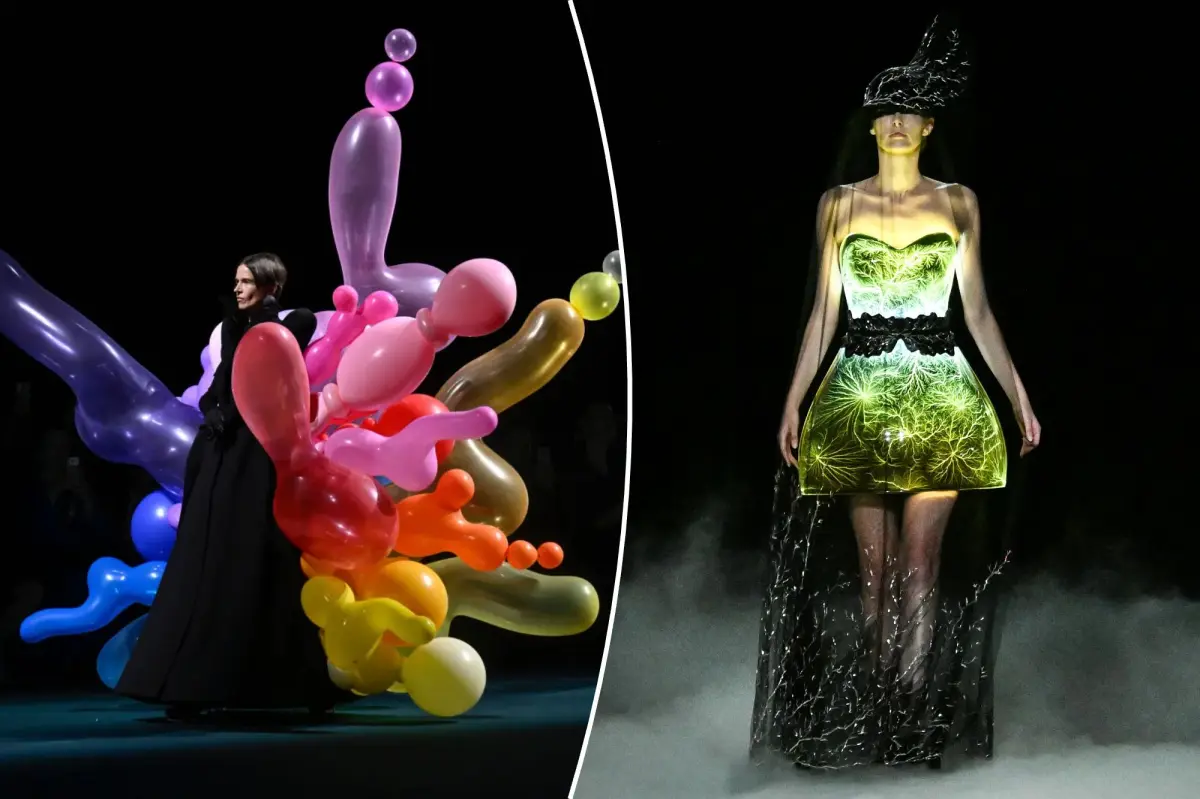
In an era where skyrocketing inflation has pushed the price of designer garments from a once-staggering couple of thousand dollars to an eye-watering ten thousand, the elite world of Paris Haute Couture has had to get creative to survive. Facing a landscape of disgruntled shoppers and skeptical critics experiencing collective sticker shock, designers did the unthinkable at this season’s runway shows. Rather than draping models in the traditional, prohibitively expensive piles of handmade lace, silk chiffon, and crystal-coated leather, the industry’s top houses pivoted to materials you are far more likely to encounter on the shelves of your local Dollar Store, Party City, or neighborhood Home Depot.
The surprising high-low revolution took flight with London-based couturier Robert Wun, who chose to juxtapose his meticulously sculpted, heavy black and white gowns with massive, whimsical bunches of customized latex balloons—the exact variety that retail for just a few dollars at any party supply storefront. Explaining this unorthodox choice to an A-list audience that included Cardi B, Wun described the floating, fragile latex as a poetic antidote to the heavy burdens of adulthood. For Wun, the balloons represented a beautiful, joyous, and fleeting nod to the fragility of childhood, proving that haute couture can still evoke deep, nostalgic emotion without relying on precious gemstones or ultra-rare textiles.
Other designers skipped the party supply aisle entirely and went straight to the hardware depot for inspiration. At Christian Dior, creative director Jonathan Anderson—famed for his cutting-edge sensibilities—adorned his frothy gowns and tailored suits with necklaces inspired by the artist Lynda Benglis. These industrial statement pieces were crafted from silver hex wire, otherwise known as chicken wire, which retail for about twelve dollars at the local hardware store and is typically used to keep squirrels out of backyard tomato plants. Meanwhile, Chanel transformed rustic straw into literal fashion gold, presenting a fairytale-inspired collection featuring golden goose clutches and shoes with beanstalk-shaped heels, all anchored by supermodel Natasha Poly sporting a hat and shoescovered in loose strands of farm-style hay.
This democratization of high-fashion fabrics continued across Paris’s most storied fashion houses. Balenciaga chose to open its highly anticipated show with a high-fashion riff on a classic, giant white tank top—a silhouette famously available at Old Navy for under six dollars. At Jean Paul Gaultier, designer Duran Lantik bridged the gap between luxury and the everyday by converting a standard Levi’s denim jacket into a structured, avant-garde peplum blazer. In a cheeky nod to its humble origins, Lantik intentionally left the classic, universally recognized red Levi’s tag fully visible on the front pocket, playfully celebrating the beauty of mass-market, everyday Americana on the sacred ground of French couture.
However, the most groundbreaking fabric of the season came from a material that was spiritually free: compost. Renowned Belgian artist and designer Iris Van Herpen constructed a mesmerizing, hourglass-shaped gown utilizing bio-fabricated “leather” developed by TômTex, a Brooklyn-based biotech startup. The innovative company ferments agricultural waste—specifically discarded plant matter like leaves, stems, husks, and fruit seeds—into a luxurious, ultra-durable alternative material called BloomCell. This sustainable, plastic-free plant leather costs a mere three dollars per square foot to produce, offering a revolutionary and environmentally conscious alternative to traditional animal hides that proves green fashion doesn’t have to sacrifice an ounce of beauty.
Yet, despite the thrifty nature of these raw, everyday materials—ranging from cheap chicken wire and latex balloons to recycled compost—the final price tags of these runway creations remain firmly out of reach for the average consumer. While the fabric of an Iris Van Herpen dress might cost less than a lunch special, the final garment still commands the price of a down payment on a luxury apartment, with pieces routinely auctioning for up to seventy-five thousand dollars. Ultimately, this season’s couture shows revealed that true luxury is no longer just about the inherent value of the raw materials, but the imagination, human touch, and artistry required to transform the mundane into the extraordinary.