





Long before multi-lane freeways carved through the golden valleys and rugged cliffs of California, the historic coastal corridor known as El Camino Real served as the state’s spiritual and physical spine. Originally traced centuries ago by Spanish walking padres to connect twenty-one historic missions from San Diego all the way to Sonoma, this legendary pathway eventually evolved into Highway 101, a scenic highway that would go on to birth the great American road trip. It is along this very historic artery, nestled in the picturesque Central Coast valley of San Luis Obispo, that an extraordinary piece of Americana is waiting for its next great awakening. The birthplace of the modern roadside lodging experience—the historic property that housed the legendary Milestone Mo-Tel, later renamed the Motel Inn—has officially hit the real estate market for the first time in a generation. Offered by the Hayes Commercial Group without a public asking price, this sprawling 4.21-acre parcel located at 2223 Monterey Street is far more than a simple plot of land; it is a sacred cultural monument standing at the intersection of history and modern ambition. For decades, this site provided shelter to weary travelers navigating the winding coastal roads of California, offering a welcoming beacon of rest long before interstate highway travel became a standard American pastime. Today, as it sits quietly off the bustling lanes of Highway 101, the property represents a rare, once-in-a-lifetime opportunity for a visionary buyer to reclaim and reimagine a cornerstone of travel culture that helped shape the modern world.
To truly appreciate the significance of this site, one must travel back in time to the winter of 1925, an era when the automobile was rapidly transforming the landscape of American leisure. On December 12 of that year, Pasadena architect and inventor Arthur S. Heineman unveiled a labor of love that would forever alter the hospitality industry: the Milestone Mo-Tel. Before Heineman’s brilliant intervention, long-distance travelers faced a grueling dilemma, often forced to choose between expensive, formal downtown hotels that required dressing up and navigating busy city blocks, or roughing it in dusty, primitive auto camps by the side of the road. Heineman envisioned a revolutionary middle ground specifically tailored to the fast-growing community of car owners. His radical, novel concept allowed guests to drive off the highway and pull their prized automobiles directly up to the front doors of their private rooms, seamlessly blending convenience, privacy, and speed. Recognizing the linguistic novelty of his creation, Heineman cleverly fused the words “motor” and “hotel” to coin the term “motel”—a brand-new portmanteau that he unsuccessfully tried to trademark, but which ultimately became a permanent fixture in the global vocabulary. Positioned roughly halfway between the bustling hubs of Los Angeles and San Francisco, this pioneering establishment became the natural resting oasis for motorists whose bones were rattled and spirits weary from a long day of navigating primitive, unpaved roads in early-model cars. Back then, the journey between California’s two major metropolises was not the effortless, cruise-control commute of today; it was a rugged, dusty expedition that demanded a sanctuary of comfort at the day’s end, and Heineman’s masterpiece provided exactly that.
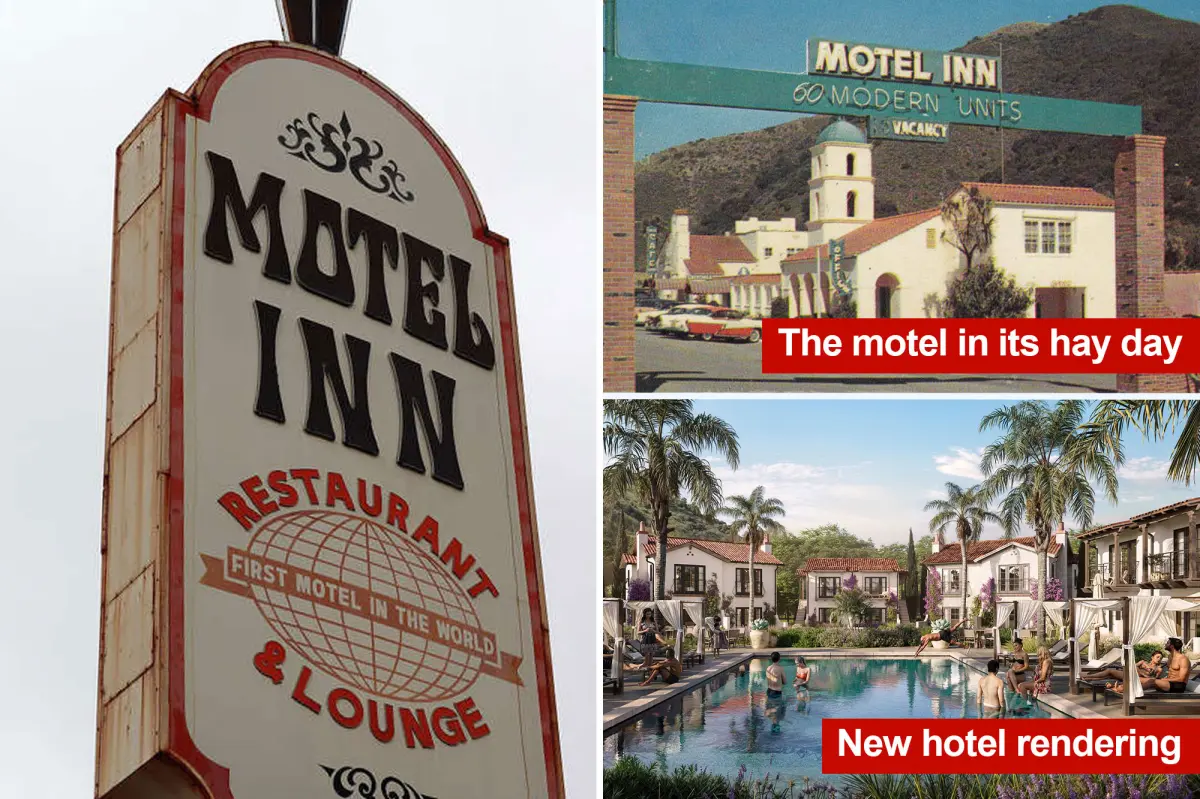
As the mid-century rolled around, the motel blossomed into a vibrant cultural hub, celebrated not only for its unmatched convenience but also for its stunning architectural beauty. Heineman had designed the property in the classic Mission Revival style, a romantic architectural movement that swept through California of that era, echoing the historic Spanish missions that lined the coastal route. The Motel Inn quickly captured the public’s imagination with its striking, three-tiered bell tower, white stucco walls, and a beautiful copper dome that gleamed under the warm sun of San Luis Obispo. This eye-catching aesthetic transformed the roadside stop into a beloved local landmark and an alluring retreat for travelers, locals, and even Hollywood elite. By the 1950s, the motel had become a legendary sanctuary of cool California glamour. Newlyweds Marilyn Monroe and Joe DiMaggio were among the iconic couples who slipped away from the intense glare of the paparazzi to find brief, quiet moments of intimacy within its cozy rooms. The air was alive with the easygoing sophistication of post-war America—the gentle clinking of cocktail glasses at the onsite restaurant, the soft hum of classic engines, and the laughter of wanderers sharing stories of the open road. It was more than a place to rest; it was a living theater of the American dream, where the freedom of the highway met the warm hospitality of the Golden State.
Yet, as the twentieth century advanced, the landscape of American travel underwent a swift and irreversible evolution. The rise of massive, uniform corporate hotel chains and the high-speed efficiency of the modern interstate highway system slowly chipped away at the intimate charm of independent, roadside motor inns. Unable to compete with these changing giant tides of the hospitality industry, the historic Motel Inn finally shuttered its doors permanently in 1991, drawing a quiet curtain on nearly seven decades of bustling operation. In the long, quiet decades that followed, the elements and neglect took a heavy toll on this birthplace of vacation culture. Abandoned to the passage of time, most of the original bungalow structures fell into deep ruin and were eventually demolished for safety, leaving behind a bittersweet landscape of dusty dirt and fading memories. Today, only a fragile remnant of the motel’s physical history remains standing behind chain-link fences, offering a poignant contrast to the busy highway traffic zooming nearby. Passersby along Monterey Street can still catch a glimpse of the beautifully refurbished lobby building, crowned by its iconic three-tiered bell tower, standing shoulder-to-shoulder with the weathered remains of the old restaurant’s facade. These lovely, haunting relics survive as silent, stoic sentinels of a bygone era, whispering stories of the millions of journeys they bore witness to and the pioneer spirit of early road trippers.
Now, after decades of standing as a monument of quiet potential, this legendary site is poised for a spectacular modern rebirth, presenting a developer’s dream that is virtually unmatched anywhere in the state of California. The prime 4.21-acre parcel is being offered as a fully entitled development site, which means the notoriously grueling and often years-long bureaucratic hurdle of obtaining local government approvals has already been completely cleared. Prospective buyers are stepping into a golden opportunity that is entirely shovel-ready, with construction permits primed and waiting for immediate issuance. The approved plans outline a stunning, high-end 83-room boutique getaway that thoughtfully pays homage to the site’s historic past while offering the luxurious, modern amenities today’s travelers expect. This planned resort features twenty-seven elegant, bungalow-style guest buildings, a peaceful swimming pool oasis, and a state-of-the-art sound wall designed to ensure deep tranquility just moments from the highway. However, because the Motel Inn occupies an esteemed place on the City of San Luis Obispo’s Historic Preservation List, any future developer must preserve and elegantly integrate the surviving historic structures—the iconic lobby, the bell tower, and the restaurant facade—into the new hotel design. As listing broker Nolan Tooley of Hayes Commercial Group noted, there is simply no comparable opportunity in California, offering an investor a coveted and rare foothold in one of the most supply-constrained lodging markets along the entire, scenic Central Coast.
For exactly one century, the historic Motel Inn has stood watch at the northern gateway of San Luis Obispo, nestled just five miles south of the steep and formidable mountain pass known as the Cuesta Grade. It has quietly watched the world transform from the slow-paced, dusty era of the Model T to the high-tech, fast-moving age of electric vehicles, and now, it waits patiently for its next passionate steward to step forward. Elevating this legendary landmark into the twenty-first century will undoubtedly require someone with deep pockets, an abiding respect for California history, and a grand imagination, but the potential reward is nothing short of writing the next major chapter in American travel lore. The site represents a rare, beautiful chance to bridge the gap between yesterday’s charming nostalgia and tomorrow’s modern boutique luxury, creating a sanctuary where a new generation of travelers can pull up, unwind, and connect with the timeless romance of the open road. As the coastal highway continues to carry thousands of modern daydreamers and adventurous road trippers past its gates every single day, the historic soul of America’s first motel stands ready to welcome them home once more. All it takes to revive this sleeping giant and secure a legendary place in the storied history of the American road trip is a grand vision, a deep appreciation for the past, and a winning offer.