





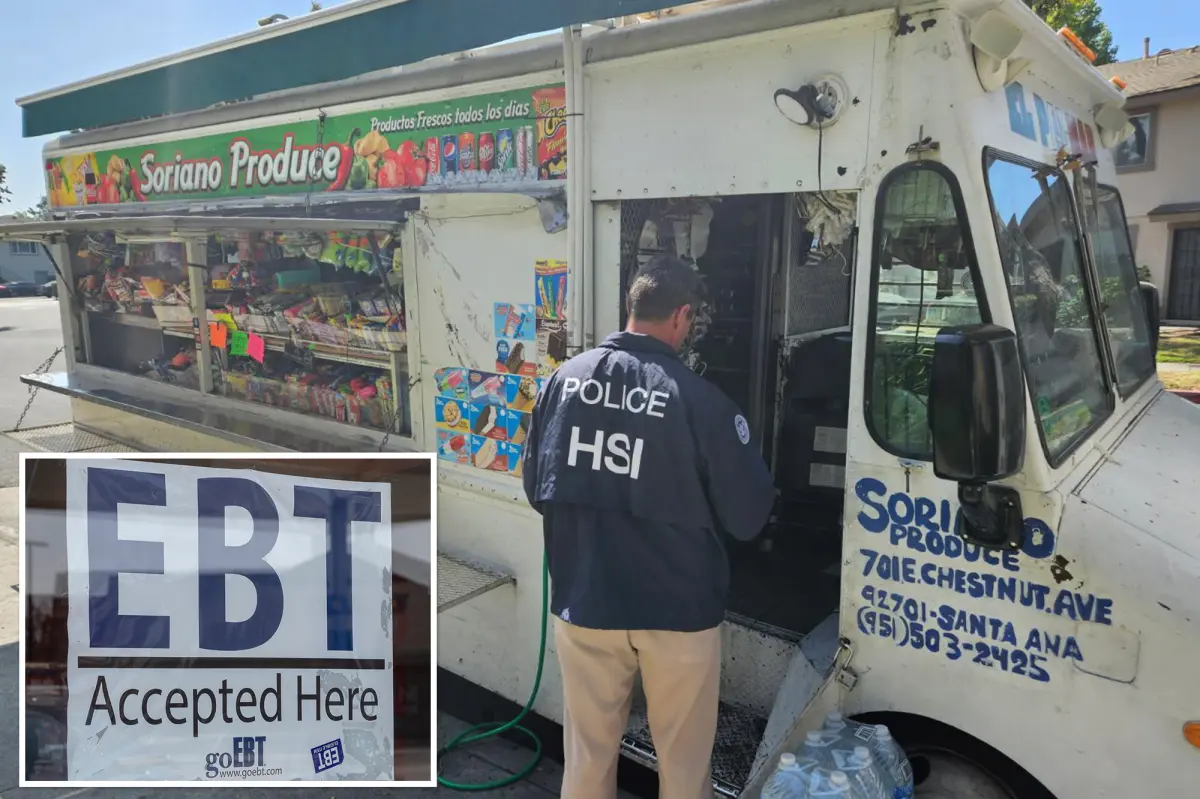
At first glance, Soriano Produce was just another local food truck parked on Lyon Street in Santa Ana, California, selling fruit, bags of chips, and basic snacks to the neighborhood. Owned and operated by Esmeralda Soriano, the modest white vehicle seemed like a typical small business striving to serve its community, especially after it officially began accepting Supplemental Nutrition Assistance Program (SNAP) and Electronic Benefit Transfer (EBT) cards in May 2023. To the average passerby, it was a low-volume operation catering to everyday folks needing a quick bite. However, behind this unassuming facade lay a massive, highly sophisticated welfare fraud operation that eventually caught the attention of federal investigators, leading to a dramatic arrest that has highlighted the staggering vulnerabilities within California’s public assistance infrastructure.
The investigation into Soriano Produce began when investigators noticed a series of glaring disparities that simply did not align with the reality of a small-scale mobile food vendor. Dwight Llewellyn, an agent for Homeland Security Investigations, spearheaded the probe and pointed out several red flags that immediately signaled illicit activity. The food truck operated with only a single, basic register tabletop checkout area, completely lacking commercial barcode scanners. Despite this primitive setup, the truck’s transaction records revealed consistently high-dollar purchases and rapid, back-to-back transactions that are highly uncharacteristic of a typical produce stand. While SNAP benefits are strictly designated for eligible food items and prohibit the purchase of household goods, toiletries, alcohol, or tobacco, Soriano’s registers were running up credit card bills that rivaled major commercial retail outlets.
The sheer volume of funds funneled through Soriano Produce became impossible to ignore when compared directly to similar vendors operating in the immediate vicinity. According to the federal criminal complaint, Soriano’s business boasted an astonishing average transaction size of $151.41, ultimately accumulating an incredible store volume of $640,924 over a relatively short period. In stark contrast, three neighboring vendors of similar size and scope recorded average transactions of under $55, with their total annual volumes failing to even reach the $100,000 threshold. In fact, a comparative analysis of the data revealed that this single, mobile fruit truck was bringing in significantly more EBT revenue than many full-scale, brick-and-mortar supermarkets and grocery stores in the region, a statistical anomaly that confirmed federal agents’ worst suspicions.
To secure undeniable proof of the unlawful scheme, law enforcement officers initiated a series of undercover sting operations targeting the food truck. In May of this year, an undercover officer approached Esmeralda Soriano and proposed a classic EBT trafficking exchange: trading $100 in SNAP benefits for $50 in cold, hard cash. Soriano allegedly agreed to the transaction but issued a cautionary warning to the undercover agent, advising, “If you come back, don’t ask my husband because he would not do it.” Encouraged by the initial success, agents returned later that month for a second transaction, during which Soriano charged $172 to the government-issued EBT card in exchange for $80 in cash. These direct, cash-for-benefits handoffs provided investigators with the definitive evidence needed to halt the operation and execute a highly publicized physical arrest right outside her vehicle.
This high-profile bust is far from an isolated incident; rather, it represents a single drop in an ocean of widespread welfare abuse that has plagued the Golden State. Just a week prior to Soriano’s arrest, heavily armed federal agents, supported by uniformed officers from the Los Angeles Police Department, descended upon Escamex Party Supplies in the Skid Row area of Los Angeles. There, they arrested a cashier accused of orchestrating a complex kickback scheme with welfare recipients, allowing them to swipe cards for fake purchases in exchange for cash cuts. This raid was part of a coordinated, four-pronged sweep across California conducted by the US Department of Agriculture’s Office of Inspector General and Homeland Security Investigations, which also resulted in the USDA issuing violation notices to 33 other SNAP-authorized retailers in the region for illegal cash conversions and selling prohibited items like alcohol.
The persistent crackdown underscores a growing frustration among federal authorities and local lawmakers over California’s handling of its massive welfare system. As the administrator of the nation’s largest SNAP program, California distributes approximately $12.5 billion in vital assistance annually. However, data from the California Legislature’s nonpartisan fiscal and policy advisor reveals that roughly 11% of these payments are issued in error—primarily driven by administrative oversights and fraudulent household reporting. This systemic neglect has drawn sharp criticism from political figures like Los Angeles’ top federal prosecutor, Bill Essayli, who openly criticized state leadership, asserting that the programs have not been monitored closely enough to weed out bad actors. Facing potential penalties of up to 20 years in federal prison and $250,000 in fines, operators like Soriano now represent the primary targets in an ongoing war to restore integrity to public funds meant for the hungry.