


Summarize and humanize this content to 2000 words in 6 paragraphs in English
Forget Japanese omakase, haute Korean set menus and trendy steakhouses.
The city’s hardest-to-get restaurant reservations all have one thing in common — they’re Indian. And they’re all terrific.
The Subcontinent’s kaleidoscopic, spice-drenched flavors are here at higher quality and in greater variety — from the rich curries of the north to the delicate dosas of the south — than ever before. They’re in greater demand, too: Reservations at some new places are as hard to come by as those at the Eighty Six and the Polo Bar.
Ambassadors Clubhouse, an opulent, 140-seat London import that debuted its Punjabi fare in NYC earlier this year, limits guests “to one reservation per month to ensure we can accommodate as many guests as possible,” according to its website. Musaafer won’t let you book earlier than two weeks ahead for dinner starting at 5 p.m., although you’ll have better luck for lunch.
The acclaimed, Michelin-starred Semma won’t let you book less than 15 days ahead — and then, only if you’re lucky. Its reservation site goes live 15 days in advance of any given date at 9 a.m, and you have to be quick with your keyboard clicks. Its sister restaurant, Adda, requires equally fast fingers to book.
Bungalow opened two years ago in the East Vilage, but it’s still nearly impossible to grab a table, so much so that I gave up waiting for availability starting “exactly at 11 a.m., 20 days in advance except Tuesdays,” according to its friendly site.
But, if you can nab a reservation at these spicy spots, the rewards are numerous — and delicious.
My favorite single new dish is the malvani macchi — black bass simmered in a multi-layered, cream curry — from Unapologetic Foods’ Adda. Chef Chintan Pandya calls it “a taste of my childhood Sundays.” As in the best Indian cookery, the essences reveal themselves not in a cluster bomb but sequentially — coconut first, then tangy kokum, followed by a blast of Szechuan pepper-like triphal spice.
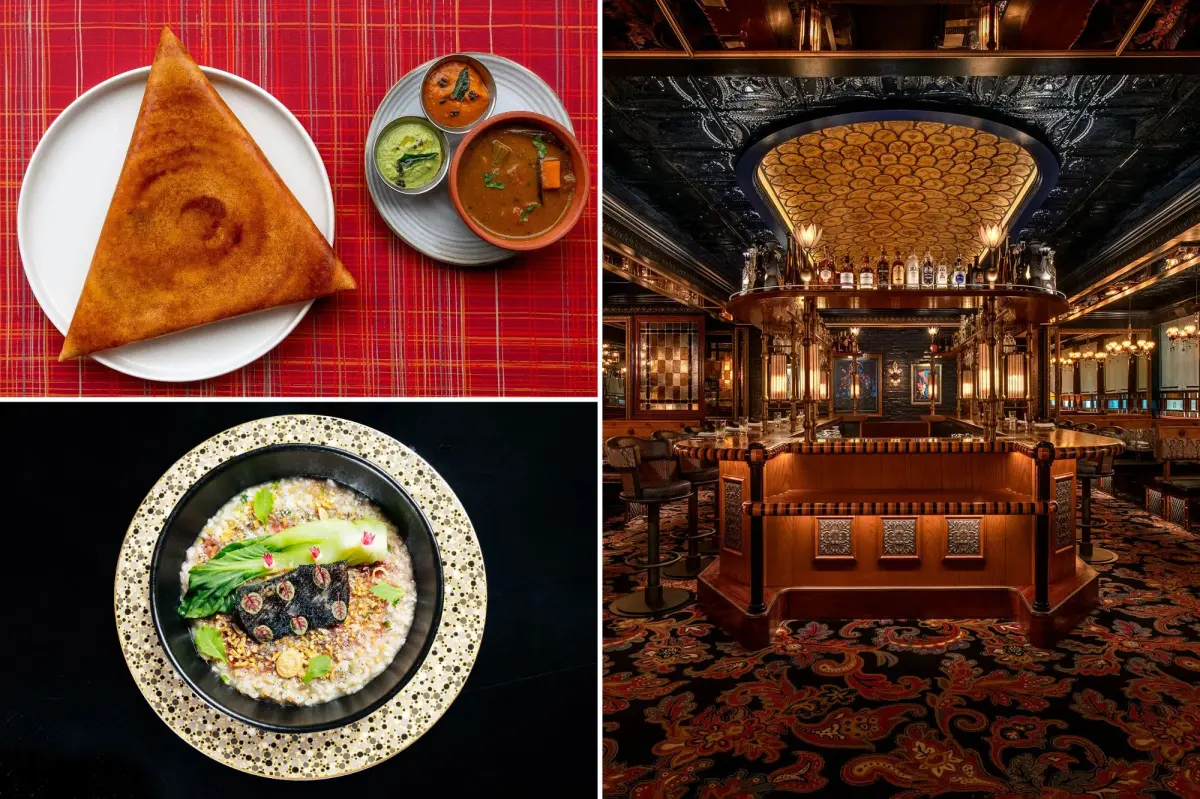
At Semma, another Unapologetic place, the triangular gunpowder dosa blew me away. A blend of ground chile spices lights the fuse in a ginger-and mustard-imbued potato masala inside the thin, ghee-griddled envelope — a fluffy-and-crisp tactile pleasure.
The skyrocketing growth of Indian fare in NYC — a cuisine previously defined by tomato-bathed chicken tikka masala and under-spiced lamb saag gosht — came after the pandemic.
Big Apple restaurant-lovers were ready for something new and challenging after the pandemic year of bland takeout and dishes dumbed down for outdoor service.
“We couldn’t really travel during the pandemic,” said Ellen Hunter, who runs the popular food-focused Instagram account @TheStarCrawl. “There’s something about Indian food that gives you a sense of exploration.”
Pandya and the Unapologetic Foods CEO Roni Mazumdara launched the game-changing Dhamaka on Delancey Street in February 2021, just days after the lockdown ended.
The restaurant swiftly became one of Manhattan’s hardest-to-book places, thanks to what I called “cauldrons of palate-tingling surprises” like chicken pulao fired by garam masala made from ground mace, cinnamon, dried chili and cardamom.
Later that year, the duo opened Semma, focusing on rural southern Indian cuisine from Vijay’s hometown of Tamil Nadu, and the equally creative Adda.
The Indian hot spots offer both unique regional dishes and adaptations of familiar favorites that are far better than the takeout standards.
Several places serve elevated takes on butter chicken. At Adda, the “butter chicken experience” costs $50 per person and must be booked in advance due to limited availability. Those who snag a slot enjoy special Heritage Green Circle Chicken, house-churned butter and tomatoes that are smoked daily.
At the theatrical, marble-walled Musaafer, the butter chicken experience costs $42 and is served in a three-tier vessel, each layer offering a distinct take on the dish.
At Ambassadors Clubhouse, Matka Beliram lamb from Mosner Family Farms is grilled osso bucco style over hot coals to a smoky, juicy turn and served with young garlic and toasted coriander seeds.
Of course, the city had great Indian restaurants long before Covid and the new crop of trendy spots. Avtar Walia’s elegant Tamarind Tribeca is currently celebrating its 25th anniversary, while Indian Accent and Junoon have also long offered upscale takes on the complex cuisine of the country, which is home to 1.74 billion people.
Walia recalled opening the original Tamarind on East 22nd Street decades ago, with the help of the celebrated, Hyderabad-born chef Raji Jallepalli.
“Our goal was to bring Indian cuisine to a different level,” Walia told me.
Although Jallabadali died in 2002, her Chilean sea bass, or hasiru samudra, is still on the menu. It’s marinated in sour cream, coriander and lemongrass before it goes into the tandoori oven and emerges almost impossibly sweet and moist.
It’s still my favorite after all the years, but I’m glad it’s no longer the only fish in the Indian sea.