




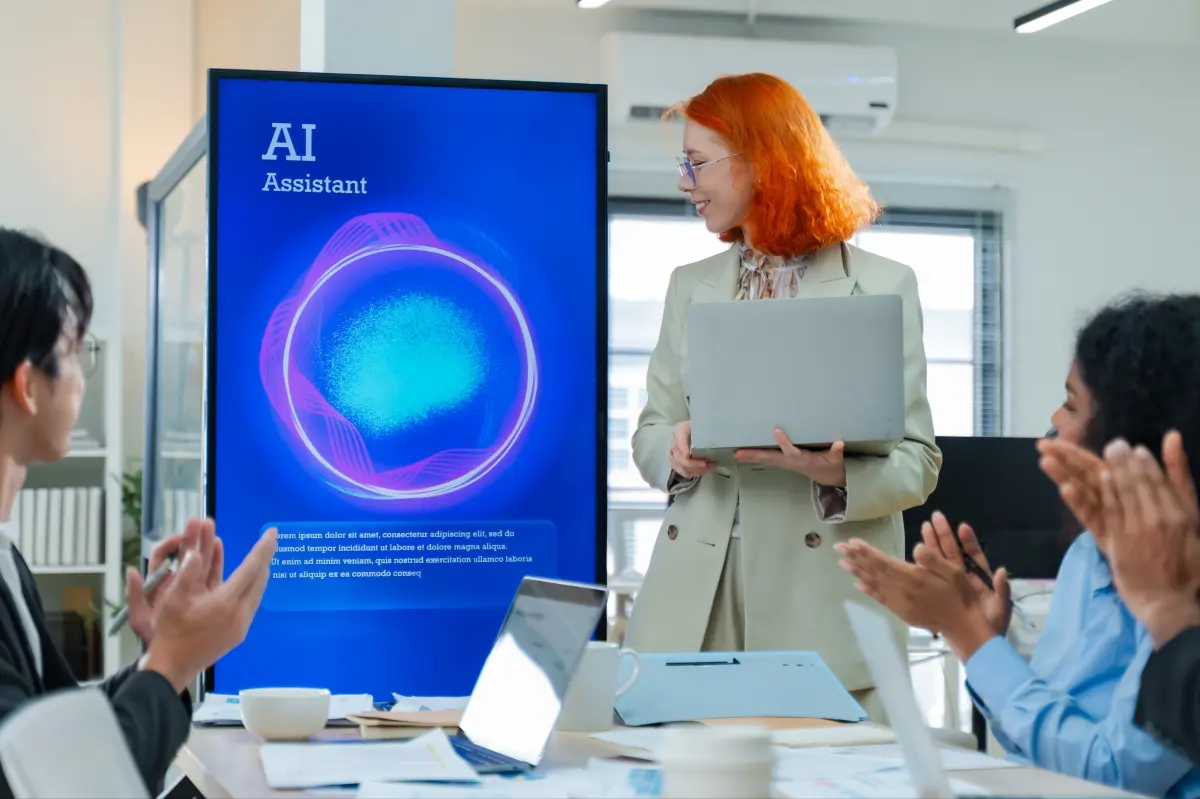
Picture this: you’re sitting at your desk, staring at a glowing screen where ChatGPT or some similar AI assistant awaits your command. Do you bark orders like a drill sergeant, or do you politely say, “Please summarize this report for me, thank you?” A fresh poll from TripleTen, conducted by Talker Research among 2,000 U.S. office workers who’ve dabbled in AI lately, reveals that a whopping 86% of us are choosing kindness—using phrases like “please” and “thank you.” It’s not just about good manners anymore; it’s becoming a workplace norm. Two-thirds of these workers, 64% to be exact, think it’s crucial to show common courtesy to AI, and over a quarter say they do it every single time. I mean, can you imagine treating your coffee maker rudely? Probably not, because in today’s hybrid worlds of humans and machines, we’re all adapting. One respondent nailed it: “AI is more likely to respond correctly when you use words like ‘please.’ Even if your prompt is lousy.” It’s like training a puppy; the nicer you are, the better behaved it gets. This survey, commissioned by TripleTen and run online from March 16 to 30, 2026, tapped into American office workers with internet access who’ve used AI in the past two years. It’s eye-opening how quickly we’re personalizing these tools, almost as if they’re extensions of ourselves. Another participant shared, “I don’t want to train myself to be rude even to a robot—it might carry over.” Yeah, that resonates; we wouldn’t snap at a colleague, so why at an AI? Then there are the optimists who swear courtesy boosts output. “AI learns from me—I want it to model my manners,” one said. It’s this blend of superstition and strategy that’s making interactions smoother. Some even throw in a bit of RoboApocalypse humor: “Because I want to be polite now so I’ll be remembered positively when our robot overlords take over.” Funny, but it hits home on the fear of a future where AI judges us by our prompts. Overall, the numbers show a shift: 41% view AI as just a tool, preferring objectivity, while 23% treat it like a person. For the tool folks, 91% stress staying direct. But for the humanizers—87% of them see AI as a personal assistant boost. And get this: 75% of those who personify AI keep things gender-neutral, with only a quarter assigning genders—14% female, 11% male. Founders, though, lean feminine at 23%. It’s fascinating how we’re anthropomorphizing tech, adding layers to our daily routines. Imagine starting your day with a respectful nod to your digital helper; it might just make Zoom calls less daunting. This poll isn’t just stats—it’s a mirror to how we’re evolving as professionals, blending empathy with efficiency in an AI-infused world. As we navigate endless spreadsheets and emails, treating these machines kindly feels like a small act of self-preservation, ensuring our outputs are polished and our habits stay humane.
Diving deeper into the survey, the contrast between seeing AI as a mere gadget versus a quasi-colleague is stark, shaping how we interact daily. Nearly two-thirds, 64%, envision AI someday as a bona fide coworker, replicating the qualities of our flesh-and-blood counterparts, especially if it gets good at mimicking teamwork and intuition. Executives? They’re twice as open to this idea—81% versus just 39% for staff. It’s telling of the hierarchy in offices, where top dogs see boundless potential in these algorithms. One respondent mused, “AI isn’t really a tool—it’s a system with what you could call functional emotions, internal patterns that genuinely shape what it produces,” as explained by Ana Riabova, an AI Growth Expert at TripleTen. She emphasizes that savvy users tweak tone, context, and detail to get better results. “The ‘please’ and ‘thank you’ aren’t superstitions—they’re what it looks like when someone has noticed the model is responding to them, not just executing.” This humanizes the tech, turning code into a conversation partner. Think about your last brainstorming session; did a polite request yield a brilliant idea, or did a blunt one fall flat? These insights from TripleTen’s study show we’re not just using AI—we’re nurturing it, like a trusty sidekick in a sci-fi novel. For instance, if AI could handle your weekly reports with a flair for detail, it might free you up for creative leaps, replacing the drudgery of data entry. But it’s not fantasy; as AI evolves, we’re borrowing social cues to make it work harder. Respondents who treat AI like humans (23%) report smoother workflows, viewing it as an assistant that anticipates needs. On the flip side, the 41% who treat it as a tool keep things clinical, avoiding emotional baggage. Gender plays a quirky role too—70% of those who anthropomorphize AI go neutral, perhaps to dodge biases, while founders favor femininity. It’s like naming a pet that’s actually a machine. Personally, I’ve found adding a “thanks” before logging off makes me feel less like I’m commanding a robot army, and more like collaborating with a helpful intern. This shift isn’t just productive; it’s humane, reminding us that as AI infiltrates our desks, maintaining our core politeness preserves our humanity. With leaders pushing its adoption, we’re on the cusp of a new era where AI isn’t invading—it’s integrating, one courteous prompt at a time.
On the leadership front, the poll uncovered a fascinating divide: 83% of office workers say their bosses have nudged them toward AI, but it’s not uniform. Staff-level employees, at a mere 27%, feel fully encouraged, creating a top-down support gap that dampens overall adoption. Sixty percent of respondents are in upper leadership roles—founders, execs, C-suites—and they spot clear links: 73% tie AI use to boosted productivity, with 92% reporting increases, and 54% connect it to morale, upping positivity at 83%. Imagine being a manager who hands out AI training like corporate perks; suddenly, teams are outputting reports faster, brainstorms morph into hit ideas, and burnout ebbs because the heavy lifting’s shared. Yet, for frontline workers, that enthusiasm trickles down sparsely, leaving them skeptical. I recall a time when my company rolled out an AI scheduling tool; the higher-ups raved about efficiency savings, but without hands-on demos, it sat unused, frustrating everyone. The quote from Nsaku Toya, an AI & Automation Career Coach, hits it: “There’s a misconception that employees are hesitant to use AI, when in reality most just haven’t been given the tools or direction. Saying ‘use AI’ isn’t the same as showing people how it fits into their actual work. Without that structure, adoption becomes inconsistent and frustrating.” Exactly—it’s not resistance; it’s guidance lacking. Leaders see AI as a catalyst, correlating it with 73% of productivity gains and morale boosts, proving its value in real-world tasks like summarizing mountains of documents (ranked #1 by 53%) or brainstorming (37%). This isn’t idle data; it’s a blueprint for workplaces. Picture a day where AI handles your inbox triage, freeing you for strategic chats with teams. But the reality check is stark: without executive buy-in for training, enthusiasm fizzles, mirroring how even great tech flops without proper integration. As we blend human judgment with machine speed, these correlations suggest AI isn’t a threat—it’s an ally, if wielded wisely. The poll’s findings urge companies to bridge that gap, ensuring every level feels empowered, not overwhelmed. In my career, seeing AI elevate productivity has been rewarding, but only when clearly directed. It’s a reminder that tech thrives on teamwork, human and artificial alike.
Yet, a glaring schism persists between the C-Suite elites and everyday staff when it comes to actually using AI on the job. While leaders are all-in at 93%, staff trails at 70%, with enjoyment levels even more divergent: 71% of execs find it “very enjoyable,” versus just 33% for workers. This isn’t shocking in a hierarchy where prestige often comes with access—think cutting-edge gadgets versus hand-me-down tools. C-Suites also view themselves as ahead in AI mastery, with 42% feeling “much further ahead” than colleagues, compared to a paltry 12% of staff. And courtesy reigns supreme among them: 78% deem it vital, dwarfing staff’s 46%. Reflect on your office; maybe your boss gushes about AI-enhanced dashboards, while you fumble with clunky interfaces. Personal anecdote: I once shadowed a CEO who treated AI like a trusted advisor, ending meetings with grateful prompts, yielding spot-on insights. For staff, it’s often a burden without the thrill, leading to lower engagement. The poll, from TripleTen via Talker Research, spotlights this as Productivity Paradox: perceived gains (73% correlation with output, 54% with morale) clash with adoption woes. Leaders believe employees will view AI as coworkers in six years, not replacements—average estimate across the board. But for staff, the friction means slower buy-in, as Toya’s insight echoes: unstructured encouragement breeds inconsistency. It’s like giving a bike without lessons; you’ll wobble. This disparity highlights a cultural shift needed: democratize AI training. Imagine staff realizing AI’s fun side, like using it for email drafts (31% love this) or parsing data (22%), turning skepticism into skill. My own journey flipped when a colleague demo’d AI for to-do lists (15% effectiveness); suddenly, it felt less alien, more assistive. Bridging this gap means leaders must walk the talk, sharing their enthusiasm to foster equality. It’s not just about tech—it’s about inclusivity, ensuring no one feels left behind in the AI revolution.
Looking ahead, the survey paints an optimistic canvas: on average, leaders project that within six years, teams will treat AI as human coworkers, seamlessly integrated rather than substitutive. This timeline, drawn from the 2,000 respondents, embodies hope amidst hesitancy, with AI anticipated to replicate colleague qualities like reliability and adaptability. Duties where AI shines include summarizing docs (top at 53%), brainstorming (37%), writing emails (31%), parsing data (22%), and even coding apps (20%). Scheduling agendas (19%), improving comms (16%), and building to-do lists (15%) round out the practical stars. Less so for notches like advising interactions (12%) or noting calls (12%), and downright unlikely for sims like full conversations (6%) or, hilariously, gossip (2%). It’s a roadmap for work-life balance: AI handling the mundane, humans the nuanced. Personally, I’ve leveraged it for email blasts, saving hours otherwise lost to drafts—pure magic. But caveats linger on extremes like simulating clients (8%) or taking calls wholly (4%), reminding us of ethical bounds. Morale ties in here; with AI boosting morale by 83% per leaders, it’s a mood lifter amidst deadlines. Yet, staff’s 33% enjoyment hints at untapped potential. This future vision aligns with Riabova’s wisdom: AI responds to tone, yielding better outputs. As founders pioneer (leaning toward feminine AI), the full workforce must catch up. Hybrid workplaces emerge, where AI’s “functional emotions” enrich collaboration. Picture a Monday where your AI buddy reminds you of breaks (4% efficacy), fostering wellness. The poll’s methodology—online surveys from March 16-30, 2026, via Talker for TripleTen—ensures credibility, targeting AI users for insights. It’s a call to action: embrace AI not as foe, but ally, refining our prompts with care. In the end, this isn’t dystopia—it’s evolution, where courtesy cultivates connection, productivity soars, and humans lead with machines in tow.
Wrapping it all with the practical lens, the poll’s task rankings illuminate where AI excels, transforming offices from drudgery mills to innovation hubs. Summarizing documents leads at 53%, a godsend for analysts drowning in reports—I’ve condensed policy stacks into nuggets effortlessly. Brainstorming (37%) sparks creativity, like AI suggesting plots for marketing campaigns without judgment. Email writing (31%) polishes communications, eliminating word vomit; one “please” prompt, and poof, professional missives. Data parsing (22%) deciphers spreadsheets, turning chaos into charts. Coding apps (20%) empowers non-developers, though debuggers still need us. Scheduling (19%) organizes calendars, syncing teams across time zones. Improving colleague comms (16%) offers scripts for tough talks, easing human frictions. To-do lists (15%) keep you on track, gently nudging priorities. Advising interactions (12%) and noting calls (same) aid training, while sending reminders (11%) reduces forgets. Simulations for training (8%) build confidence pre-client meet. Human-like chats (6%) are niche, yet endearing. Break reminders (4%) promote self-care, countering burnout. Full call-taking? A mere 4%, ethically fraught. Gossip? Hilariously low at 2%, sparing HR headaches. This menu, from the TripleTen-commissioned survey (Talker Research, March 2026, link to questionnaire here), shows AI’s suite as a productivity powerhouse, especially for routine tasks. Leadership’s 73% productivity link highlights it: employees output more, with 92% seeing boosts. Morale follows, up 83% via AI use. Yet, the C-Suite-staff split persists—enjoyment and adoption lag for lower roles, underscoring training’s need. Future coworker status in six years per leaders means evolving together, not apart. Personally, integrating AI into my workflow feels like hiring a diligent junior; courtesy keeps the rapport strong. It’s not replacing us—it’s amplifying, allowing focus on strategic joys. This humanizes tech: responsive to our tones, it mirrors manners back. As we navigate, remember Riabova’s take: AI’s “internal patterns” shape outputs, so specificity and kindness unlock excellence. Offices stand to gain in efficiency, but only if we unite across hierarchies. In essence, AI isn’t just tool—it’s teammate, prompting us to craft prompts with heart, fostering a courteous, creative collective.