





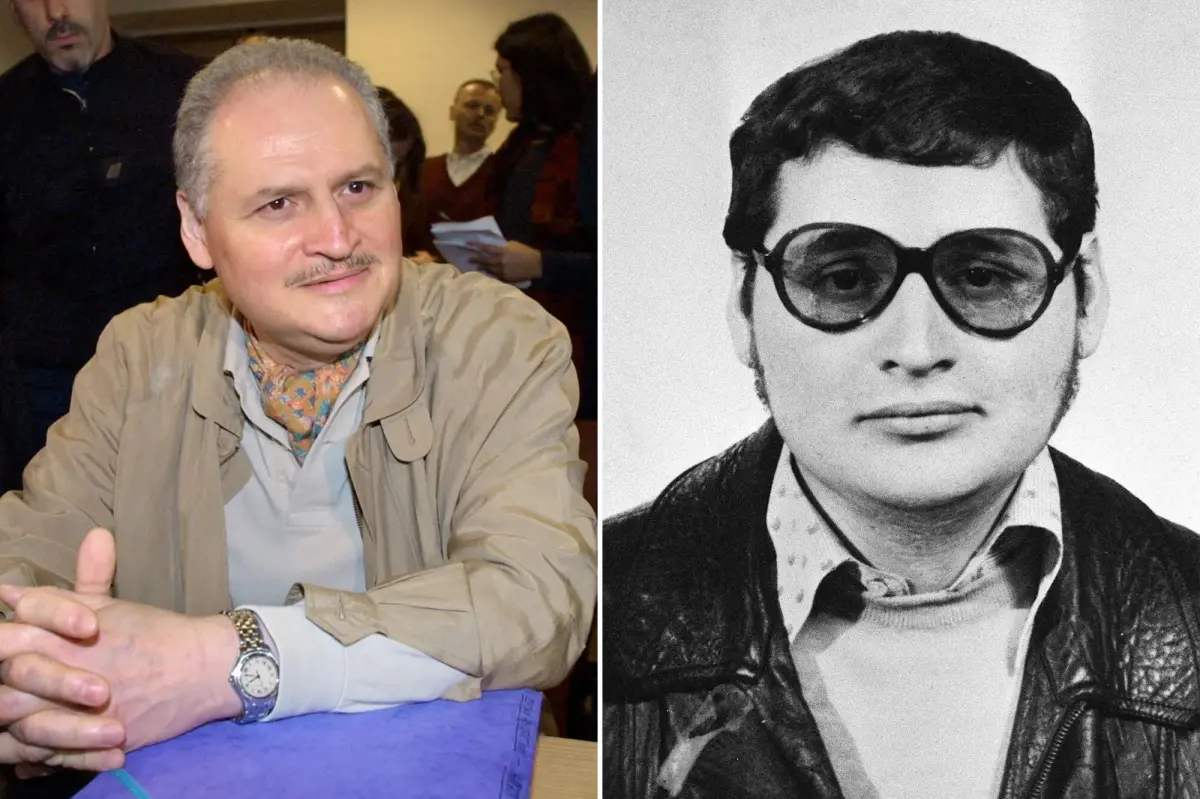
The snow fell thick and silent over Vienna on the Sunday before Christmas in 1975, muffling the city in a hush that felt almost holy. Just before 11:30 in the morning, a red tram hissed to a stop outside the headquarters of OPEC, the global oil cartel that controlled the world’s most precious resource. Six figures stepped off, their long coats heavy, their sports bags bulging not with holiday gifts but with submachine guns. Journalists loitering outside assumed they were delegates from some minor oil nation, here for the high-stakes meetings inside. Then the guns came out, and the quiet was shattered. They shot their way up the stairs, killed three people, and seized 62 hostages, including the oil ministers of nearly every petroleum-producing country on Earth. At the center of the chaos stood their leader, a young man with a handsome face, a leather jacket, and a black beret tilted at a jaunty angle. He had just pressed a pistol against a wounded Libyan economist and pulled the trigger. Now he laid down his weapon, pulled out a pack of cigarettes, and passed them around to his terrified captives with a warm, disarming smile. The ice-cold killer had become the gracious host. “I am the famous Carlos!” he announced, as if the world had been waiting for him. Almost no one knew the name, but that would not be true for long.
The man who would become Carlos the Jackal was born Ilich Ramírez Sánchez in Venezuela in 1949, into a family so devoted to revolutionary communism that his father named his three sons after Vladimir Ilyich Lenin: Vladimir, Ilich, and Lenin. The middle boy carried the patronymic as if it were a birthright to greatness, but his early life was a mess of privilege and failure. He was expelled from university, left a pregnant girlfriend behind, and disappointed his exacting father. At 20, in July 1970, he turned up unannounced in Beirut and asked to join the Popular Front for the Liberation of Palestine, then the most feared militant group in the Middle East. When his new handlers asked how he intended to fight the enemy, the pudgy rich kid seemed genuinely puzzled. “With weapons!” he declared. They gave him the Arabic name Salim and sent him to a Jordanian training camp, where his unlikely gifts emerged. It was not ideology or tactical brilliance that set him apart. It was pure, almost theatrical confidence. As the journalist Joby Warrick writes in his new book “The Jackal,” Ilich could carry himself as though he owned the world, even when half the planet was chasing him. He strolled through checkpoints in tailor-made raincoats and silk neckties, doused in baby powder, hiding guns in the flats of the girlfriends he juggled across London and Paris. He was not a soldier in any traditional sense. He was a performance artist of violence, and the stage was just beginning to take shape.
The name that made him famous came almost by accident. In June 1975, French intelligence officers tracked him to a farewell party in Paris’s Latin Quarter, tipped off by one of his own captured handlers. When they knocked, Carlos did not surrender. He pulled a pistol and shot four men in seconds, killing two detectives and the man who had betrayed him, then vaulted a 12-foot wall and disappeared into the crowds at a nearby sidewalk café. Police found his abandoned suitcase, containing a fake Peruvian passport in the name of Carlos Martinez. Days later, a man in London opened a briefcase that Carlos had left behind in a girlfriend’s apartment. Inside were pistols, grenades, explosives, and what looked like a list of targets. The man, who was dating one of Carlos’s former girlfriends, took the case to The Guardian. A reporter mentioned, almost as a throwaway detail, that the briefcase had been stored beside a bookshelf holding Frederick Forsyth’s assassination thriller “The Day of the Jackal.” The book belonged to someone else, and there was no evidence Carlos had ever read it. It didn’t matter. Within 24 hours, the British tabloids had transformed that trivial detail into a headline, and the headline into an identity. Carlos the Jackal was born, a glamorous anti-hero for an age that was beginning to understand what celebrity really meant. Carlos found the nickname flattering. “The jackal is a very nice little animal, you know?” he later told a French journalist. “It’s a predator, but very pretty.” He was thrilled to have been cast in a story larger than himself, even if he had not chosen the script.
The OPEC raid was his coming-out party, but it was also a sign of how delusional he had become. The attack was dreamed up by Libya’s dictator, Moammar Khadafy, as revenge against rival oil producers, and Carlos happily took the assignment. The Austrian government caved within hours, handing the terrorists a jet and safe passage to Algiers with dozens of VIP hostages on board. Some hostages asked for his autograph. To a young secretary sobbing in fear, he murmured, “You can go home. You are too beautiful to die.” The Saudi and Iranian oil ministers, marked for execution, walked off the plane alive after a ransom was paid, reportedly $50 million, most of which Carlos kept for himself. But his boss, the PFLP’s ruthless operations chief Wadi Haddad, was not amused. He summoned Carlos to Yemen and put him before a tribunal. “You are an executioner, and not a movie star!” Haddad thundered, and banished him. Yet Carlos seemed incapable of understanding the difference. He had tasted applause, and he liked it. For the next two decades, he drifted through the underworld as a mercenary for Middle Eastern dictators, bombing trains and streets through proxies, living lavishly under state protection in East Berlin, Budapest, and Damascus. He married a young militant, had children, and kept playing the role of revolutionary hero, but the ideology grew thinner and thinner. At his core, as Warrick concludes, Carlos was not a political visionary but a criminal narcissist, a man who killed without feeling and often without any clear reason except the pleasure of power.
By 1994, the Cold War had ended, his patrons had vanished, and Carlos the Jackal was hiding in Khartoum, a city where the government publicly denied he existed while privately sheltering him. He was drinking heavily, chasing women, and growing tired. The CIA had tracked him down, aided by a mole inside his own gang, a disillusioned Swiss militant who earned $3,000 a month under the code name FDBONUS/1. But catching Carlos would still have been almost impossible if fate had not delivered a strange, almost absurd opportunity. The 44-year-old terrorist was suffering from a varicocele, essentially a varicose vein in the scrotum, and his young wife wanted a baby. On August 13, 1994, he checked into a Khartoum hospital for corrective surgery. The doctors would sedate him, and for a few crucial hours, Warrick writes, Carlos the Jackal would not be himself. Hours later, groggy, unarmed, wearing only pajamas and a bandage, the man who once escaped on a passenger jet was carried by Sudanese commandos onto a waiting plane, hooded and handcuffed, and flown to Paris. When he realized he had landed in France rather than Israel or Saudi Arabia, he felt relief, not fear. “I was so happy. Prison, no problem,” he later told Warrick. “I am alive.” It was perhaps the most human moment in his entire adult life, a glimpse of the frightened, fallible person hidden beneath all the swagger and bloodshed.
Today, Carlos the Jackal is prisoner No. 11939 at Poissy Central Prison outside Paris, serving three life sentences. He is an old man now, 75 years old and still performing. When Warrick visited him in March 2025, Carlos complimented a young prison official on her hair and asked, with a sly smile, “Are you a real blonde?” He seemed to take pleasure in the game, in the way guards greeted him with cries of “Monsieur Carlos!” and the way he could still make an entrance. But for all his charm, he showed no remorse, none at all. He told Warrick he had killed 83 people by his own hand and that another thousand had died on his orders, and he offered these numbers not as a confession but as a résumé. His only regret, he said, was leaving witnesses. “In Sudan I should have shot those bastards,” he said. “I wouldn’t be in prison.” There is something haunting about that final statement, not because it is vicious, but because it is so utterly empty. The man who once dreamed of being the world’s most famous revolutionary ended up with nothing but a legend and a prison cell. The terrorism that made his name was real, the victims were real, but the ideology was always a costume. Strip away the cigarettes, the silk scarves, the revolutionary speeches, and what remains is a boy who wanted to be somebody fearing he was nobody, who turned mass murder into a performance and then found that the audience had finally moved on. The Jackal was never a jackal at all. He was a mirror held up to an age of violence and celebrity, and in the end, all the glamour faded into snow and silence, leaving only a tired old man behind a table, still asking for applause.