





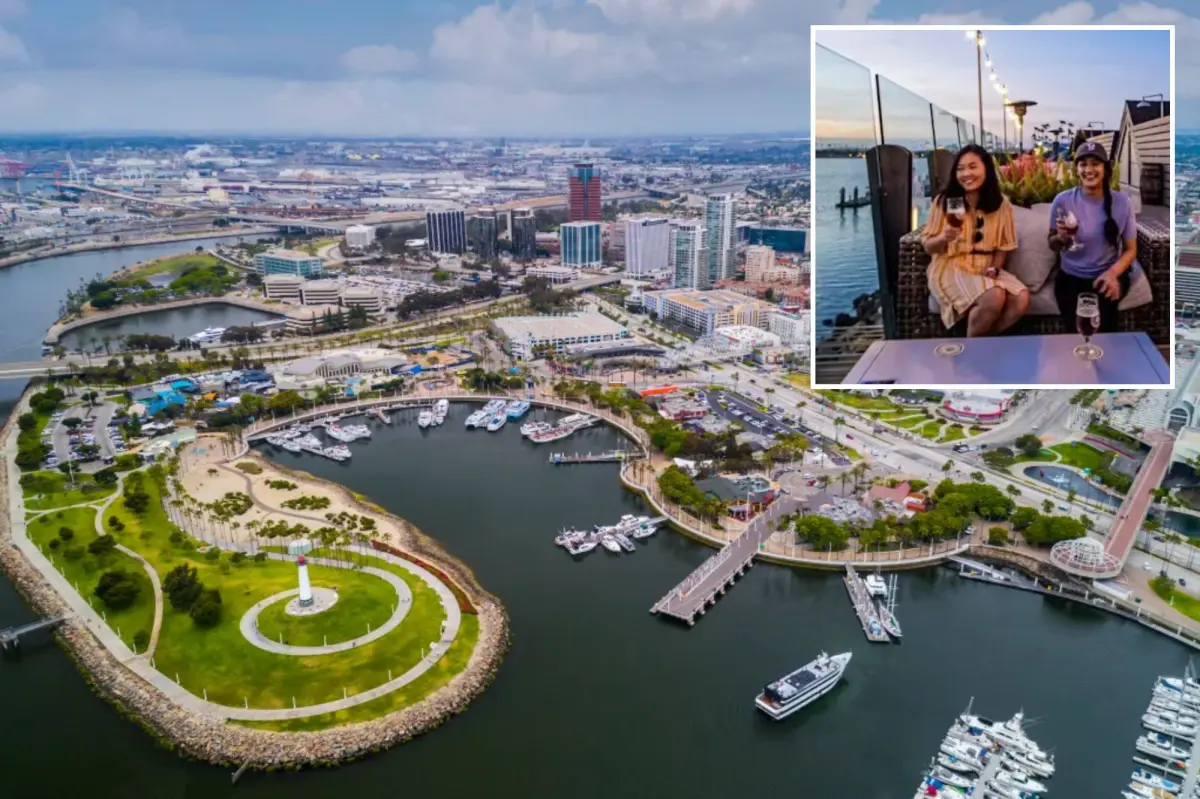
There is a quiet, universal magic in the simple act of sitting beneath an open sky, feeling the gentle warmth of the afternoon sun on your shoulders, and sharing a cold drink with friends as the ambient hum of a bustling city drifts by in the background. In our increasingly digital, hyper-isolated modern landscape, the physical spaces where we can gather without pretense—often referred to by sociologists as “third places”—have become absolutely essential to our collective mental health, happiness, and sense of belonging. For those living in the sprawling, sun-drenched expanse of Southern California, the quest for the perfect outdoor spot often points toward the region’s legendary coastline. However, a groundbreaking new study by Maxwell Social, a private membership club and innovative event venue curator, has completely shaken up our understanding of where outdoor socializing truly thrives, revealing a fascinating and highly unexpected division between neighboring communities. While the glamorous, star-studded metropolis of Los Angeles historically carries the reputation of an outdoor paradise, the study ranked LA at the absolute bottom of its nationwide index, exposing a frustrating lack of accessible outdoor social infrastructure. In stark contrast, its historic, maritime neighbor to the south, Long Beach, proudly seized the number-one spot in the entire nation, celebrated for its breezy ocean patios, unpretentious craft breweries, and welcoming public spaces. This dramatic juxtaposition highlights a profound truth about modern urban design: beautiful weather is merely a backdrop, and it requires intentional, human-centered urban planning, pedestrian-friendly streets, and a vibrant community spirit to transform a city’s climate into a truly active, open-air social sanctuary where people can naturally connect, share stories, and flourish.
To demystify the subtle ingredients that make a city truly great for outdoor gatherings, Maxwell Social conducted a rigorous, data-driven investigation that looked far beyond superficial aesthetics or warm weather averages. The research team analyzed the forty-five most populous urban areas across the United States, utilizing the U.S. Census Bureau’s highly detailed Vintage 2025 population estimates to establish a fair, accurate, and proportional baseline. Rather than simply counting the total number of venues in massive cities, which would naturally bias the results toward giant concrete jungles, the study created a sophisticated per-capita index that evaluated five critical metrics per 100,000 residents. Researchers painstakingly combed through Google Maps to catalog the density of welcoming restaurant patios and soaring rooftop bars, while simultaneously analyzing Yelp data to map out the distribution of casual beer gardens and local craft breweries where neighborhoods naturally gather. Recognizing that physical spaces are only half of the equation, they also captured the digital pulse of local desires by analyzing search engine data from 2025 to 2026, measuring how frequently residents typed hopeful phrases like “patios near me,” “outdoor bars,” “rooftop bars,” “beer gardens,” and “outdoor restaurants” into their devices. By blending these concrete, physical venue densities with active consumer search volume, the study established a comprehensive, multi-dimensional metric that accurately reflects both the physical availability of outdoor social spaces and the passionate, daily demand of the citizens who long to occupy them.
The resulting ranking painted a highly colorful and surprising portrait of American geography, proving that the most vibrant hubs for open-air camaraderie are rarely the massive, hyper-marketed coastal playgrounds we might expect. Following closely behind the coastal paradise of Long Beach, the artistic Northern California city of Oakland claimed the second-place spot, earning high praise for its exceptional density of community-focused breweries and sun-dappled patios that perfectly embrace the Bay Area’s cool, breezy climate. Third place was proudly claimed by Atlanta, Georgia, a city where a lush, sweeping tree canopy meets an absolute explosion of elevated rooftop bars and a population deeply enthusiastic about reclaiming their weekends under the Southern sky. Perhaps the most intriguing revelations of the study emerged in the highly localized victories of unexpected mid-sized cities. For instance, Virginia Beach, Virginia, Mesa, Arizona, and Colorado Springs, Colorado, outperformed some of the nation’s largest metropolises in patio availability, creating exceptionally inviting, pedestrian-friendly dining zones. Even more astonishingly, when it came to elevated nightlife, the desert city of Mesa and the historically industrious giant of Detroit, Michigan, led the entire nation in rooftop bars per capita, boasting a remarkable 21.6 and 17.2 sky-high venues per 100,000 residents, respectively. These fascinating architectural triumphs demonstrate that even in regions characterized by intense summer desert heat or freezing Midwestern winters, creative local business owners and passionate residents will always find innovative ways to rise above the asphalt and celebrate life together under the stars.
To complement this rigorous mathematical indexing, Maxwell Social sought to capture the living, breathing human element of urban socialization by surveying one thousand diverse Americans living across these major metropolitan areas. The feedback they gathered revealed a deeply poignant and widespread yearning for authentic connection, juxtaposed against a highly frustrating reality of modern civic life: while the public is practically starving for more opportunities to spend quality time outdoors, our modern cities are consistently failing to meet this basic human need. Nearly one in five respondents—approximately eighteen percent—shared the disheartening experience of wanting to gather outside with friends but being utterly unable to find a single space that was high-quality, legally accessible, or physically comfortable. Furthermore, nineteen percent of those surveyed reported the stressful experience of being asked to leave, ticketed, or told to quiet down by local authorities or property managers while trying to peacefully socialize outdoors within the past year. Another fifteen percent of Americans expressed a firm belief that their home cities simply do not possess enough outdoor gathering spaces of any kind, revealing a systemic deficit in urban environments that prioritize commercial parking lots and high-density, closed-door real estate over the fundamental human necessity for shared, open-air green spaces and community plazas.
This persistent deficit has created a fascinating psychological divide between where Americans perceive the ultimate outdoor social lifestyle to exist and where it actually thrives on a daily basis. When asked to identify the absolute capital of casual, open-air gatherings, sixteen percent of survey respondents eagerly crowned New York City, with Los Angeles, Miami, and San Diego trailing closely behind at eleven percent each. Yet, as the analytical data proved, the sprawling layout of Los Angeles actually suffocates spontaneous social life, forcing its massive population to compete for a surprisingly sparse selection of walkable patios and public courtyards. This geographic frustration is felt most acutely by younger generations, particularly Gen Z, who are actively spearheading a cultural shift away from traditional, expensive indoor venues toward casual, inclusive, and sober-friendly outdoor gatherings. A staggering forty-one percent of Gen Z respondents stated that they would gladly leave their homes and socialize far more often if their local communities simply provided better, safer, and more accessible outdoor social spaces. For these young adults, who spent formative years navigating the isolation of a digital world, the lack of vibrant, physical outdoor spaces isn’t just an urban design oversight—it is a direct and painful barrier to building the real-world friendships, support systems, and community networks that define a healthy, happy transition into adulthood.
When local municipalities fail to provide these essential backdrops for human connection, everyday citizens are increasingly taking matters into their own hands, fueling a major national trend that can only be described as “outdoor vibe tourism.” The survey revealed that more than one in four Americans—a substantial twenty-eight percent—have literally packed their bags and traveled to an entirely different city simply because they knew that casual, outdoor social drinking, dining, and walking would be easier, more accepted, and more structurally supported than it is in their highly restrictive home towns. Unsurprisingly, historic cultural hubs like New Orleans and Las Vegas topped the list of popular destinations for these open-air escapes, where relaxed open-container policies, sprawling pedestrian plazas, and a deeply ingrained heritage of public celebration make natural human interaction feel completely effortless. This ongoing migration of social capital sends a powerful, undeniable message to city planners, real estate developers, and local governments across the country: the deep human desire to gather beneath the open sky is not a luxury, but a fundamental biological and social drive that will always seek an outlet. By investing in wider, shaded sidewalks, welcoming public plazas, simplified patio permitting, and green, communal beer gardens, our cities can begin to heal the modern epidemic of loneliness, proving that the ultimate wealth of any community is measured not by the heights of its concrete skyscrapers, but by the warmth of the laughter echoing across its sunny, shared patios.