





The deep-seated desire to hold onto physical pieces of our shared history is a fundamental human instinct, acting as a way to anchor ourselves to fleeting moments that once brought us collective joy, inspiration, and wonder. This beautiful truth was on spectacular display during the recent Hollywood & Entertainment Signature Auction hosted by the Dallas-based Heritage Auctions, an event that ultimately amassed a breathtaking total of $14,098,033 (approximately £10,996,466). Far from being a mere sterile exchange of high-priced goods among wealthy investors, this event functioned as a vibrant, deeply emotional celebration of modern nostalgia, where passionately contested bidding wars transformed simple movie props and hand-written drafts into priceless cultural relics. For those of us looking on from the sidelines, these high-stakes events offer a fascinating, deeply human look at our own collective psychology, highlighting how the everyday ephemera of pop culture—the items we watched on silver screens as children, or listened to on vinyl records in our bedrooms—gradually transform into the sacred treasures of our modern-day folklore. As bidding paddles rose and fell in the packed auction room, the atmosphere felt less like a cold corporate transaction and more like a warm, celebratory gathering of historical guardians, all dedicated to preserving the physical touchstones of the stories that have shaped our global culture and personal identities over the last half-century. It proved that the items that make us laugh, cry, and dream possess an enduring, priceless value that far exceeds their physical components, serving as tangible links to our youth.
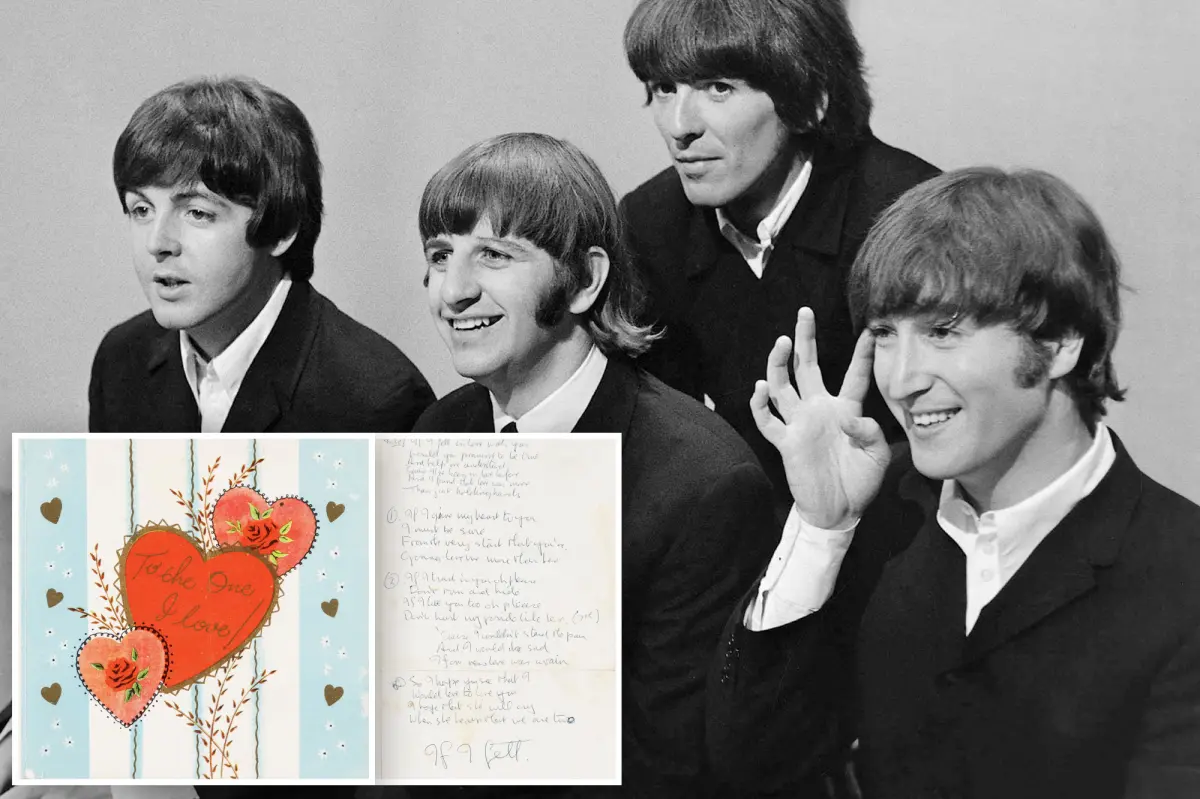
At the absolute emotional peak of this massive auction was an incredibly intimate piece of musical and cultural history: a simple, unassuming Valentine’s Day card that bore the handwritten lyrics to the Beatles’ early classic ballad “If I Fell,” written by the hand of John Lennon himself. This stunning piece of music history ended up selling for an extraordinary $656,250 (£511,875), a price tag that reflects the immense, almost sacred cultural weight of the specific moment in time when it was created. It was the frantic, electric winter of 1964, a pivotal era when Beatlemania was sweeping across a wounded post-Kennedy America like a tidal wave of pure energy, joy, and youthful hope. Lennon scribbled these legendary, vulnerable lyrics while the band was staying in New York City, preparing for their historic, record-shattering debut on The Ed Sullivan Show—an event that would forever change the course of music history and television broadcasting. To gaze upon these handwritten lines on the back of a vintage sweetheart card is to step directly into a time machine, placing us right inside the chaotic energy of that historic New York hotel suite, feeling the raw excitement of a young working-class genius on the absolute cusp of global immortality. The powerful contrast between the tender, romantic vulnerability of the song’s lyrics and the casual, disposable nature of the Valentine’s card reminds us of the beautiful, unpolished humanity operating behind the grand legend of the Beatles, showing us that even the anthems that defined a generation began as quiet, intimate thoughts whispered onto whatever scrap of paper happened to be within arm’s reach of a young man caught up in the whirlwind of sudden, monumental fame.
Beyond the realm of rock-and-roll royalty, the auction also shone a bright, affectionate spotlight on the lighter, more whimsical side of our cinematic heritage, proving that our love for humor, comfort, and eccentricity is just as strong as our reverence for musical genius. Among the most delightful and surprising highlights of the event was the sale of “Otto the Autopilot,” the beloved, goofy inflatable co-pilot from the legendary 1980 spoof film Airplane!, which fetched an impressive $200,000 (£156,000) from an enthusiastic bidder. Seeing Otto, a prop that once brought tears of helpless laughter to millions worldwide, treated with such lofty financial respect highlights how deeply we prize the absurdity that brings levity to our lives. This affection for cult classics was further demonstrated when two of the famous “hero” rugs from the Coen brothers’ cinematic masterpiece, The Big Lebowski, went up for bidding. Longtime fans of Jeff Bridges’ iconic character, “The Dude,” know all too well that his rug was not merely a background prop, but the very catalyst for the film’s entire chaotic, hilarious plot—it was, after all, the legendary rug that “really tied the room together.” Bidders fought with fierce determination to secure these cultural textile artifacts, with one rug selling for $350,000 (£273,000) and the other commanding an even higher $375,000 (£292,500), proving that even the most laid-back, anti-establishment icons can leave behind a heritage worth a king’s ransom. Similarly, the magical, bittersweet innocence of childhood was summoned into the auction house with the sale of the iconic chocolate-brown top hat worn by Gene Wilder in the 1971 fantasy classic Willy Wonka and the Chocolate Factory. Selling for a sweet $350,000 (£273,000), this beautifully preserved velvet hat stands as an eternal monument to Wilder’s brilliant performance, which masterfully balanced a sense of eccentric, slightly dangerous mystery with a warm, open-hearted invitation to pure imagination.
For fans of high-octane action, speculative science fiction, and sweeping fantasy, the auction offered some of the most thrilling and iconic artifacts ever to grace the screen, seamlessly bridging the gap between fantasy and reality. The pioneers at Ripley’s Believe It or Not! World Entertainment recognized this cultural magic and successfully acquired two legendary pieces of cinematic technology: the highly coveted hoverboards used by Michael J. Fox’s character, Marty McFly, in the beloved sequel Back to the Future Part II. One of the boards, utilized specifically for the complex special effects flying sequences, sold for a staggering $125,000 (£97,500), while its counterpart, designed for the high-definition, detailed close-up shots, brought in $87,500 (£68,250)—both serving as nostalgic portals to a futuristic version of 2015 that fans across the globe still wish they could actually experience. The energy of the room then shifted from nostalgic retro-futurism to the majestic, dark fantasy saga of Westeros with the sale of Daenerys Targaryen’s signature dragon eggs and their beautifully carved chest from the HBO cultural phenomenon Game of Thrones. These exquisite, hand-crafted props, which once symbolized the literal and figurative rebirth of the “Mother of Dragons,” commanded an incredible $312,500 (£243,750), encapsulating the monumental scale, ambition, and emotional intensity of a television series that defined a decade of global media. Meanwhile, lovers of classic American cinema and tough-as-nails protagonists were drawn to the legendary .44 Magnum revolver held by Clint Eastwood’s iconic character, Harry Callahan, in the Dirty Harry action franchise. Selling for $206,250 (£160,875), this piece of cold, machined steel represents far more than just a prop weapon; it is the physical embodiment of the rugged, morally complex American antihero, the ultimate vessel through which Eastwood delivered that unforgettable, grin-inducing cinematic warning: “Go ahead, make my day.”
Reflecting on the extraordinary, record-breaking success of the entire multi-million-dollar event, Joe Maddalena, the Executive Vice President of Heritage Auctions, spoke eloquently about the deep-seated emotional driving forces behind these massive sales, highlighting the intense passion that collectors harbor for these historical landmarks. Maddalena pointed out that the incredibly diverse artifacts sold during this auction are far more than just structural pieces of wood, paper, metal, or painted fiberglass; they are the physical manifestations of our modern-day mythology. In our contemporary world, where traditional folklore and shared community tales have largely faded, we look directly to the silver screen, television, and radio waves to find our heroes, our life lessons, and our shared cultural bonds, making these precious props the modern equivalent of ancient holy relics. Maddalena noted that whether it is the specific weapon that represents the fierce justice of a beloved action franchise, the delicate, ink-stained paper upon which a visionary musician poured his heart to create a generation-defining song, or the promotional materials for a landmark cinematic achievement, these objects offer fans a rare, breathtaking opportunity to hold a piece of history in their hands. They serve as a vital, touching bridge that connects the intensely private, emotional experience of a fan enjoying a piece of art in the quiet of their living room with the vast, collaborative genius of the visual artists, actors, and directors who brought those magnificent stories to life.
In the end, the staggering multi-million-dollar success of this auction serves as a beautiful, heartwarming testament to the enduring power of human storytelling and our collective, stubborn refusal to let the magic of our past fade away into the shadows of obscurity. As these historic, cherished items transition from the spotlight of the auction stage into their new homes within private collections and public museums around the world, they will undoubtedly continue to spark deep conversations, evoke powerful waves of nostalgia, and keep the spirits of their respective eras vibrantly alive for generations to come. They remind us all that while the human actors may age, the brilliant musicians may pass on, and the film studios may change hands, the art they worked so hard to create remains completely immortal, anchored forever by the tangible, physical items they touched and created during their creative process. These artifacts act as precious mirrors reflecting who we were when we first encountered them—capturing our youthful dreams, our deep belly laughs, and our child-like sense of unfiltered awe. By dedicating ourselves to preserving these objects, we are not merely hoarding expensive pop culture memorabilia; we are actively safeguarding the emotional milestones of our shared human journey, ensuring that future generations can look upon a beat-up Valentine’s card or a whimsical top hat and feel the exact same spark of wonder that we did. Thus, the vast sums of money spent in Dallas were not simply financial investments, but profound acts of love, preservation, and cultural stewardship, guaranteeing that the stories that shaped our world will continue to inspire, comfort, and unite humanity for many decades to come.