





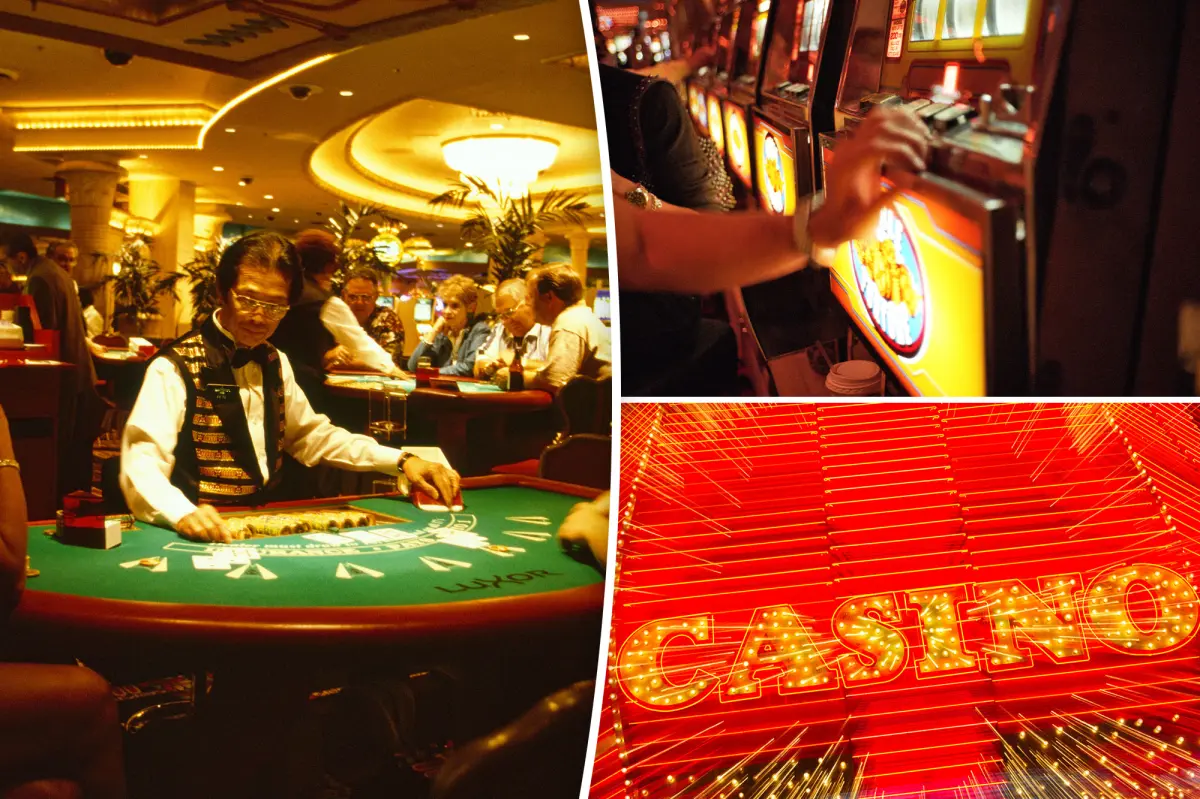
Las Vegas, maybe? That was the question hanging over the city a year ago, after a widely reported tourism slump made Sin City seem less like a hot destination and more like a cautionary tale. But the latest numbers are telling a different story, and it’s a story that anyone who loves a good old-fashioned comeback can get behind. According to new data from travel provider Priceline, Las Vegas has surged to the top of the list for most searched destinations in the country this month, measured year-over-year. That means travelers are actively hunting for Las Vegas trips more than they are hunting for trips to anywhere else, and that includes Orlando and New York City, two destinations that usually dominate these kinds of rankings. Las Vegas beating those two isn’t just a statistical blip; it’s a sign that the city’s appeal is still very much alive. For a place that has been through a stretch of bad press, with stories about declining visitor numbers, expensive buffets, and general grumbling, the search data feels like a breath of fresh desert air. Seattle, another Western city that has faced its share of negative headlines, also showed up at No. 5, and even Portland, a city that has been struggling economically and socially, is currently one of the top five cities in the nation for hotel values. If you’re looking for a narrative, it’s this: the West is calling travelers back, and Las Vegas, as usual, is leading the charge. The city’s shimmering lights, world-class shows, and the ever-present possibility of a lucky streak have always been powerful draws, but after a year like the last one, it’s reassuring to see that the world hasn’t forgotten about a place that has spent decades convincing us it’s the epicenter of fun. Of course, search interest is just the beginning, but for a city that relies on attention, it’s a very good beginning.
The road back hasn’t been smooth, and the numbers bear that out. In July of last year, the Las Vegas Convention and Visitors Authority reported that visitor volume had fallen 12% compared with the previous year. That was a huge, alarming drop, the kind of statistic that leads to breathless stories about the end of an era. But fast forward to this July, and the picture is very different. Visitor numbers crept back up by 2.7% year-over-year. That’s not a roaring recovery, but it’s a real improvement, and for a city that was hurting, even modest gains feel like reason to exhale. Hotel performance has also been ticking upward. Occupancy reached 77.2%, a 1.1 percentage point improvement over the same period last year. That might not sound like a lot, but in Las Vegas, occupancy rates are everything. Empty rooms mean empty casinos, empty restaurants, empty shows. Every percentage point represents thousands of travelers who decided to spend their money in the desert. There are still some weak spots, though. Convention attendance, which is a major driver of the city’s economy, fell 5.6% compared to the same time last year. That’s a reminder that business travel, one of Las Vegas’s most important revenue streams, hasn’t fully bounced back. Conventions bring in a different kind of visitor, one who spends on hotels, meals, entertainment, and maybe a little gambling after the meetings are over. Without that corporate crowd, Las Vegas is still running at less than full power. But the overall trend is positive, and the fact that leisure travel is filling some of the gap says a lot about the city’s enduring appeal. People still want to come to Las Vegas for weddings, birthdays, bachelor parties, and just plain old vacations. They’re not staying away; they’re just being a little more thoughtful about when and how they go. And as the numbers show, they’re starting to come back.
Now let’s talk about money, because that’s where a lot of the recent frustration has centered. Las Vegas has been widely described as overpriced, and anyone who has checked the price of a steak dinner or a hotel room on the Strip in the last couple of years might have felt a little sting. But here’s a genuinely good piece of news: in the most recent July data from the Bureau of Labor Statistics, the cost of leisure and hospitality in Las Vegas was down 1.1% from the year before. That’s not exactly a massive discount, but it’s a step in the right direction, especially in a city where prices had been rising faster than the temperature in July. Steve Hill, the CEO of the Las Vegas Convention and Visitors Authority, has been pushing back against the narrative that Las Vegas is no longer a good value. His argument is essentially that traffic jams, expensive souvenirs, and crowded lobbies are not the same as being ripped off. “The idea that generally Las Vegas is not a value, that it is overpriced, I don’t think our customers are doing math when they are concerned about a specific issue,” Hill said. “They’re expressing concern about that specific topic, that tends to then move into a narrative around Las Vegas is expensive or Las Vegas is not a value, but if you actually do the math on that, that’s not accurate.” In other words, people may complain about a $20 cocktail and then conclude that the entire city is a ripoff, even though the same trip might have included a cheap room, a reasonably priced buffet, and a free attraction like the Bellagio fountains. It’s not hard to understand the psychology. When you spend big money on a vacation, every little extra charge feels magnified. And Las Vegas, with its ability to separate you from your money in a thousand creative ways, is an easy target. But Hill’s point is worth considering: Las Vegas can still be a bargain if you know where to look. The city has always had a tiered economy, with luxury experiences and budget-friendly options existing side by side. The latest price data suggests that, for now, the value is starting to come back.
But there are other forces at play that have nothing to do with the quality of a shrimp cocktail. Steve Hill recently told the Nevada Economic Forum that rising costs, including jet fuel and retail gasoline, have been weighing on travel. When it costs more to fly and more to drive, a destination like Las Vegas, which is heavily dependent on visitors from California, Arizona, and other surrounding states, feels the pinch immediately. People still want to come; they just can’t always afford the trip. And there’s also an international dimension to the slump that doesn’t get as much attention as it should. Canada is Las Vegas’s largest source of international tourists, and visitors from Canada have dropped 30% since 2019, according to Hill. That’s a huge decline, and it’s not just a blip. It’s a reflection of everything from exchange rates and airfares to broader political and economic tensions between the two countries. “It is a big portion of what’s missing in Las Vegas right now,” Hill said. Canadian travelers are exactly the kind of visitors Las Vegas loves: they’re usually enthusiastic, they stay for several days, and they spend money across the entire resort ecosystem. When you lose 30% of that group, you feel it in the hotel lobbies, the showrooms, and the sportsbooks. The decline also highlights how vulnerable Las Vegas is to forces beyond its control. The city can build the most dazzling attractions and run the cleverest marketing campaigns, but it can’t control the price of jet fuel or the policy decisions that shape international travel. It can only adapt. And adapting is something Las Vegas has always been good at, whether that means shifting its marketing to domestic audiences, offering more incentives for border-state tourists, or finding new ways to keep the people who do show up spending a little longer. The recovery, in other words, is happening, but it’s happening in a world that still hasn’t quite returned to the pre-pandemic normal, and that’s especially true for international travel.
Another worrying trend involves the next generation. Visitors aged 21 to 29, a demographic that is crucial to Las Vegas’s long-term future, have decreased by more than 10% since 2022. That’s a hard number to ignore. Younger adults have always been part of the city’s DNA, the ones who arrive for their 21st birthday, blow a little money at the blackjack table, take a million photos, and come back later when they have more income. If those visitors are staying away in droves, it’s not just an immediate problem; it’s a warning sign for the next decade. There are plenty of theories about why this is happening. Younger travelers may be more interested in wellness, outdoor adventures, or boutique cities than in the smoky, crowded, over-the-top experience that Las Vegas has traditionally sold. They also carry more student debt and have less disposable income, and their definition of a vacation often doesn’t include spending $300 at a nightclub. But the city is not taking the decline lying down. One of the biggest bright spots in the current landscape is live entertainment, and the crown jewel of that is the Sphere. The massive, glowing orb opened a couple of years ago to a mix of awe and skepticism, but it has become an absolute machine. In 2025, the Sphere generated a spectacular $379 million in revenue, making it the highest-grossing entertainment venue in the world. That’s an extraordinary achievement. It’s not just a concert hall; it’s a visual and sensory experience that draws people who might otherwise skip a trip to Las Vegas. The Sphere has hosted some of the biggest names in music and has become an attraction in its own right, the kind of thing people post about on social media before they even walk through the doors. If Las Vegas can use that energy to attract a younger crowd, the future could still be very bright. The challenge is translating a single hot venue into a broader reason to visit, but if anyone can figure that out, it’s the city that built a pyramid, an Eiffel Tower, and a volcano in the middle of the desert.
At the end of the day, the story of Las Vegas right now is a story of mixed signals and patient optimism. The latest search data says people are dreaming about the city again. Hotel occupancy is up, visitor numbers are improving, and even the cost of a leisure trip is edging slightly downward. At the same time, convention attendance is still lagging, international visitors, especially from Canada, are still missing, and the city hasn’t figured out how to recapture the magic for young adults the way it once did. It would be easy to focus on the negatives, and plenty of people have done exactly that over the past year. But a city like Las Vegas doesn’t survive by ignoring its problems; it survives by outlasting them. The Strip is still there, bright and impossible to ignore, with its new attractions and old habits. The Sphere is pulling in crowds and revenue that would have seemed absurd even a decade ago. Hotels are filling up again, and the sound of slot machines, for better or worse, is filling the air. The truth is that Las Vegas has always been a place of highs and lows, of boom and bust, of wins and losses. It’s a city that understands better than most that you can’t hit a jackpot every time; you just have to keep playing. And that’s what it’s doing. So, Vegas, maybe? Yes, maybe. Maybe a little more every day. The numbers aren’t perfect, and the recovery isn’t complete, but the exit is clearly in sight. For travelers who have been waiting for the right moment to return, the moment is probably closer than they think. Whether you’re chasing a great show, a bargain steak, or just the inexplicable feeling that comes from standing in front of a giant volcano while it erupts on cue, Las Vegas is ready to welcome you back with open arms, a cold drink, and the quiet promise that the next visit might be the best one yet.