







The Digital Food Police
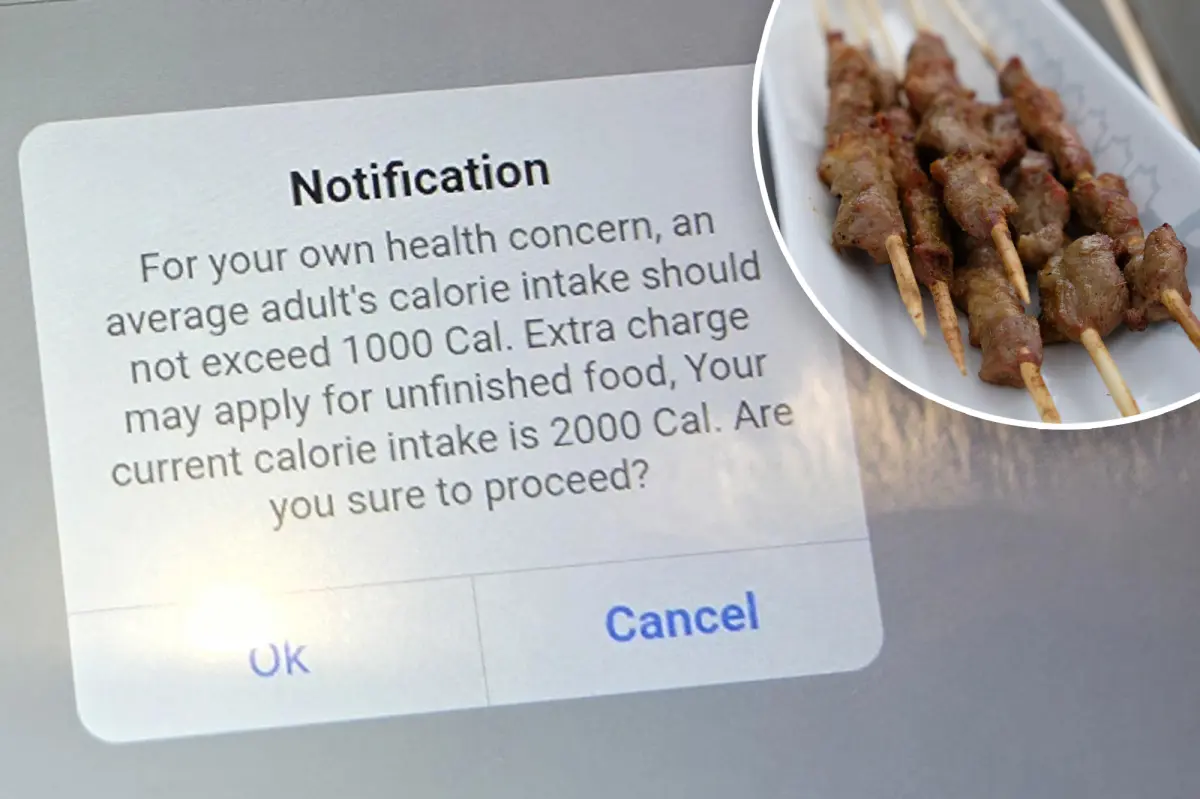
It was supposed to be a standard, indulgent night out at an all-you-can-eat sushi restaurant, but for one diner, the evening took an unexpectedly dystopian turn. After ordering three lamb skewers to top off their meal, the patron was ready to finalize their digital checkout when a glaring, unsolicited pop-up message flashed across the order screen. Rather than a simple confirmation, the screen offered a stern, paternalistic warning about their physical health. “For your own health concern, an average adult’s intake should not exceed 1,000 calories,” the digital prompt scolded, before pointing out that the customer’s total tally had reached 2,000 calories. The system then asked a rather loaded question: “Are you sure you want to proceed?” To make matters worse, a meticulous breakdown in the corner of the screen revealed that while the current order of lamb kebabs was a modest 240 calories, prior selections had already racked up 1,760 calories—a total the system highlighted was technically meant to feed two people. Shocked by the blatant judgment of a tablet, the diner snapped a photo and posted it to Reddit’s popular “Mildly Infuriating” forum, instantly igniting a massive online debate about technology, body autonomy, and the unwritten rules of dining out.
The Internet Reacts to the Robot Cop
The Reddit community wasted no time in leaping to the defense of the hungry diner, with many expressing absolute horror at the concept of a digital calorie-monitoring system gatekeeping an unlimited buffet. Critics labeled the system aggressively invasive, with one commenter describing the tech-heavy guilt trip as “so dystopian” and arguing that restaurants should simply “let people eat freely.” Another user took a more practical stand, joking, “I came here to eat, not to read,” while others used humor to mask their genuine disbelief, mocking the screen’s subtext as a robotic voice asking, “Hey fatty, you sure you wanna be so fat?” For many, the entire appeal of a bottomless banquet is the freedom to overindulge without judgment or constraint. To have a mechanical overseer calculate and critique your biological intake at a venue specifically designed for feast-style consumption felt like a betrayal of the hospitality industry’s core promise. One passionate critic went so far as to argue that consuming anything less than 2,000 to 3,000 calories at an all-you-can-eat establishment defeats the purpose of the experience entirely, questioning what people are even doing with their lives if they plan to count calories at a buffet.
The Realities of Caloric Diversity
The computerized warning also faced heavy scrutiny because of its flawed, overly simplistic scientific assumptions regarding human biology. The system’s assertion that a single sitting should cap at 1,000 calories ignores the incredibly diverse dietary needs of modern humans. According to official federal health guidelines, an average adult woman generally requires around 1,600 to 2,400 daily calories, while an adult man typically needs between 2,000 and 3,000 calories. However, these blanket baseline numbers are highly fluid and fluctuate dramatically depending on an individual’s height, weight, daily activity levels, metabolic rates, and hormonal health. A high-yield athlete, a manual laborer, or someone practicing intermittent fasting could easily and healthily consume 2,000 calories in a single sitting without issue. By programming a rigid, arbitrary 1,000-calorie threshold into the software, the restaurant chose to use a highly generalized health metric as an blunt instrument, functioning less like a helpful nutritional guide and more like an aggressive, public arbiter of personal health.
Defending the System and Combatting Waste
Despite the initial wave of outrage, a parallel conversation emerged on the thread defending the restaurant’s digital guardrails, with defenders arguing that the pop-up was never intended as a health lecture, but rather as a highly practical tool to combat massive food waste. Many experienced diners noted that this practice is highly common at all-you-can-eat establishments, particularly Asian-style hot pot, Korean barbecue, and sushi joints. Because these restaurants operate on a bottomless business model, customers frequently over-order in moments of sheer hunger, only to leave mountains of perfectly good food untouched. To curb this, many of these establishments have long enforced financial surcharges for excessive leftovers. Supporters of the system argued that the pop-up warning is simply an automated reminder of this policy, helping patrons keep track of their portion sizes before they accidentally trigger a hefty “unfinished food” fine. From this perspective, the technology is a helpful safety net, encouraging mindful ordering while protecting the restaurant’s bottom line and the environment.
The Global Crisis of Overproduction
To understand why a restaurant might resort to such extreme digital interventions, one must look at the staggering scale of the global food waste epidemic. Some commenters on the thread shared stories of visiting buffets in the United States, expressing shock at seeing fellow diners piling plates high with food only to take two bites and walk away. This careless behavior is a microcosm of a much larger, systemic crisis. According to tracking data from environmental resource groups like RTS, the United States alone wastes an estimated 120 billion pounds of food annually—more than any other nation on Earth. This shocking volume accounts for roughly 40 percent of the country’s entire food supply. When restaurants throw away millions of tons of edible meat, produce, and grains each year, the economic and environmental strain is immense. What seems like a minor, slightly annoying digital pop-up to a hungry customer is often a desperate, frontline attempt by restaurant owners to curb the financial losses and moral burden of disposing of tons of food waste every single week.
Systemic Waste Beyond the Customer’s Plate
However, as many online commentators quickly pointed out, focusing solely on the customer’s plate ignores the massive amount of waste generated by the corporate food industry itself. In a parallel viral Reddit thread, employees at Buc-ee’s—the incredibly popular Southern gas station and convenience store giant famous for its massive selection of hot foods—shared heartbreaking accounts of the sheer volume of food they are forced to discard daily. Employees working the late-night shift expressed deep frustration at spending hours hand-crafting fresh, high-quality brisket sandwiches and pastries, only to throw dozens of them directly into the trash at closing time to comply with strict corporate freshness policies. These workers detailed a cycle where they might discard 50 perfectly good sandwiches at the end of a shift, only to immediately prepare 150 more, knowing a massive percentage of those will meet the exact same fate. This systemic overproduction highlights a tragic irony: while individual diners are being digitally policed and shamed for wanting three extra lamb skewers, major food empires throw away millions of pounds of fresh food every night simply to keep their display cases looking fully stocked. Until the corporate landscape addresses its own institutional waste, digital warnings at the dinner table will continue to feel like an unfair displacement of blame onto the consumer.