





Keep a close eye on your mailbox and your bank accounts over the coming weeks, as a minor calendar anomaly is about to shift the delivery dates for several federal benefit distributions. Many households across the nation will soon notice their Supplemental Security Income (SSI) payments arriving slightly earlier than usual, a scheduling adjustment sparked by a standard operating policy at the Social Security Administration (SSA). Specifically, the SSA is scheduled to release August checks on Friday, July 31, rather than on the traditional first day of the new month. It is incredibly important for beneficiaries to understand that this early arrival is not a financial bonus, a legislative windfall, or an extra payment added to their annual total; rather, it is a proactive administrative adjustment designed to prevent any disruption in access to vital funds. By law and standard protocol, the federal government does not issue SSI payments on weekends or federally recognized holidays. Whenever the first day of a month falls on a Saturday, a Sunday, or a public holiday, the agency automatically bumps the distribution date up to the closest preceding business day. Because August 1 falls on a Saturday, the system naturally shifts the payment day to Friday, July 31. This safeguard ensures that vulnerable individuals are never left empty-handed over a weekend when financial institutions, physical bank branches, and support services are closed. This specific calendar quirk will manifest twice more before the end of the year, resulting in early deliveries in both October and December. The payment for November, which begins on a Sunday, will be advanced to Friday, October 30, and the January payment will arrive on Thursday, December 31, because New Year’s Day is a federal holiday. While receiving these funds ahead of schedule can provide a temporary sense of relief, financial advisors urge beneficiaries to practice disciplined budgeting, as an early check means a longer, more challenging wait until the subsequent payment cycle begins.
To fully appreciate the significance of these scheduling shifts, it is helpful to look at the deeply human mission behind the Supplemental Security Income program and understand who relies on these monthly distributions to survive. Established to provide a crucial baseline of financial security, SSI is a needs-based program designed to assist low-income individuals who are aged 65 or older, as well as adults and children living with severe, long-term physical or cognitive disabilities. Unlike standard Social Security retirement benefits, which are funded directly by payroll taxes paid throughout a worker’s career, SSI is funded through general U.S. Treasury revenues and targets those who have very little in the way of personal resources. The eligibility criteria set by the Social Security Administration are notoriously strict: applicants must be U.S. citizens, nationals, or fall under very specific, legally recognized non-citizen classes. Furthermore, individuals must demonstrate that their monthly income falls below a strictly defined federal threshold and that their total countable assets—including savings accounts, cash, and luxury investments—do not exceed $2,000 for an individual or $3,000 for a married couple living together. Navigating these stringent asset limits requires immense administrative diligence, as even minor changes in a household’s financial situation can trigger unexpected suspensions or reductions in benefits. For the millions of families who qualify, these regular monthly checks represent more than just government statistics; they are the fundamental safety nets that keep food in the pantry, pay for lifesavers like prescription medications, and protect households from the terrifying threat of sudden eviction or homelessness.
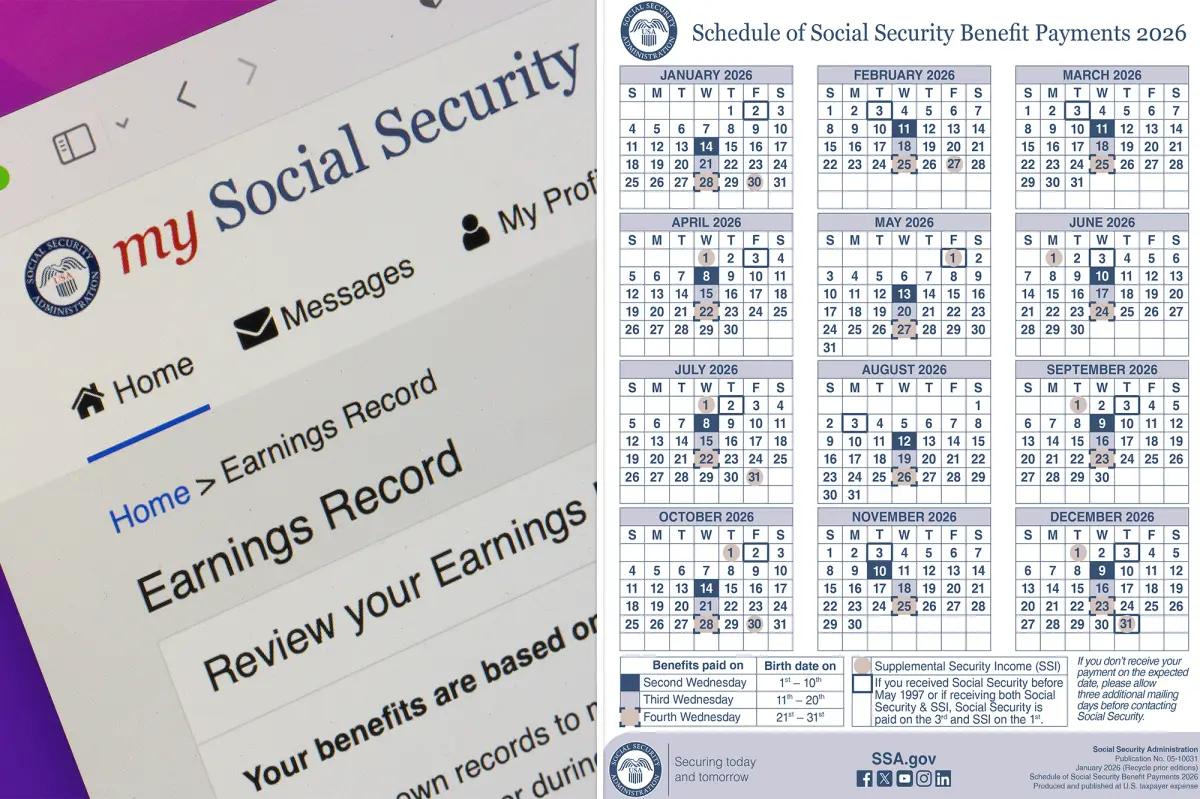
In contrast to the needs-based framework of SSI, traditional Social Security retirement benefits operate on an entirely different structure, reflecting a lifetime of professional dedication and economic contribution. Designed to replace a portion of a worker’s pre-retirement earnings, this program requires individuals to pay into the system during their active working years to secure monthly income further down the road. To earn eligibility for these retirement payouts, an individual must accumulate at least 40 “work credits,” a milestone that typically requires about ten years of steady, tax-paying employment. Once an eligible worker reaches the minimum age of 62, they can choose to begin drawing their benefits, though waiting until their designated Full Retirement Age or even delaying retirement up to age 70 results in permanently higher monthly checks. Rather than distributing all retirement checks on a single day and risking massive, systemic bottlenecks within the banking system, the Social Security Administration utilizes a highly organized, staggered payment system based entirely on a beneficiary’s birthdate. For individuals born between the 1st and the 10th of any given month, retirement checks are consistently distributed on the second Wednesday of every month. Those whose birthdays land between the 11th and the 20th can look forward to seeing their deposits hit their accounts on the third Wednesday, while individuals born between the 21st and the 31st will receive their payments on the fourth Wednesday. This predictable mid-week cycle helps retirees map out their monthly expenses and align their utility bills, mortgage payments, and grocery shopping trips with absolute precision.
To help you plan your household expenses and avoid any unexpected cash-flow gaps, it is highly beneficial to review the complete, concrete payment calendar for the remainder of the year. For those who receive Supplemental Security Income, the distribution timeline for the second half of the year features several shifts: the payment for August will land on Friday, July 31; September’s payment will arrive on Tuesday, September 1; October’s payment is scheduled for Thursday, October 1; November’s payment will arrive early on Friday, October 30; December’s payment will land on Tuesday, December 1; and the payment for January of the following year will be advanced to Thursday, December 31. This means that December is a “double-payment” month, which can easily trick the brain into feeling wealthier than usual during the peak of the holiday shopping season. However, financial counselors strongly advise against spending that late-December check on holiday gifts or luxuries, reminding families that the second check in December is actually the entire budget for January, and no additional SSI money will arrive to help pay for winter heating bills or food during the first month of the new year. Meanwhile, traditional retirees on Social Security retirement benefits will also see their Wednesday schedules proceed normally, with the one major exception occurring in November. Because Veterans Day falls on a Wednesday, the first retirement distribution of that month will be bumped up by one day to Tuesday, November 10, ensuring that veterans and retirees are not delayed in receiving their money. By printing out this schedule or marking these dates clearly on a kitchen calendar, households can visually organize their finances and confidently navigate the seasonal ebbs and flows of their income.
Beyond the logistical adjustments of the calendar, beneficiaries can find some genuine optimism in the upcoming projected boost to their monthly payouts, courtesy of the yearly Cost of Living Adjustment, commonly known as COLA. This critical financial mechanism is designed to act as an economic shield, protecting the purchasing power of seniors and disabled individuals from the quiet, wealth-eroding forces of inflation. The COLA is not a performance-based bonus or a political favor; it is an annual mathematical calculation built directly into federal law to ensure that fixed-income benefits rise in lockstep with the real-world expenses of everyday life, such as groceries, energy costs, and medical procedures. Current projections, analyzed closely by respected non-partisan advocacy organizations like the Senior Citizens League (TSCL), suggest that the upcoming COLA increase will likely hover around 3.8%. While a 3.8% increase might sound modest on paper, it represents an essential lifeline when applied directly to a household’s monthly budget, helping to offset the dramatic price hikes that have impacted supermarket shelves and utility bills. The Social Security Administration determines the final, official COLA rate using the Consumer Price Index for Urban Wage Earners and Clerical Workers (CPI-W), focusing specifically on the average percentage increase in inflation during the third quarter of the year—specifically July, August, and September. Once these key inflation numbers are gathered and calculated by the Department of Labor, the agency officially announces the new adjustment in mid-october, with the larger payments taking effect in the subsequent January cycles.
Ultimately, navigating the complex bureaucracies of federal benefit programs requires a healthy mixture of reliable information, proactive preparation, and emotional resilience. It is entirely normal to feel overwhelmed by the constant adjustments to payment schedules, shifting eligibility requirements, and the persistent stress of managing a household on a fixed budget. However, taking active control of your financial layout can dramatically reduce anxiety and restore a strong sense of personal independence. One of the single most effective ways to manage your benefits is to open and regularly check a personalized “my Social Security” account on the official government website. This secure, user-friendly digital portal allows you to instantly track the status of your upcoming payments, update your direct deposit routing numbers, print official benefit verification letters, and manage your tax withholdings without ever having to wait on hold for hours or visit a crowded local agency office in person. For individuals who do not have reliable internet access, reaching out directly to community senior centers, local disability advocacy groups, or trustworthy family members can provide the hands-on, face-to-face support needed to clarify complex letters or resolve payment issues. These benefit programs are not charitable handouts; they are hard-earned foundational rights and collective societal safety nets designed to ensure dignity, security, and peace of mind for you and your loved ones. By staying informed about early calendar dates, keeping a close eye on the annual COLA updates, and actively using the helpful resources available, you can confidently steer your household through any upcoming logistical or economic shifts.