






Nama-stay. It may sound like a yoga instructor’s playful pun, but in California’s most exclusive hotels, it has become a genuine philosophy of hospitality. Luxury hotels in the Golden State have always been known for their opulent lobbies, infinity pools, and champagne-soaked happy hours. But now, they are turning their attention inward, to something far more personal and increasingly precious: the well-being of their guests. At the Four Seasons Hotel Los Angeles at Beverly Hills, this shift has taken the form of an entire wellness floor, a dedicated sanctuary where the usual trappings of luxury have been reimagined through a lens of health and restoration. The rooms feature hypoallergenic hardwood flooring instead of plush carpets that might trap allergens, water-purification systems that make every sip feel pristine, and specially designed lighting that adapts to your circadian rhythm, gently nudging your body to wake up naturally and wind down at night. In the corner, neatly placed, are yoga mats and blocks, ready for a sunrise flow or a quiet evening stretch. The hotel first experimented with this concept back in 2017, when, as commercial director Jessica Tardif told Travel + Leisure, they “started conservatively.” But the experiment clearly resonated. Today, a coveted floor with easy access to the property’s spa, pool, and fitness center is entirely dedicated to the concept, and it comes with a price tag to match. On average, guests pay about $1,145 per night to sleep, stretch, and breathe in this wellness-focused space. It is a striking statement about where luxury travel is headed: not just indulgence for its own sake, but indulgence that makes you feel better, stronger, and more centered than when you arrived.
Down by the beach, the Santa Monica Proper Hotel is embracing the same trend with a distinctly Southern California twist. The hotel recently upgraded six of its standard rooms with features that blur the line between technology and tranquility, most notably the Eight Sleep mattress, a high-tech bed that actively regulates temperature throughout the night. Imagine slipping into bed and finding that the mattress has already warmed your side to a perfect, cozy degree, then gradually cooled the surface as you drift into deep sleep, adjusting again before dawn to help you wake up gently. It is sleep, optimized like a well-tuned engine. A night in one of these upgraded rooms will set you back an estimated $814, which is hardly what you would call a beach-breezy bargain. But the experience extends far beyond the bed. Booking one of these rooms also grants access to the exclusive Proper Club, a members-only lounge and spa where guests can take the plunge—quite literally—into cold plunges and sweat it out in saunas. For those not staying in a wellness room, a day pass to the Proper Club costs $295, a sign that the hotel knows exactly how much people value the ritual of hot and cold therapy. What is happening here is more than just a room upgrade. It is a rebranding of the hotel stay itself, where the room becomes a private wellness studio, the mattress becomes a recovery tool, and the spa becomes an extension of your evening routine. The line between a hotel room and a wellness retreat is dissolving, and guests seem more than willing to pay for it.
But perhaps the most ambitious expression of this movement is still unfolding near the shores of Lake Tahoe, at the upcoming Lake Tahoe Proper, a sister property located on the site of the legendary Cal Neva Resort. This is not just any piece of real estate. The Cal Neva was once a Hollywood haunt partially owned by Frank Sinatra and frequented by the likes of Marilyn Monroe, a place where the Rat Pack roamed, secrets were traded over cocktails, and the glittering world of mid-century celebrity collided with the rugged beauty of the Sierra Nevada. Now, that storied ground is being reborn as a wellness destination of almost staggering scale. The Lake Tahoe Proper will feature 50,000 square feet of space dedicated solely to health and well-being, including a full spa, an indoor pool, hydrotherapy experiences, and a year-round calendar of seasonal sports like skiing, hiking, boating, and mountain biking. For those who prefer their exercise with a side of friendly competition, the resort will also offer three padel courts and a free-standing Pickleball building. It is a remarkable juxtaposition: the ghosts of old Hollywood and the latest innovations in recovery and mindfulness, side by side. You can almost picture Monroe lounging by the pool in one era, and in another, a modern guest moving from a cold plunge to a padel match to a sound bath, all before lunch. The resort is betting that the same affluent travelers who once came for glamour and escapism are now searching for something more sustaining—a place where they can leave not just relaxed, but genuinely renewed, their bodies worked, their minds cleared, and their spirits lifted by the mountain air.
The trend, of course, is not confined to California. Across the Pacific, in Hawaii, Maui’s Grand Wailea debuted its own wellness rooms in 2024, and they come with a serious arsenal of high-end health equipment. Each room features an expensive air purifier, Therabody recovery tools, and white-noise sound machines designed to block out the world and lull you into deep, undisturbed rest. It is the kind of setup that makes you feel less like you are in a hotel and more like you are in a private health clinic, but one that happens to have spectacular ocean views. Depending on when you book, these wellness suites can cost anywhere from $750 to over $1,000 per night. That is a significant investment, but for many travelers, it is worth every penny. As J. P. Oliver, the managing director of the resort, told Travel + Leisure, “Well-being is becoming part of the core guest experience, rather than an added amenity.” That single sentence captures the seismic shift happening across the hospitality industry. It is no longer enough to offer a spa downstairs and a mini-fridge in the room. The room itself is expected to contribute to your health, to actively help you recover from jet lag, stress, and the constant hum of modern life. Every surface, every gadget, every carefully chosen sound is meant to lower your cortisol, improve your sleep, and send you home with more energy than you had when you arrived. In an age of burnout, that kind of promise is worth more than gold-plated faucets.
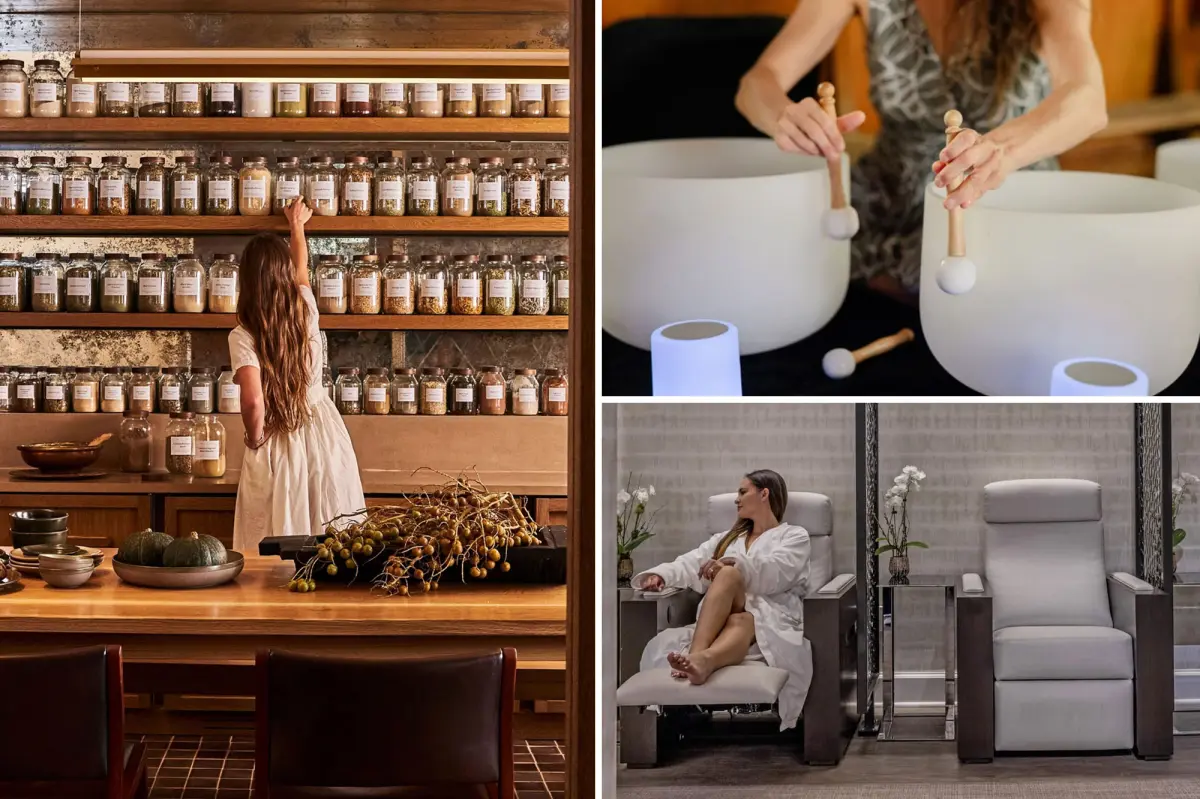
The wellness revolution is spreading far and wide, reaching hotels that have nothing to do with California sunshine or Hawaiian breezes. At Boston’s new Dagny hotel, every wellness room comes with its own Peloton bike, so guests can keep up with their training routines without ever leaving their floor. Meanwhile, JW Marriott has rolled out “Mindful Rooms & Suites” across its global portfolio, offering a thoughtful collection of tools designed to support both physical and mental well-being. These rooms come with yoga accessories, Pilates rings, dumbbells, and massage guns for the body, and for the mind, crystal singing bowls and take-home mindfulness journals. It may sound a little woo-woo to some, but it is part of a broader effort to make mindfulness accessible and integrated into the travel experience. As Fora travel advisor Alexandra Shea told Travel + Leisure, “Clients want to keep up their strength-training routines or maintain their sleep quality. Wellness-oriented room categories—or hotels with strong wellness infrastructure—often end up being the best fit.” That quote speaks to a fundamental change in what travelers expect from a hotel. It used to be that a hotel was a place to rest your head between adventures. Now, it is an active partner in your health journey. Whether you are a marathon runner who needs to stretch, a busy executive who needs to decompress, or just someone who wants to sleep better, these rooms are designed to meet you where you are. They are no longer afterthoughts or gimmicks; they are becoming the standard by which luxury is measured.
Ultimately, this movement reflects a deeper cultural shift in the way we think about travel, rest, and success. For decades, luxury meant excess—more space, more amenities, more indulgence. But today, the most coveted luxury is feeling good in your own skin. Travelers no longer want to escape their lives; they want to return to them better versions of themselves, with clearer heads, stronger bodies, and a deeper sense of calm. Hotels are responding because their guests are voting with their wallets, and the numbers are impossible to ignore. A night at the Four Seasons wellness floor costs around $1,145. A wellness room at Santa Monica Proper is roughly $814. A suite at Grand Wailea can climb past $1,000. And yet, these rooms are filling up, because for many people, health is the ultimate status symbol. The future of hospitality, then, is not just about thread counts, minibar selections, or even Michelin-starred restaurants. It is about heart rates, brain waves, sleep cycles, and the simple, profound pleasure of waking up after a long night and feeling genuinely rested. It is about walking into a room and feeling your shoulders drop, your breath deepen, and your mind quiet. That is the new luxury, and it is spreading from California to Hawaii to Boston to every corner of the globe. So go ahead, book that wellness suite, adjust that smart mattress, and strike a downward dog on your hypoallergenic hardwood floor. Nama-stay, indeed.