





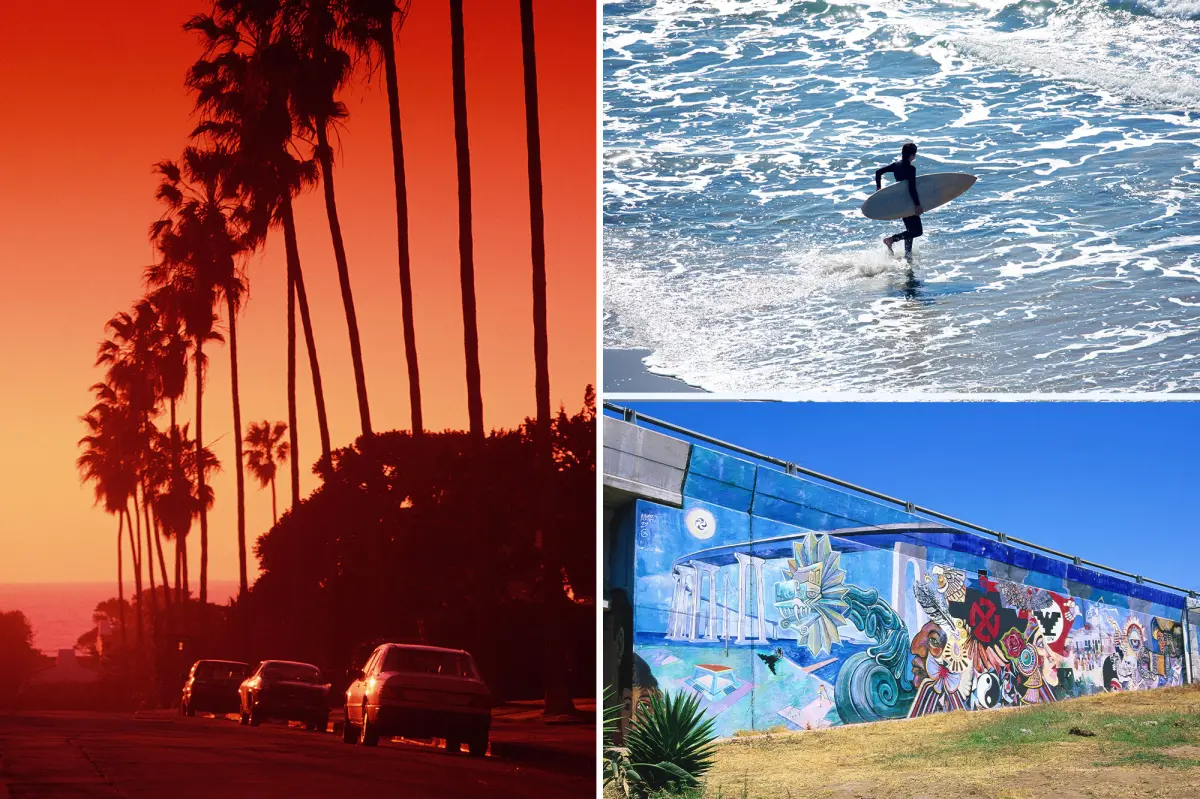
Just when the monthly grocery bill starts to feel like a second mortgage, and the price of gas seems to be its own private joke, news arrives that lands like a splash of cold seawater in the face: the cost of living can, in fact, go higher. For anyone who has ever daydreamed about trading fluorescent office light for ocean breezes, a newly released ranking of coastal real estate markets is a sobering reality check. The report, put together by FinanceBuzz, identifies seaside communities across the United States where property values are expected to keep climbing, and one painfully beautiful California city has made the cut. San Diego—sometimes lovingly, sometimes sarcastically called America’s Finest City—has been named among the beachy markets where home prices are poised to surge, even though the typical single-family home there already costs around a million dollars. That is not a typo. The golden promise of surf, sun, and guacamole has become one of the most expensive zip codes in the nation, and the forecast is not cooling down.
There is something almost absurd about the image of a million-dollar median home price being described as a market with “room to grow,” but that is exactly the reality facing San Diego right now. The FinanceBuzz list placed San Diego at number seven among ten coastal destinations, rubbing shoulders with Rockport, Texas, Rehoboth Beach, Delaware, Myrtle Beach, South Carolina, Kure Beach and Carolina Beach in North Carolina, Cape May, New Jersey, Port Townsend, Washington, Destin, Florida, and Panama City Beach, Florida. For those unfamiliar with the geography, that means San Diego was the lone Golden State entry on a roster of places where real estate professionals predict values will keep pushing upward. Local realtor Phil Green, who runs a San Diego-based buying and selling service called I Buy SD, told FinanceBuzz that the momentum is driven by intense, unabated demand. “We will be seeing a rise in housing prices,” Green said. “There is, and continues to be, such a strong demand.” It is the kind of confident prediction that makes renters wince and prospective buyers feel a knot tighten in their stomachs, not only because of the price tags but because the demand has not been dented by any of the chaos that seems to surround California living. Wildfires, mudslides, rising insurance premiums, homeowner battles with coastal commissions, and headlines about natural disasters have not been enough to quench the thirst for ocean views.
If you were hoping that a chaotic news cycle or rising interest rates would soften the market, the numbers will do their best to disabuse you of that notion. According to Redfin data cited in the report, the median sale price in the city of San Diego hovered at about $990,000 over the three months ending in July. That was up 2.8 percent from the same period the year before, which might sound modest until you realize that it is a staggering 145 percent above the national average. To put that in plain English, a home that would be considered roughly ordinary in San Diego would cost nearly two and a half times what the same kind of house would fetch in a typical American community. And while prices climb, the options are shrinking. Inventory in San Diego County fell by 5.6 percent in August, leaving buyers to circle over an increasingly limited pool of available properties like seagulls at a beach picnic. More than a third of homes in the area reportedly sold above asking price, and the typical home spent just 28 days on the market. That is not the pace of a sluggish, confused market. That is the rhythm of a place where people are making decisions quickly, often with a sense of urgency bordering on panic. It is hard not to imagine the human stories behind those statistics: a young family refreshing their browser every morning, a couple writing offer letters with no contingencies, a single professional quietly wondering if the dream of coastal living is already out of reach.
The pressure extends beyond San Diego proper, which may be even more startling for people who assumed they could find a bargain by looking a little further out. In Oceanside, a city that was once considered the more affordable, laid-back northern neighbor of San Diego’s beach towns, homes sold for a median of about $889,000 during the June-to-August period. That is almost $900,000 for a community that used to carry a reputation as a working-class beach town, a place where Marines from nearby Camp Pendleton and local surfers might coexist over breakfast tacos. Even Imperial Beach, a community that has spent years grappling with polluted water running down from the Tijuana River Valley and a host of infrastructure headaches, came in at a staggering median price of $845,690. The idea that a beach town with sewage spills and environmental battles can command that kind of price says everything about the desperation for coastal living, or perhaps about the sheer shortage of places where people can be near the water without retreating to gated luxury developments. The human toll is difficult to ignore: teachers, nurses, restaurant workers, and the very people who keep these coastal communities running are often priced out, forced to commute long distances from inland neighborhoods or leave the region entirely. And yet the market keeps climbing, propelled by people with remote-work incomes, second-home ambitions, and investment portfolios that treat real estate as a safer bet than the stock market.
What, exactly, is fueling this relentless rise in a market that already seems to be straining under the weight of its own cost? Realtors cite a tangle of factors: tourism that keeps the local economy humming, infrastructure improvements that make some neighborhoods more desirable, the continuing flexibility of remote work that allows people to earn big-city salaries while living at the beach, and an enduring demand for second homes among those fortunate enough to have a first home already tucked away. There is also something deeper and less quantifiable at play. The ocean has always worked on the human psyche like a kind of therapy. The sound of waves, the smell of salt air, the sight of an endless horizon—these are not amenities that show up neatly in a spreadsheet, but they are priceless in the emotional arithmetic of homebuyers. When people imagine their life in a beach town, they are not picturing escrow fees or property tax bills. They are picturing bare feet on warm sand, Saturday morning coffee with a view, and children growing up with the ocean as their backyard. That dream is a powerful force, powerful enough to push buyers to stretch their budgets, waive inspections, or offer tens of thousands of dollars above asking price. It is also powerful enough to keep the market hot even as headlines scream about environmental hazards and the endless bureaucratic fights between homeowners and coastal authorities. People see, above all, a place they want to belong to, and they will pay almost anything to get in the door.
In the end, the ranking serves as both a warning and a mirror. For anyone holding out hope that a beach bargain might materialize in Southern California sometime soon, the message is blunt: do not hold your breath. San Diego’s position on the FinanceBuzz list is not a fluke, and it is not likely to reverse course in the near future. The region’s appeal is too strong, its reputation too beloved, and its supply of coastal land too finite. But underneath the corporate summaries and market forecasts, there is a quieter story about what we value and who gets to be included. The rising tide of home prices in places like San Diego, Oceanside, and Imperial Beach is lifting some boats and swamping others, widening the gap between those who can afford the coastal dream and those who merely serve it. There is no easy answer to the affordability crisis, no single policy that can untangle the years of underbuilding, speculative buying, and geographic constraints that have created this moment. And yet, amid all the discouraging numbers, there remains something stubbornly resilient about the human desire to live near the water. It is a desire that has built cities, transformed coastlines, and shaped entire economies. It is also a desire that is colliding, hard, with the reality of a limited planet and a finite number of oceanfront lots. As San Diego continues to climb the ladder of expensive places, the question is not simply whether home prices will keep rising—they almost certainly will. The harder question is how a community can preserve the very soul that makes it so desirable while so many of its people are locked out. The waves will keep rolling in, the sun will keep shining, and the for-sale signs will keep appearing, but the future of America’s Finest City will depend on whether it can hold onto its heart as well as its price tag.