






Frank Sinatra famously sang that if you can make it in New York, you can make it anywhere. He probably wasn’t thinking about dresses, but maybe he should have been. The city that once dressed America, and arguably the world, is quietly, stubbornly stitching its way back into the fashion game. For decades, New York was the undisputed capital of American clothing manufacturing, with the Garment District churning out nearly all of the nation’s wardrobe. Then came the great overseas exodus, as brands chased cheaper labor and faster profits, and roughly 97 percent of American fashion manufacturing disappeared, taking millions of jobs along with it. It seemed like a story with a sad ending. But now something unexpected is happening. A small but fierce group of designers, many of them based in Manhattan, Brooklyn, and Queens, are refusing to let the needle and thread leave the five boroughs. They are bringing production home, not out of nostalgia, but out of pride, practicality, and a deep belief that a dress made in New York carries a certain magic that no offshore factory can replicate.
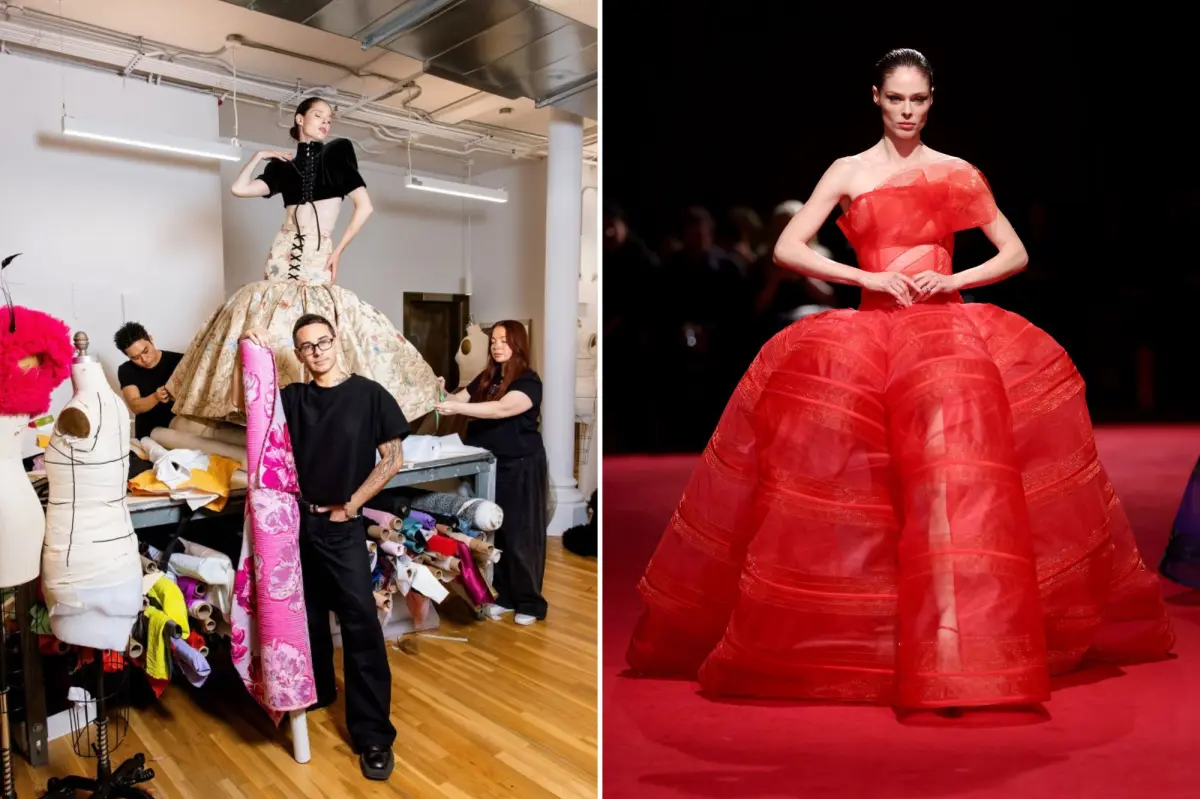
At the center of this movement is Christian Siriano, the designer who has dressed everyone from Zendaya to Celine Dion to Oprah, and who insists that every single piece that comes down his runway is made in the city he calls home. Siriano has been manufacturing in Manhattan for nearly two decades, and he is almost evangelical about it. Pointing to the satin-filled workroom of his Mercer Street studio, he explains that if you see a dress on his runway, it didn’t come from some distant factory; it was made right there, behind the scenes, by real hands in New York City. For him, this isn’t just a business decision. It’s an identity. “We live in New York,” he says, “and we live for New York.” He notes that his clients, including the celebrities who wear his gowns on the red carpet, feel something special when they know a garment was made there. They sense that they are getting a unique, almost talismanic object. Even a simple dress, he says, feels worth so much more when it’s made locally. He doesn’t want to ship fabric around the world just to get a zipper sewn on. He wants everything to stay close, local, and authentic. His philosophy is simple: people dream of having an amazing New York life, and the way to look like you’re living that dream is to wear clothes that were actually made in New York.
The history behind this revival is rich and bittersweet. At its peak, from the 1920s through the 1960s, New York’s Garment District in midtown produced about 95 percent of all clothes made in America. Over a million people worked in the industry as seamstresses, pattern cutters, and assembly line workers. The neighborhood swelled with immigrants from Italy, Russia, and Germany, as well as new arrivals from the American South and Puerto Rico. These workers often didn’t share a common language, but they shared a common craft, and the Garment District became a place where teamwork and community flourished against all odds. In the 1970s and 1980s, that pool of skilled labor helped catapult names like Ralph Lauren, Donna Karan, and Oscar de la Renta into American icons. But then the world changed. Cheap overseas manufacturing lured brands away, and fast fashion giants like Temu started selling cheap imitations of designer looks for just a few dollars. Today, more than 900 fashion brands are based in New York, but the vast majority manufacture their products abroad. Some luxury labels still source from artisan workshops in Italy and Mongolia, but most retailers are filling shipping containers with inexpensive goods from unregulated factories far away. It’s a system built on speed and cost, not on craft or connection.
The economics of making clothes in New York are undeniably difficult. Nobody sewing on Seventh Avenue can compete with a $7 Shein dress or even a $40 Uniqlo staple. Wages, rent, materials, and tariffs all add up. Yet there are glimmers of institutional support. In January, the Council of American Fashion Designers and Ralph Lauren launched the U.S. Fashion Manufacturing Fund, an initiative designed to give real financial backing to designers who want to create American-made collections. There’s also the CFDA x NY Forward Grant Fund, which helps Garment District factories afford equipment upgrades. But even without these cash infusions, a stubborn cluster of designers is doing things the hard way, sketching, cutting, and sewing between subway rides, because they believe it matters. They believe that making clothes in New York is not just a cost line, but a commitment to a place, a tradition, and a community. They are willing to charge a little more, work a little harder, and wait a little longer because they know that the value of a garment isn’t only in how it looks, but in how it was made and where it comes from.
Take Batsheva Hay, a former corporate lawyer from Kew Gardens who started her namesake label in 2016. Her prairie-punk dresses have been worn by Natalie Portman, Celine Dion, and Chloe Fineman, but Hay still makes everything on 28th Street in the heart of the Garment District. She remembers when everyone knew someone, an uncle, a family friend, an older neighbor, who had worked in the district. Now, when she tells people she makes her clothes in New York, they look at her like she’s high. But Hay doesn’t care. As a mother of two, she wants to work close to home, and she wants to support other people whose lives are also here. She keeps costs down by using deadstock fabric, beautiful reams of prints from the 1970s, ’80s, and ’90s that she buys from discount warehouses or factories that are shutting down. Her dresses retail for around $300, which isn’t cheap, but it’s also not outrageous for a garment that’s handmade in New York by people who are fairly paid. For Hay, there’s a deep romance in this way of working. She doesn’t want to just create a vision on a Pinterest board and send it off to another country to have other people make her dreams come true. “There’s no romance in that,” she says. “New York has the heart.”
The heart is also beating in Brooklyn, where knitwear designer Aisling Camps knits her own clothes on looms in her DUMBO studio. After graduating from Columbia University, she launched her line with three looms and a determination to stay in control of her process. She points out that in Italy and France, everyone goes on vacation for two months in the summer, and if she sent her designs overseas, she’d have to wait six months for them to come back. By then, she says, people would want something different. So she makes everything herself, even the pieces she showed Vogue, and this summer she was nominated for her first CFDA Vogue Fashion Fund Award. Just a few blocks away in midtown, there are still tiny but mighty manufacturing hubs like Joanna Design Source, Steinlauf and Stoller, International Pleating, and the New York Embroidery Studio, all working within walking distance of each other. The Creatory, a manufacturing hub on West 39th Street, has produced Met Gala outfits in just a week for fashion brand Tanner Fletcher, worn by Ariana Grande, Elle Fanning, Bad Bunny, and others. Fletcher Kassell, who runs the label with Tanner Richie, says trust is everything. Because the factory is just down the street, they can walk in, stay involved, and know exactly who is making their clothes. If you’re buying something from us, Kassell says, we want it to be from us, not from someone we’ve never met. That’s the New York way, getting it done, with all the grit, heart, and soul of the city itself.