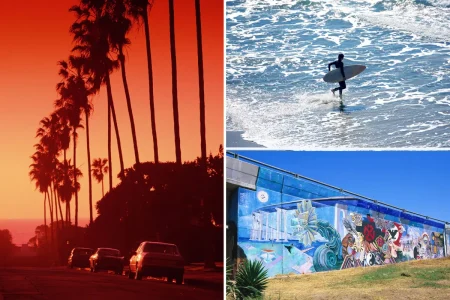






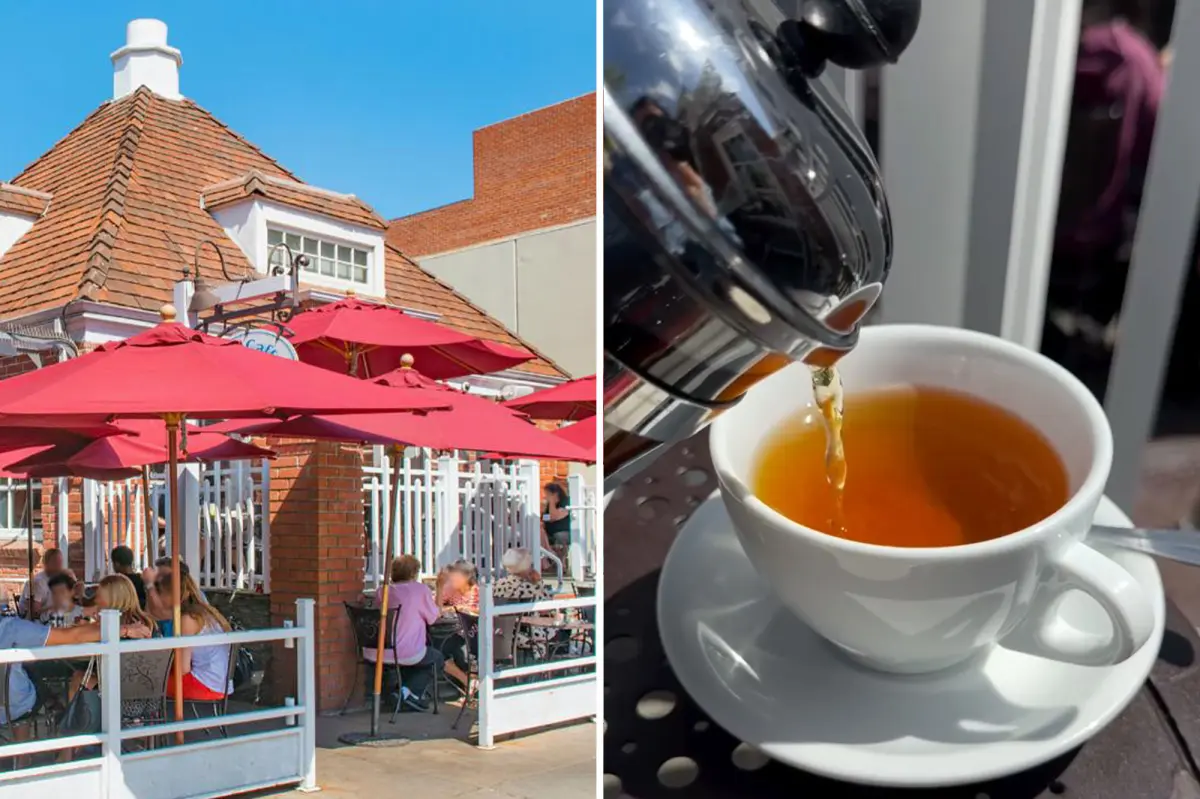
Urth Caffé has never been just a coffee shop. In Southern California, and especially in Los Angeles, it has become part of the visual vocabulary of the region: a place where the parking lot is often full, the line sometimes curls out the door, and the brightly colored drinks look more like edible art than something you grab on the way to work. It is the kind of café that makes a cup of coffee feel like a small, deliberate occasion. That is partly why the announcement that the chain will open its first London location in Covent Garden in early 2027 has landed with so much emotional significance. “London is calling… and Urth Caffé has answered,” the company wrote on Instagram, describing the brand as a natural fit for “the neighborhood of new and old traditions.” But the thread from a modest café on Melrose Avenue in the 1990s to a premium retail destination in one of the world’s most heavily visited tourist districts is not just a business expansion. It is also a story about how this chain has grown beyond its original scene, how it became a symbol of modern Californian dining, and how its ambitions might now exceed the affection of the customers who made it famous.
The origins of Urth Caffé are the stuff of local LA legend. It was founded by the husband-and-wife team of Jilla and Shallom Berkman, an entrepreneurial couple who had a simple and unusual concern: making caffeinated beverages increasingly organic, high-quality, and connected to a sustainable ethos less familiar at the time. The first location opened in Manhattan Beach in 1991, then the company moved to a much larger and freer space on Melrose in 1994. In that decade, Melrose Avenue was a weird and wonderful kind of cultural corridor; in bohemian shops and vintage stores running along the street, and seeing someone in the food for a coffee was practically a thought of being young. It didn’t happen all at once, but gradually that Melrose café became a destination. It was the place to see and be seen, not only because of the coffee, but because of the way it fit into an idealized version of contemporary California: bright, sunlit, healthy, stylish but not overly formal. The idea of drinking Urth coffee was never just about caffeine; it was about identity and belonging. The brand would continue to grow, but its roots are forever tied to that corner of LA, and you can still feel the company’s energy in the way it talks about itself, and not just as any coffee shop, but as a cultural and referential home to artists and family.
Over time, the menu moved far beyond what the founders originally imagined. Urth became beloved for its organic coffee and. . Some cafés did one thing well; Urth tried to do many things and often did them with a flamboyance that made it unmistakable. There were enormous salads, examples with long rows of kale, grilled chicken, avocado, and more vegetables than a typical lunch check should contain. There were sweet desserts, named and pinkiced cakes dusted with powdered sugar, and slices of chocolate cake so large they felt like presents. There were boba teas and rich drinks that had no dry quickly became another signature. Everything was arranged for a camera, and so often the place ended up on Instagram and on social media. But Urth’s celebrity reputation also came from Hollywood. Because the chain had locations in West Hollywood, Beverly Hills, and Santa Monica, it became prime people watching territory. Wait an agent, a manager, an actress, a musician? Time people drinking from the withed paper cup of a coffee, they were also making a very specific, very options. When HBO’s Entourage established a series presence in the show, those locations became even more embedded in the public imagination. Urth was never a product; it was a prop in a certain fantasy of California life: a place where the weather is always good, the salads are always lovely, and a paucity of comfortable.
That commercial power gradually turned from neighborhood favorite to regional institution. The current US stores include Downtown LA, Pasadena, Laguna BeachOrange, Hawthorne and locations at LAX and the Wynn Las Vegas. This is a significant footprint for a family-owned chain. But international expansion has already happened: there are Urth locations in the Middle East too, via a franchise, including spots in Dubai and Saudi Arabia. Those locations gave the brand a useful test as how its much American-branded form of Californiana could travel to different cultures and survive. Not every LA café transitions to Dubai’s climate and expect standards; Urth apparently found a way. London, however, is a completely different kind of challenge. Covent Garden is a historic district with busy markets, tourist traffic, and serious retail pricing, and it is also a market with a proud coffee culture of its own. Londoners already have exceptional bakeries, skilled espresso bars, and a highly independent coffee specialty scene. The fact that Urth is entering this landscape with confidence suggests that the company is less interested in being “authentic” in an Italian sense than in being something specifically and recognizably Californian. That is the financial bet: a visit to Urth London will be about conversation, luxury, and the American dream. This pub, a perfectly mediocre object of the city, is entering another well-known street in the same way as an English counterpart.
But not everyone is convinced. In fact, the response to this announcement has been unusually sharp, and it reveals a big gap between the brand’s self-image and its sense of taste among longtime customers. The response to the announcement on local media was swift, as below a social media post from a Southern California news account had more than one skeptic. “It’s actually so mid, food is not good but the vibes are outstanding,” one commenter wrote, a phrase that offers an almost perfect summary of the gap between emotional fashion and allergic quality. Another wrote more bluntly: “Their food is terrible.” A third was genuinely confused: “How? It isn’t good.” Perhaps most telling, one commenter who still appears to love the brand wrote, “Love you, but they need to focus on the quality and service at their US locations instead of expanding internationally.” This is the note that matters, not in the thoughtful use stage of despair. It suggests that people who care about Urth have noticed changes over the years. Maybe the line is too long, the prices are too high, the kitchen is uneven, or the ingredients no longer taste as special as they did once. Urth is still real enough to earn love; it just doesn’t always deserve them. The expansion to London, in this view, is exactly the wrong priority. Another commenter reduced the whole project to one devastating sentence: “I wouldn’t trade Europe’s bakeries and coffee for this or any American coffee shop.” That is the difficulty of entering a market with stronger traditional standards. Europe has its own romance, its own pastry culture, and for many of us its own unanswerable claim to supremacy. London, more than any other city, has absorbed those traditions and is now in a global culinary city.
Behind all this sits the evolution of the Berkeleyans, not only siblings, but they have also founded each other and the family. they are from the moral and exclusive the idea of the organic food. Their first location in Manhattan Beach in 1991 doesn’t feel like a foregone conclusion, because the market wasn’t full of expensive soy lattes and vegan carrot cakes. They saw the future, and they believed in a style of eating that was both visually attractive and more ethical. The move to Melrose in 1994 put it in the center of a movement, and the timing could not have been better. The restaurant was bigger, the rails were cool, and the customers were soon all around the Los Angeles area. In the years since, the couple and their team have built a brand that has in no way lost its local or its international appeal. It has grown carefully, sometimes with exposure, and often with a franchise. The Middle East was a separate business, not a legal umbrella, which was a nice way to grow without losing the original roots. Now all questions are about London: who will run it? Will it be directly owned by the company or operated through a franchise model like the Middle East? No clear answer was immediate. According to media reports, including the California Post, the Berkeleyans had not yet clarified who was to actually operate the new London location. That is one of the few unanswered details, and it points to the complex world between the founding family and the ambitions of a brand that no longer fits simply into the national market.
But the most memorable line has to be the passage of the population and the imagination. Urth Caffé is no longer a tiny belief in the SoCal beach culture; its London site may take a few years to walk through, and belongs to the greatest and most luxurious international retail city. It might be seen as an invitation to the same world that elected him. On the other hand, it is also a challenge, because the company is leaving the home court to enter an instant, erudite, mature coffee culture. Success will likely depend on exactly those things that some customers are worried about: food quality, service standards, and the ability to create a experience that feels genuinely worth its price. The question is whether the chain can sustain the warmth and quality that made it the expected and beloved place in the early years, not just the famous, but the comfortable. If the answer is yes, Londoners will get a bright, colorful, slightly magical version of California coffee that might actually be welcomed. If they get only the organizer’s name, the crowd, and the photo opportunity, the went to current comments from locals can serve as a warning: outside hospitality can be beautiful, but when the food doesn’t set the table, but also the impression of the new world is gone. For now, the California chain is holding on, one very long con, and proposing something that the original founders could not have envisioned in 1991. And in the end, it might be the greatest sign that Urth has arrived not by ignoring criticism, but by understanding the same old human, subtle balance between ambition and place—the balance that made a modest coffee shop create a global identity.