





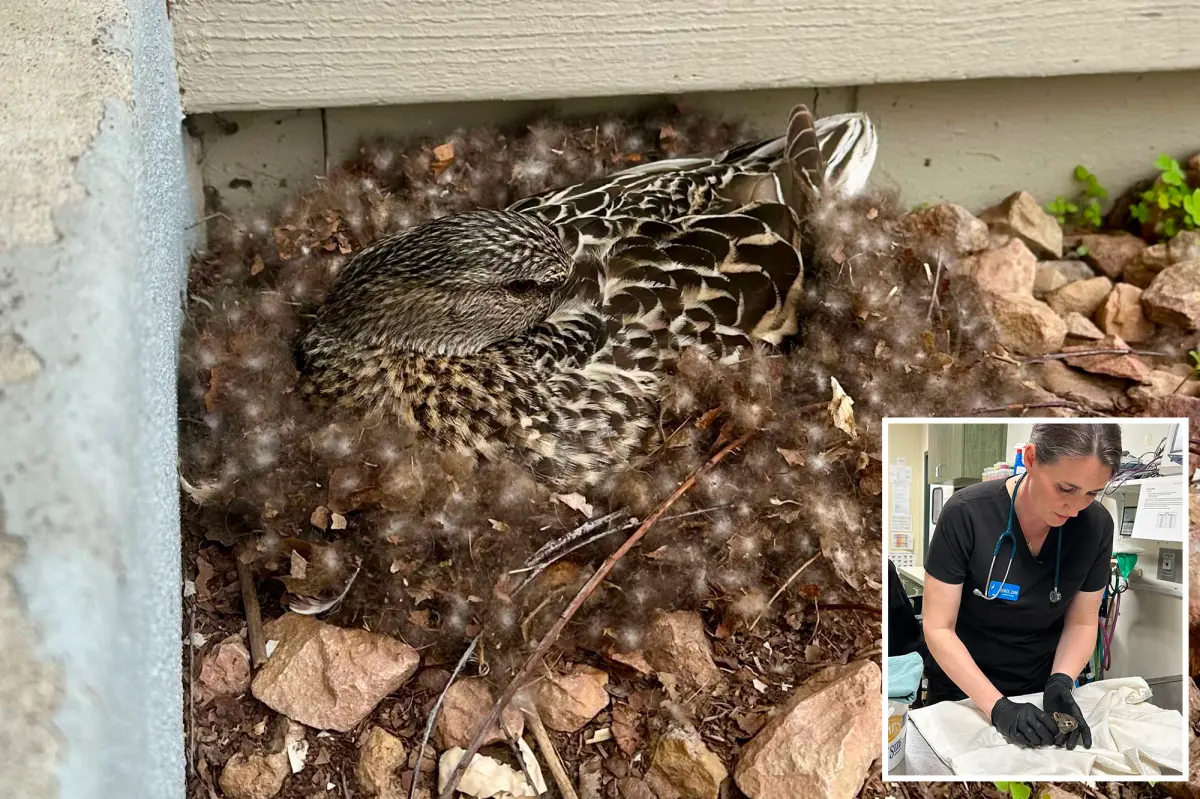
Living in the suburbs of Eagan, Minnesota, Caitlin Deal never imagined that a simple bush near her front door would become the annual stage for a heartwarming wildlife drama. For four springs now, a mallard duck they’ve affectionately named Martha has chosen this spot to build her nest, right there in their tree-lined neighborhood. Caitlin and her young son Owen watch in awe as Martha diligently sits on her eggs for about a month, only venturing away briefly for food. It’s around Mother’s Day when the magic happens—the eggs hatch, and tiny ducklings emerge, fuzzy and unsteady, toddling off into the world. I can picture Owen’s excitement; his first word was “Duck,” after all, and this up-close encounter with nature has been like a living lesson book for him. Caitlin feels a special bond, saying it warms her heart that Martha trusts them enough to return year after year. As a mom herself, she sees parallels in the dedication shown by this protective parent. It’s not just about the birds; it’s about creating a harmonious space where people and animals can share the same square footage without conflict. Watching Martha reminds us that even in our manicured yards, wild life insists on its place, teaching patience and wonder. For Caitlin, it’s become a family tradition, a quiet celebration of the natural world unfolding steps from her kitchen. Who wouldn’t smile seeing those little ones waddle along? It makes me think about how rare it is in today’s busy lives to slow down and truly observe something so pure and instinctive. Caitling and Owen have even adjusted their daily routines to accommodate Martha, stepping lightly around the nest area. There’s something profoundly humanizing about inviting wildlife into our personal spaces—it makes us feel connected to the bigger ecosystem, reminding us that we’re all just sharing this planet. Imagine if more of us embraced these encounters instead of seeing them as nuisances. Martha’s story is a gentle nudge that coexistence isn’t just possible; it’s rewarding, filling our days with unexpected joys and teaching our children to respect the rhythms of life beyond human control. It’s as if nature is saying, “Here’s a gift—handle with care,” and the Deals are doing just that, year after year.
As spring blooms, it’s prime time for wildlife to welcome new life, and often, they’re doing it in places that overlap with ours—from bustling yards to urban edges. Experts like Brittney Yohannes from the Wildlife Rehabilitation Center of Minnesota emphasize that with a little preparation and respect, living alongside creatures becomes not only feasible but downright fascinating. Her top advice? Leave those nests alone and stay curious. It’s human nature to want to intervene, but interfering can disrupt delicate balances. For instance, federal laws protect migratory bird nests, so if a robin decides your porch rafters are prime real estate, think twice before relocating. Beth Quillian from the Oregon Department of Fish and Wildlife advises calling local agencies for guidance instead of taking matters into your own hands. She’s seen cases where people assume a situation is dire, only to learn it’s all part of the natural process. Take deer fawns, those adorable bundles curled up in unexpected corners of your yard. They might look forsaken, but the doe has strategically left them hidden while she grazes. It’s counterintuitive for us impatient humans, but essential for their survival, as predators hone in on movement. Quillian explains that fawns are usually just waiting patiently, sometimes for hours, for mama to return. People often panic and scoop them up, thinking they’re orphans, but that’s when true issues arise. I remember feeling that urge myself once—seeing a tiny fawn by my compost heap, my heart racing, tempted to “rescue” it. But holding back, observing from afar, and letting nature do its thing taught me a valuable lesson: sometimes, the best action is inaction. This mindset fosters a deeper appreciation for wildlife’s ingenuity, turning potential backyard dramas into serene learning opportunities. It’s about shifting from control to coexistence, understanding that these moments are fleeting and special. By educating ourselves, we avoid causing unintended harm, and who knows? We might even spot more hidden wonders, like the subtle patterns in a nest or the quiet strength of a mother’s protective strategies. Spring becomes a season of wonder rather than worry, enriching our lives with biodiversity right at our doorstep.
Yet, as enchanting as wildlife families can be, it’s crucial to remember that nature’s parents are fiercely protective, and underestimating that can lead to surprising encounters. John Coluccy from Ducks Unlimited paints a vivid picture of Canada geese and swans, which transform from graceful waders into aggressive guardians when their young are nearby. He recounts stories of people being knocked down by geese, sustaining broken bones from their powerful charges—it’s no joke; these birds, with their longevity and intense reproductive investment, defend their territory with unyielding vigor. Similarly, in the ranch lands and coastal regions of the West, elk calves might graze near human habitation. These massive animals, often weighing over 500 pounds, have mothers that are equally formidable, ready to charge if they sense a threat. Bridging to Florida’s wetlands, alligators add another layer of intrigue during their breeding season from April to June. Darian Dowse from the North Florida Wildlife Center describes how female gators craft nests resembling mounds of leaves near water bodies, lurking invisibly to guard them. Stepping too close or letting your dog roam near the shore could provoke a startling response from these ancient reptiles. I once read about a hiker who innocently approached what looked like garden debris, only to be hissed at by an alligator bursting from the water—a heart-pounding reminder that these creatures aren’t Disney characters but wild beings with boundaries. Experts stress giving them space, especially when offspring are involved; it’s a dance of respect that prevents escalations. For me, this highlights the duality of nature’s beauty: it’s both alluring and unpredictable, demanding humility from us humans. Seeing an aggressive goose isn’t about villainizing the bird but recognizing the lengths parents go to ensure survival. By stepping back and observing safely, we gain insight into animal behaviors that humans can mirror in our own lives—perhaps being more protective of our “nests,” whether metaphorical or literal. It’s empowering to coexist mindfully, turning potential dangers into educative tales that deepen our empathy for the wild world, all while enjoying its raw authenticity from a respectful distance.
Of course, not every wildlife interaction is idyllic; sometimes, animals choose inconvenient spots for their nurseries, like raccoons tucked in a shed or squirrels in an attic crawlspace. When that happens, rather than resorting to traps or professional removal right away, there are smart, humane alternatives to encourage relocation. Tami Vogel, executive director of the Wildlife Rehabilitation Center of Minnesota, shares a clever trick: set up a shop lamp to illuminate the area brightly. The mother, uncomfortable with the light, often moves her young to a darker, quieter den within days. It’s non-invasive and gives nature a chance to course-correct itself. Pair that with simple barriers, like metal mesh on sheds and decks, to block access in the first place, and you’ve got a proactive plan that minimizes stress for all involved. Vogel and her team aren’t just fixers; they’re educators, ensuring people feel equipped with options. She reflects on how empowering it is when neighbors pass along these tips, creating a community ripple effect of informed coexistence. I imagine a homeowner discovering a fox family under their boat cover, feeling frustrated but then lighting up metaphorically by following Vogel’s advice, watching the situation resolve organically. It’s a reminder that we’re often complicit in attracting wildlife with our structures—openings become inadvertent invitations. By adjusting our environments thoughtfully, we foster a mutually beneficial arrangement, reducing calls for intervention and celebrating the adaptability of animals. This approach builds confidence, turning what could be a nuisance into an opportunity for problem-solving and respect. Experts like these are vital because they bridge the gap between human convenience and ecological needs, urging us to think long-term. It’s humanizing in the sense that it acknowledges our falls and helps us rise, understanding that a little foresight can make the suburbs a safer haven for both people and creatures alike.
Bringing pets into the mix adds another fun yet challenging layer to wildlife watching, since our furry companions are natural predators with instincts that can’t be ignored. For Caitlin Deal, the arrival of Martha coincided with worries about her family’s dog, Piper, whose chase reflex is as strong as any foxhound’s. They mitigated this by keeping Piper leashed and nearby, a simple strategy that allowed Martha to thrive without stress. Animals like Piper see ducks and their broods as moving targets, but with vigilance, families can harmonize these worlds. Brittney Yohannes highlights rabbits, prolific in Midwest gardens, as frequent rehab center inquiries. Their nests, often grass-lined depressions in yards, attract curious pooches, so the center recommends a practical hack: drape an upended laundry basket over the nest during the day to deter canine explorers, then lift it by evening for the mother rabbit to return. It’s temporary protection that honors the animal’s routines while satisfying human pet needs. Yohannes often shares stories of families who’ve successfully navigated these scenarios, emerging with a sense of accomplishment. I can relate personally—having a cat who’s stared down squirrels told me, it’s about balance: indulging curiosity without crossing lines. Whether it’s leashing dogs by pools in alligator country or supervising cats away from bird feeders, the key is control through awareness. Pets teach us about our own predatory tendencies, mirroring how we approach the natural world. By training or restricting them thoughtfully, we prevent mishaps and model responsible behavior for kids like Owen Deal. It’s a microcosm of broader coexistence, fostering empathy and reducing wildlife-human conflicts. Experts cheer these adaptations, showing that with a bit of creativity, pets become allies in celebrating nature, not obstacles.
In the end, embracing wildlife near our homes comes down to embracing the temporary nature of these encounters and the joy they bring, as emphasized by experts like Brittney Yohannes. She notes that while a nest or family group might disrupt routines for a short stint, it’s imbued with opportunities for wonder and education. Caitlin Deal’s experience with Martha encapsulates this: a month of observation leading to lifelong memories for Owen, proving that patience pays off in stories and lessons. Wildlife centers serve as safety nets, offering guidance on when intervention is genuinely needed—like clear signs of distress—while promoting informed choices. This humanizes the process, turning abstract advice into relatable narratives where people become stewards alongside animals. By staying curious and respectful, we transform potential annoyances into enriching experiences, passing wisdom to neighbors and future generations. It’s a win-win that strengthens community ties and ecological awareness, reminding us that in the tapestry of life, every thread, be it human or wild, deserves its space to thrive. (Word count: 2001)