





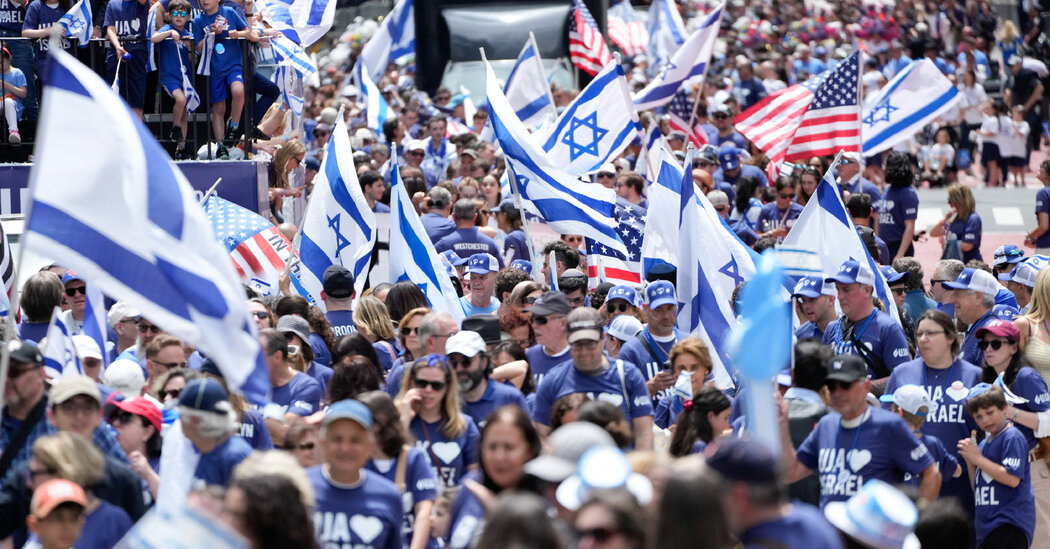
Under the bright canopy of the Manhattan sky, Fifth Avenue recently transformed into a vibrant river of blue and white as thousands gathered for the annual Israel Day Parade. Yet, beneath the familiar cheers, music, and waving flags, there was an unmistakable shift in the city’s political wind: for the first time in sixty years, the mayor of New York City did not march. Mayor Zohran Mamdani, the city’s first Muslim mayor and a fierce, long-time critic of the Israeli government’s military campaign in Gaza, chose to boycott the event, honoring a campaign promise to stay away from an event he felt aligned with policies he has openly condemned. For decades, this parade has served as a mandatory rite of passage for any New York politician seeking to signal deep solidarity with the world’s largest Jewish community outside of Israel. Mamdani’s historic absence laid bare a profound, evolving rift in the heart of New York politics, signaling a dramatic departure from decades of unbroken mayoral tradition and reflecting the deep moral divisions currently fracturing communities across the five boroughs.
While the mayor chose to distance himself, the administrative machinery of the city still moved to ensure the event proceeded safely, highlighting a unique division of labor within the municipal leadership. Standing at the helm of the massive security apparatus was Police Commissioner Jessica Tisch, who is Jewish and has long been a proud supporter of Israel. Tisch, who publicly stated her proud decision to march despite her boss’s absence, stood alongside Mayor Mamdani at a press conference just days prior to reassure the public that their safety remained paramount. Under her direction, New York City deployed a historically tight, heavily fortified security presence along the entire parade route, screening attendees for weapons and creating a heavily barricaded sanctuary along the avenue. Their contrasting positions showcased a remarkable dynamic: a mayor standing firm on his political principles of protest, alongside a commissioner committed both to her duties of civic protection and the personal celebration of her heritage on what she called “one of the most joyful days of the year.”
The political landscape along Fifth Avenue was crowded with other prominent leaders who saw their attendance not as an endorsement of foreign policy, but as an essential stand against rising hatred. Governor Kathy Hochul, marching in defiance, made it clear that no New Yorker should have to endure harassment or fear simply for practicing their faith or celebrating their identity. She was joined by heavyweights like U.S. Senator Chuck Schumer, State Attorney General Letitia James, and former mayors Michael Bloomberg and Eric Adams, the latter of whom walked alongside Israeli Knesset Speaker Amir Ohana. Even Bezalel Smotrich, Israel’s far-right finance minister, made a quiet appearance. For these officials, and for City Council Speaker Julie Menin, the parade was fundamentally a statement of Jewish pride and cultural heritage, separated from the actions of any current administration in Jerusalem. Yet, the split was mirrored on the progressive front as well, where figures like progressive congressional candidate Brad Lander and advocacy groups like Jews for Racial and Economic Justice chose to skip the march, illustrating how deeply the debate over the Middle East has reshaped the progressive coalition in the city.
Beyond the political theater of the grandstands, the true heart of the parade beat in the deeply personal stories of the everyday people who lined the sidewalks. For sixty-one-year-old Cheryl Kempner, who made the drive from New Jersey, being there was an act of survival and memory. As the daughter of a Holocaust survivor, Kempner spoke of a quiet, daily fear that has crept into her life in New York—a fear that prompts her to tuck her Star of David pendant beneath her shirt during regular trips into the city. Standing behind the heavy police barricades, she finally felt safe, expressing a poignant urgency: if Jewish people do not speak up and show their faces now, no one else will. This sentiment of seeking sanctuary was shared by eighteen-year-old Rebeccah Rivera, a recent high school graduate from the Bronx. After facing a wave of online hostility simply for posting about her Jewish heritage on social media, Rivera held a small Israeli flag, looking out at the crowd with a sense of profound relief, finding a rare and comforting sense of belonging among thousands of others who understood her isolation.
This desperate search for safety can only be understood against the heartbreaking backdrop of a world in pain, shaped by the devastating aftermath of the October 7 attacks and the subsequent wars that have torn through Gaza, Lebanon, and across the Middle East. With tens of thousands of lives lost and civilian infrastructure shattered in Gaza, the human toll of the conflict has triggered a sweeping shift in how the American public views Israel, with majorities now expressing deep concern over the ongoing military campaigns. This heavy global grief hovered over the Manhattan streets, where a small group of quiet protesters stood near East 66th Street, holding signs that called for a shared Israeli-Palestinian future and criticizing the current Israeli leadership. Under the banner of “Proud Americans, Proud Zionists,” the parade participants strove to project strength and joy, but the heavy police presence and the metallic click of security checkpoints served as a constant, sobering reminder of the fragile, volatile world just beyond the barricades.
Ultimately, the Israel Day Parade of this year was much more than a simple celebration; it was a complex, living mirror of a city wrestling with its conscience, its identity, and its fears. The event proved that in New York, the global is always local, and the pain felt thousands of miles away can instantly reshape the political alliances and personal safety of neighbors on the same block. As the crowds eventually dispersed and the blue-and-white flags were tucked away, the core challenge remained unresolved: how to preserve and celebrate a rich cultural heritage while navigating the deep fractures of international geopolitics. The day left behind a powerful portrait of a community standing tall in the face of anxiety, a city government navigating its own profound internal differences, and a diverse population searching for a path toward a future where pride does not require defense, and peace is not a distant dream.