


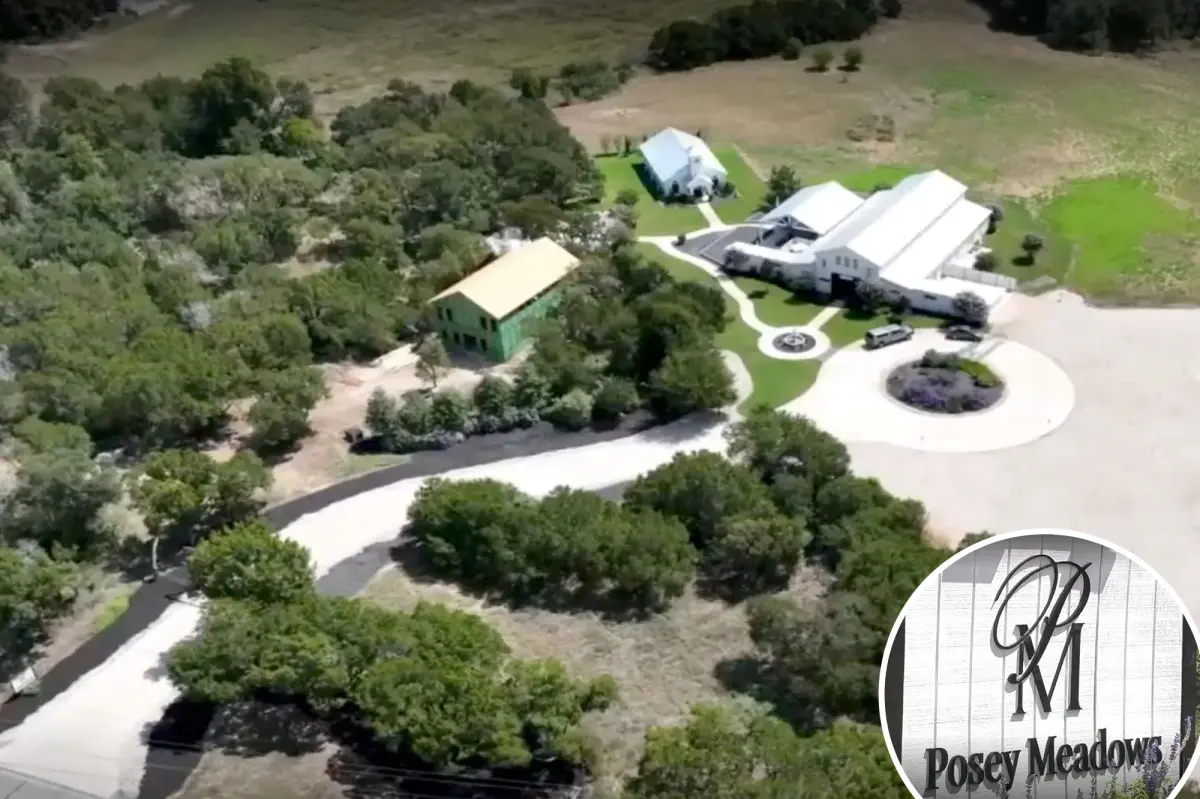
There are certain moments in life that test the boundaries of human decency, and how we respond to them says everything about who we are. For a young woman in San Marcos, Texas, the most devastating of those moments arrived in late April, when her fiancé, Diego Hernandez, died suddenly at just 25 years old. The couple had spent months imagining their life together, counting down the days to a November 20 wedding at Posey Meadows, a wedding hall that was supposed to be filled with laughter, flowers, and the people they loved most. They had already paid $15,909.28 for the venue, trusting that the beautiful space would witness their vows, their first dance, and the beginning of a shared future. Instead of standing beside her beloved on that day, this bride-to-be was left to plan a funeral, to comfort family, and to navigate an unbearable new reality. And yet, when she reached out to the venue to ask for compassion, she was met not with sympathy but with a rigid business policy that had no room for death. The contract, they said, simply had no clause covering the death of a client. Every dollar was kept. Later, the venue went even further, filing a countersuit against the grieving family for breach of contract. The words “’til death do us part” were meant to speak to eternal love, not to become a legal loophole, but at Posey Meadows, death itself became just another term in the fine print. The family had come asking for kindness; they were handed a court date instead.
What makes this story so heartbreaking is not merely the financial loss, although for many families $15,909.28 is an enormous sum, a mountain of savings and sacrifice. It is the manner in which the loss was dismissed. Diego’s mother, Lucy Hernandez, described the desperate call she made to the venue, pleading with owner Julie Campbell for understanding. She said she made that call “just moments before seeing her son’s body one last time.” Just moments. In that raw and unimaginable space between grief and goodbye, she was forced to ask strangers for mercy. The response, according to the family, was stone-cold rejection. Instead of a refund, the venue suggested that the family rebook for a future date or simply throw a different party entirely. A different party. As if a funeral could be swapped for a birthday, as if a ring could be replaced by a cake, as if a mother mourning her child could somehow be expected to celebrate in the same place where she had once dreamed of watching him get married. Lucy’s words to a local news outlet captured the collective outrage: “Where are their morals? Where are their moral principles?” She added, “We don’t have a fight in us. We’re emotionally drained.” That last sentence is perhaps the most devastating of all. A family that should have been free to grieve, to hold one another, to remember Diego in peace, was instead forced to fight a legal battle against a wedding venue. The fight was never about wanting more than they were owed. It was about asking for something that cost the venue nothing: a little humanity.
With no resolution in sight, the bride-to-be filed a lawsuit in Hays County district court in late July. It was not a decision born of greed or revenge; it was the act of a woman who had already lost everything and could not bear to be robbed of her dignity as well. She was not asking for extra damages or punitive punishment. She was asking for a refund of money paid for a wedding that could never happen, for a service that would never be rendered, for a celebration of a life that had been stolen far too soon. The venue, however, responded with an aggressive counterclaim, demanding that the family pay the remaining balance of the contract. Their reasoning? They alleged that the family had never provided proof that Diego was actually dead. It is difficult to imagine a more absurd, more callous legal strategy. An attorney for the bride later stated that he had repeatedly offered to send Diego’s death certificate before the lawsuit was even filed, and the venue’s legal team had remained completely silent. The death certificate, according to reporters, is now included in the legal documents. This is the world we live in: a grieving mother must formally prove to a wedding hall that her son is dead; a young woman must gather paperwork to validate her own unthinkable loss. The counterclaim reduced a human being to a contractual variable, turning a funeral into a footnote in a business dispute. The venue may have legal precedent on its side—contracts are contracts, and courts often uphold what is written, no matter how cold it seems. But the moral line is not drawn in the fine print. It is drawn in the way we treat one another when the universe shatters a family. And by that measure, Posey Meadows has already failed.
The public has responded with the kind of outrage that only such obvious injustice can inspire. The venue’s Google listing and Facebook page have been flooded with negative reviews, with users calling the owners “greedy” and “disgusting humans.” One reviewer wrote, “Would leave 0 stars, if able. I hope this venue doesn’t see another ounce of business after their horrible treatment of the Hernandez wedding couple. Despicable!!” Another wrote, “Whatever sick person makes the decision to not refund a bride whose fiancé died, 6 whole months before the wedding… has to be one of the greediest things I’ve ever heard of. There is no saving this kind of person. They deserve every misfortune that comes from this.” The reviews are raw, angry, and entirely human. They reflect a sense that this is not just about one venue or one contract, but about a pattern of behavior within the wedding industry that treats love as a revenue stream. Multiple commenters noted that this situation is not unique, and called for “death clauses” to be added to all non-refundable venue contracts. Others shared their own stories of being trapped by fine print. One woman recounted that her venue had an “act of God” clause, but that “you better believe nothing will ever meet the criteria.” She explained that during the pandemic, when large events were literally banned, her wedding venue still refused to allow her to invoke the clause. “These venues are such shit,” she wrote on Instagram. That frustration is not limited to a handful of bad actors. It points to a broader truth: too often, the business of weddings forgets what weddings are actually about. They are about love, commitment, joy, and hope. When those things are destroyed by tragedy, a contract should not become a weapon.
At its core, this case is about the difference between legality and decency. Posey Meadows may be within its legal rights to hold the money and demand the balance. The contract may indeed lack a death clause. The law may eventually side with the venue, and a judge may force the Hernandez family to pay even more money to the very people who refused to offer a single word of comfort. But being legal does not make something right. Being within your rights does not excuse cruelty. The venue had an opportunity to do a small, profound act of kindness. It could have looked at a heartbroken mother and said, “We are so sorry for your loss. Of course you can cancel. Of course we will refund you. Go and be with your family.” That simple response would have cost them nothing in the long run, and it would have meant everything to a family drowning in grief. Instead, they chose to hide behind paperwork. They chose to demand proof of a death that was already printed on the hearts of everyone who loved Diego. They chose to suggest a “different party” to a woman whose only dream was to watch her son marry his beloved. In doing so, they revealed not a flaw in their contract, but a flaw in their character. The bride, in the midst of all this, did not reply to media requests, asking only for privacy. It is hard to imagine why. She had already been exposed to the world as a woman in pain, a woman whose fiancé’s name is now attached to a lawsuit, a woman whose love story has been reduced to a headline. She asked for the one thing this ordeal has persistently denied her: peace.
As this case moves toward a court decision, there is little doubt that the legal outcome will be closely watched. But the real verdict has already been delivered by the community, by the strangers leaving reviews, by anyone who has ever loved someone and understood the unbearable idea of losing them. The real record will not be found in a judge’s order, but in the way this story has woven itself into a larger conversation about accountability, compassion, and the limits of contractual cruelty. Perhaps this ordeal will inspire more venues to include death clauses in their contracts, and perhaps it will remind couples to read every line and ask hard questions before they sign. But more than that, it should remind us that underneath every contract is a human being. When Diego Hernandez died, he did not intend to break a contract. He did not choose to hurt a business. He was a 25-year-old man whose life was cut short, leaving behind a family, a fiancée, and a future that will never be. The least anyone could have done, and the least the venue could have done, was to honor that loss with a moment of grace. Instead, his name has been turned into an invoice, his death into a legal defense, his family’s pain into a case number. There is no refund that can bring Diego back. There is no lawsuit that can heal the hole in his mother’s heart. But there is a difference between a business that simply cannot help and one that chooses not to. Posey Meadows had every chance to choose compassion. Instead, it added grief to grief. In the end, that is the story that will outlast any court ruling: a young man who was loved, a family who fought for dignity, and a world that showed them—through outrage and solidarity—that they were not alone. That is a kind of justice that no contract can take away.