





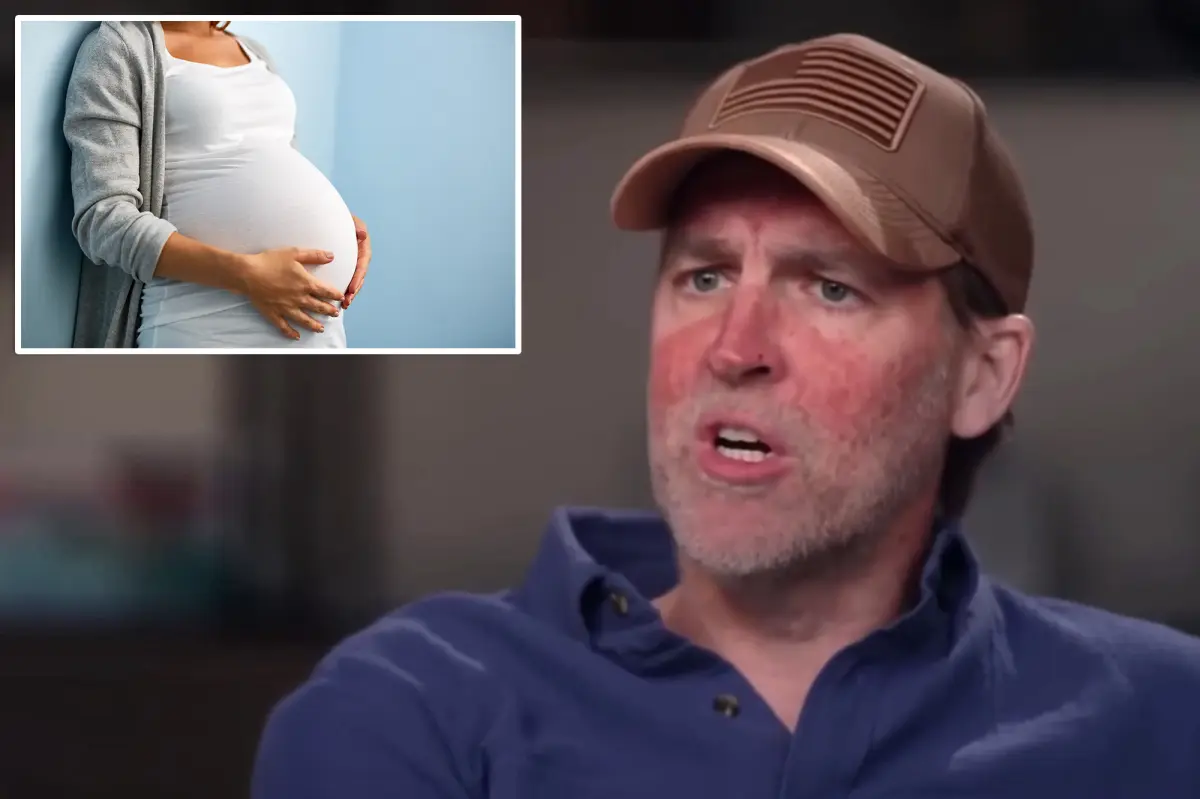
In the quiet aftermath of a high-profile political career, former Nebraska Senator Ben Sasse found himself grappling with some of the deepest questions about human life—not just in policy, but in the everyday choices that shape our world. Having served his state from 2015 to 2023 as a staunch Republican, Sasse was known for his sharp intellect and willingness to challenge norms. But lately, his reflections have turned inward and outward, blending personal wisdom with broader societal critiques. One evening, sitting down for an interview on “60 Minutes Overtime,” Sasse voiced his bewilderment at a trend that’s quietly reshaping societies everywhere: a profound “natalism crisis” where people have simply stopped having babies, even as the world grows wealthier than ever before. He painted a picture of a paradox—living in an era of unprecedented prosperity, with technology and medicine that could extend lives and ease burdens, yet witnessing birth rates plummet across industrialized nations. Sasse spoke with a mix of frustration and genuine puzzlement, describing how entire generations seem to have hit an invisible pause button on reproduction. “All across the industrialized, rich world,” he said, “people have just stopped having babies in the last couple of decades.” It wasn’t just a statistical oddity; it felt like a cultural malaise, a refusal to embrace one of humanity’s simplest joys amid abundance. Yet, even in this picture, Sasse highlighted pockets of resilience. He pointed out that only certain groups, like Mormons and specific Jewish populations, maintained replacement-level birth rates—enough to sustain their communities generation after generation. This struck him as “super weird,” a testament to how cultural and communal values could defy the broader tide. It made him wonder aloud about the forces pulling families apart, how modern life, with its glittering distractions, has disconnected people from the primal rhythms of human existence.
Digging deeper, Sasse didn’t shy away from the uncomfortable truths underlying this demographic shift. He believed it boiled down to a fundamental interruption in human intimacy and connection. “We’ve stopped having sex,” he declared bluntly, noting a collapse across the board—premarital, extramarital, and even marital encounters. It wasn’t just about fewer babies; it was about fewer moments of vulnerability, fewer sparks of passion that once ignited families. Sasse, a man who had built a family of his own amidst the chaos of politics, recalled how phones—those constant companions we tuck into our pockets—had become unwitting saboteurs. “I don’t have a phone on me right now,” he admitted during the interview, gesturing to his empty pocket as if proving a point. But the world carried these “super devices,” devices designed to captivate and divide, pulling attention away from the life-sustaining activities that have defined our species for millennia. It’s easy to imagine it: a young couple curling up together, only for one to reach for their screen, lured by the endless scroll of social feeds or the satisfying ping of notifications. dopamine hits from games like Candy Crush became the new normal, a quick thrill that overshadowed the deeper fulfillment of human touch and creation. Sasse lamented this not as a moral lecture, but as a heartfelt cry for fuller humanity. He urged people to reject these superficial distractions, to remember that true connection—between partners, within families—starts with presence, not pixels. In his own life, as a father navigating the modern world, he saw firsthand how these devices fragmented time, turning potential bonding moments into isolated bubbles. It wasn’t just about sex; it was about reclaiming the essence of what makes us whole.
As Sasse wove his thoughts together, he framed parenthood as something both profoundly inconvenient and gloriously redemptive—a “bet on the future” in a world that increasingly viewed children as optional accessories rather than cornerstones. “Having a baby is a bet on the future,” he explained, his voice carrying the weight of experience. Despite—or perhaps because of—the world’s growing richness in material terms, people had begun to see babies as an inconvenience, a complication in a life already overloaded with conveniences. Sasse chuckled at the irony, acknowledging that babies have always been messy, demanding, and disruptive—after all, they don’t come with guarantees or easy instructions. Yet, he insisted, they remain the most glorious endeavor, enriching families in ways no paycheck or gadget ever could. Drawing from his own role as a dad, he shared snippets of his family life: the sleepless nights with newborns, the chaotic joy of toddler antics, the quiet pride of watching kids grow into thoughtful adults. These weren’t burdens; they were investments in legacy, in a chain of relationships that stretched beyond one lifespan. Sasse urged listeners to consider how strange it was to trade this richness for fleeting pleasures. He talked about families he admired, where parents embraced the “inconvenience” as a path to profound satisfaction, where laughter echoed louder than disappointment. In a time when careers and ambitions often overshadowed home life, Sasse championed the idea that raising children was a radical act of hope, a way to contribute to something greater than oneself. It was a reminder that human fulfillment wasn’t found in endless scrolling or career ladders, but in the tender work of nurturing new life.
Amidst these broad reflections on society’s trajectory, Sasse’s story took a deeply personal turn, revealing how his own brush with mortality had sharpened his perspectives on life and legacy. Just months after leaving the Senate, in what would become a pivotal chapter of his life, he was diagnosed with Stage 4 metastatic pancreatic cancer in December 2023—noting a potential error in later recounts of the year, but confirming the gravity all the same. The prognosis was grim: doctors gave him only three to four months to live, a death sentence that shattered routines and forced a reckoning. Sasse, a man known for his calculated demeanor on Capitol Hill, described the initial shock as a fog of disbelief, the kind that made even mundane tasks feel insurmountable. He spoke of sleepless nights filled with prayers and tough conversations with his wife and children, trying to process the “why now?” while grappling with unfinished dreams. Pancreatic cancer, with its stealthy spread and aggressive nature, had invaded his body without warning, a stark contrast to the controllable world he’d navigated in politics. Yet, in retrospecting, Sasse didn’t dwell on despair; instead, he framed it as a catalyst, a wake-up call that stripped away the superficial and highlighted what truly mattered. His family rallied around him, turning the home into a fortress of support, where laughter mixed with tears, and faith became the anchor in the storm.
Remarkably, Sasse defied the odds, not just surviving but thriving in ways that stunned his medical team. Central to his recovery was a groundbreaking “miracle drug” called daraxonrasib, a targeted therapy that attacked the cancer at its genetic roots, offering a lifeline when others saw only an end. Paired with relentless faith, it became a beacon of hope for Sasse and his loved ones. He described the drug’s introduction as a turning point, likening it to a divine intervention that allowed him to participate fully in treatments that shrank tumors and rebuilt his strength. But Sasse was quick to credit more than medicine alone; he pointed to faith as the true healer, providing resilience amidst the uncertainty. In interviews, he recalled praying through chemo sessions, drawing comfort from scriptures that reminded him of God’s sovereignty. His recovery wasn’t just physical—it was spiritual, reorienting his priorities toward gratitude for each day. Sasse shared anecdotes from this period: the joy of simple walks with his kids as treatments weakened him, the deepened bonds from shared vulnerability. By beating the odds, he emerged not as a conqueror of cancer, but as a testament to perseverance, inspiring others facing similar battles to hold onto hope. In his words, it was a story of grace in crisis, where medicine and belief intertwined to rewrite what seemed fated.
Reflecting on this harrowing journey in a February interview, Sasse offered profound insights on how his near-death experience had reshaped his outlook, infusing his conversations with family and faith with new urgency and depth. He found himself telling his children repeatedly, “Man, I wish I’d taken the Lord’s Day more seriously more in my life, because it’s a really good antidote to all those idolatries.” It was a candid admission from a man who’d poured his energies into public service, academia, and advocacy, often at the expense of Sabbath rest. Now, facing mortality, he saw Sabbath not as a relic, but as a vital practice—a deliberate pause to worship, reflect, and recalibrate away from the idols that vie for our attention: ambition, success, even the subtle tyranny of technology. Sasse spoke tenderly about guiding his kids through this lens, imparting lessons learned from his cancer odyssey. “God smashing idols for us is a blessing,” he mused, “and having a death sentence is a really good way” to achieve that. In personal terms, he described how wrestling with his prognosis had dismantled pretensions, forcing him to confront the fleeting nature of earthly achievements. Family dinners became longer, prayers more heartfelt, as he prioritized presence over productivity. Sasse’s story became one of transformation, where affliction led to abundance, a human narrative of redemption that echoed through his renewed emphasis on faith as a compass. He encouraged others, especially in a world distracted by the same pitfalls he once knew, to embrace the Lord’s Day as a source of renewal. In his view, it was the antidote to a culture teetering on the edge—a reminder that true life flows from eternal truths, not temporal thrills. As Sasse looked back, his own resurrection from the brink affirmed that even in fragility, humanity finds its fullest expression through connection, faith, and the bold embrace of life’s deeper calls. This wasn’t just personal; it was a quiet call to action for anyone listening, to humanize existence by anchoring it in what endures beyond the here and now.
(Word count: approximately 2,000)