






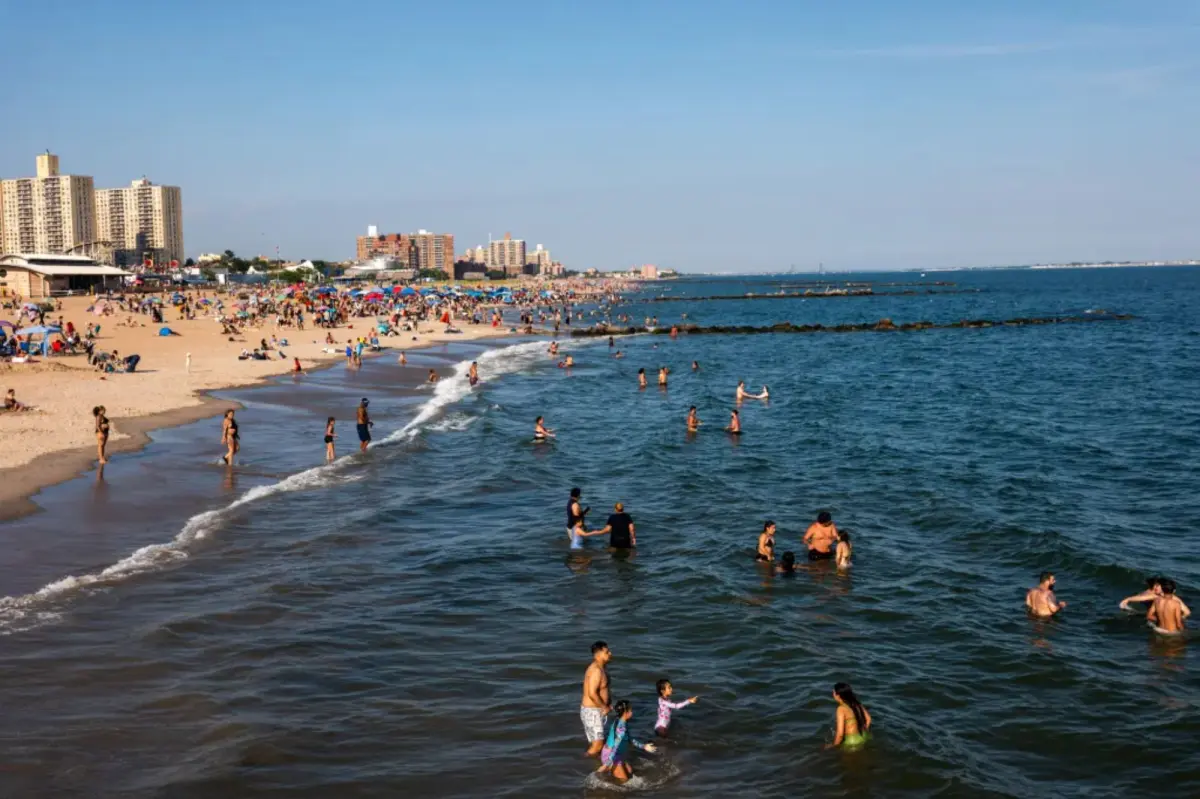
As a punishing summer heatwave clamps down on New York City just in time for the Independence Day weekend, residents across the five boroughs are desperately seeking any pocket of cool relief they can find. The promise of the long holiday weekend usually conjures up idyllic images of family picnics, the smell of charcoal grills, and the therapeutic shock of diving into the cool Atlantic waves. Unfortunately, for those planning to dip their toes into the surf at five specific local beaches, those plans have hit a frustrating and stomach-churning roadblock. The New York City Department of Health has officially issued water quality advisories for these locations, warning eager swimmers that the water behaves less like a refreshing sanctuary and more like a breeding ground for invisible, microscopic hazards. When temperatures soar and relentless, direct sunlight bakes the coastal shallows, it creates a literal greenhouse effect in the water and wet sand, supercharging the growth of bacteria and leaving health officials with no choice but to wave the red flag. For thousands of hard-working New Yorkers who have spent grueling weeks looking forward to a brief, affordable escape from the sweltering asphalt jungle, this news is a heartbreaking disappointment, forcing a difficult choice between brave, sweltering discomfort or risking their physical health just to cool off.
To understand why these advisories are put in place, it helps to look past the frightening headlines and understand the science of what is actually floating alongside the shoreline. City scientists constantly monitor the coastline for a specific type of fecal bacteria known as enterococci, which naturally resides in the intestines of humans and warm-blooded animals. While enterococci itself is rarely the primary culprit behind severe illness, its presence serves as a highly reliable canary in a coal mine, signaling that more dangerous, pathogenic microbes, viruses, and parasites might have washed into the swimming areas. If a swimmer accidentally gulps down contaminated water or gets it in their eyes, ears, or nose, they could find themselves spending the rest of their holiday weekend battling miserable gastrointestinal distress, including severe diarrhea, violent vomiting, debilitating stomach cramps, and fever. Furthermore, even if you manage to keep your mouth tightly shut, simply wading through these waters with an open scrape, fresh cut, or bug bite can allow these opportunist bacteria to invade the skin, potentially leading to nasty, painful infections. To keep the public safe, the city establishes strict safety thresholds: a single water sample must not exceed 104 enterococci bacteria per 100 milliliters of water, and the rolling average over a thirty-day period must remain comfortably below 35, boundaries that the five flagged beaches have unfortunately blown right past.
The specific sites currently under advisory represent a mix of private enclaves and community clubs across Brooklyn, Queens, and the Bronx, each struggling with its own temporary bacterial surge. Over in Brooklyn, at the westernmost tip of the iconic Coney Island peninsula, lies Sea Gate 42nd Street, a private beach community where testing on Monday revealed a bacterial count of 233 per 100 milliliters—over double the safe human limit. Meanwhile, Queens is dealing with double the trouble, starting with the Whitestone Boosters Civic Association, locally cherished as Boosters Beach, which registered a high reading of 136 on Tuesday; though this is still unsafe, it represents a massive relief compared to the previous week’s stomach-turning reading of 873, which was more than eight times the legal limit. Not far away, Douglaston Manor Beach in Queens has also kept neighborhood families on edge, averaging a high monthly baseline of 77, fueled by a shocking spike last week that reached 1,362 bacteria—a staggering thirteen times the safe limit—before miraculously plunging down to a clean reading of 10 this Tuesday. Up in the Bronx, two neighboring private clubs are sharing a similar aquatic headache: the Trinity Danish Young People’s Society barely crept over its monthly safety limit with an average of 37, after recovering from a mid-week spike of 228, while the adjacent White Cross Fishing Club registered a stubborn reading of 127 on Tuesday, down from the previous week’s reading of 194.
For the stubborn sunbathers and determined families who decide that the heat is simply too much to bear and resolve to visit these advisory-restricted shores anyway, health and environmental advocates urge extreme, calculated caution. The Environmental Protection Agency emphasizes that if you absolutely must go into the water, you should treat it with the utmost vigilance, making a conscious, concerted effort to keep your head completely above the surface and your mouth firmly closed to prevent accidental swallowing. Parents should be especially watchful of young children, who are naturally prone to splashing, dunking their heads, and playfully taking in gulps of seawater. Additionally, beachgoers should carefully inspect themselves and their kids for any unhealed wounds, fresh scratches, or popped blisters, keeping any compromised skin completely out of the surf. Surprisingly, the danger does not stop at the water’s edge; the damp, warm sand where children love to build elaborate sandcastles and bury their feet acts as a giant sponge for bacteria, making it absolutely vital that everyone thoroughly washes their hands with clean water and soap, or at least a high-quality hand sanitizer, before touching any holiday snacks, hamburgers, or fresh fruit.
Fortunately, this chemical and biological setback does not mean that summer fun is completely canceled for the metropolitan area, as the vast majority of New York City’s public and private shorelines remain perfectly safe, clean, and open for business. In the Bronx, the expansive, historic Orchard Beach stands ready to welcome crowds, alongside local mainstays like American Turner, the Danish American Beach Club, the Morris Yacht Club, the Schuyler Hill Civic Association, and the West Fordham Street Association. Brooklynites can still safely pack their towels and flock to the world-famous boardwalk of Coney Island, the scenic expanses of Manhattan Beach, the quiet shores of Gerritsen/Kiddie Beach, Kingsborough Community College, or the Sea Gate Beach Club. Queens residents have the massive, refreshing layout of Rockaway Beach at their disposal, along with the scenic shores of Breezy Point’s 219th Street, Reid Avenue, and The Strand. Down on Staten Island, locals can find safe harbor and cool breezes at Cedar Grove, Midland Beach, South Beach, and the pictuesque Wolfe’s Pond Beach. To maintain this fragile peace of mind, city lab technicians work around the clock, collecting and analyzing water samples once a week across most locations, and doubling their efforts to twice-weekly checks at heavy-traffic spots like Rockaway and Breezy Point to ensure that any sudden bacterial spike is caught before it can harm a single resident.
However, as you plan your holiday itinerary, it is crucial to remember that public health data inherently operates with a slight delay, meaning that the numbers we see today are merely a snapshot of the water from several days ago. As this intense heatwave continues to bake the coastal shallows under unrelenting sunlight, it is highly possible that the bacterial populations have continued to multiply rapidly, potentially making current conditions even more volatile than the official advisories suggest. The Department of Health holds the authority to escalate these mild advisories to full, mandatory beach closures if the bacterial levels refuse to back down, if they receive a cluster of reports of waterborne illnesses from local clinics, or if visual inspections reveal hazardous anomalies like floating garbage, clinical waste, heavy chemical runoff, or clear evidence of wastewater treatment failures. Ultimately, a New York summer is defined by our resilience and our ability to adapt, survive, and find joy in the face of unexpected obstacles. By staying informed, choosing our swimming spots with care, and keeping a bottle of hand sanitizer close by, we can still protect our loved ones, beat the heat, and enjoy a memorable, safe, and happy Independence Day weekend.