







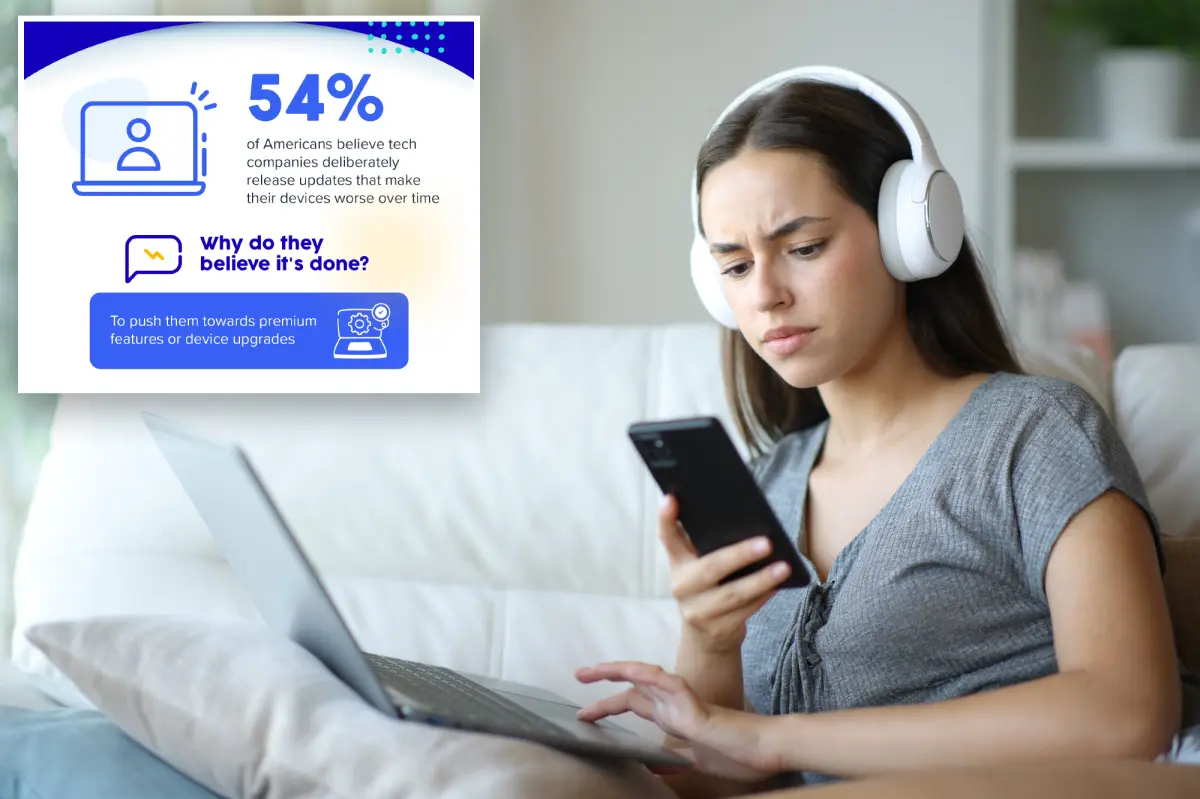
For millions of people, the sight of a little red notification dot on a phone screen or a sudden pop-up window announcing an “update ready to install” no longer sparks excitement or anticipation. Instead, it triggers a collective, modern sigh of dread. While tech giants pitch every iteration of their software as a leap into a seamless future, a fascinating and deeply telling national study reveals that a majority of Americans feel quite the opposite—perceiving these digital updates as persistent disruptions rather than improvements. Commissioned by UserTesting and conducted online by Talker Research, the study polled 2,000 internet-connected U.S. adults to explore our complicated relationship with modern technology. The findings paint a picture of a weary, highly skeptical public. Over half of those surveyed (54 percent) suspect that software updates are not actually meant to enhance user experience; instead, they believe these prompts are subtle corporate maneuvers designed to lock them out of loved functions, nudge them toward premium subscription tiers, or quietly pressure them into purchasing expensive device upgrades. Furthermore, 55 percent of respondents believe these updates are coded and styled with only a young demographic in mind. Interestingly, while 63 percent of Gen Zers enthusiastically agree that these updates are tailored exclusively for them, a vast majority of older generations—including 54 percent of millennials, 52 percent of Gen Xers, and 56 percent of baby boomers—concur, feeling increasingly marginalized by interfaces that seem to change the rules of navigation overnight.
This sense of alienation translates into an active, quiet rebellion against the constant cycle of digital churn. Nearly two-thirds of Americans (62 percent) report that operating system updates actively disrupt the daily flow of their lives, while 53 percent say the same about the apps they rely on to chat, work, navigate, and manage their finances. In response to this ceaseless evolution, an overwhelming 78 percent of users admit to a strategy of absolute avoidance, refusing to change anything on their devices unless it becomes completely unavoidable. The enthusiasm to adopt new systems immediately is incredibly rare; a mere 20 percent of those surveyed click the install button the moment it appears. Instead, the general public prefers to wait out the storm, with over a quarter waiting a day or two, nearly a third delaying for at least a week, and 15 percent stubbornly ignoring the alerts until the software formally locks them out and forces their hand. This cautious foot-dragging also depends heavily on how close a device is to a user’s heart. Personal lifelines like smartphones and tablets—where notifications are impossible to ignore—are kept relatively current, with nearly half of phones and over half of tablets updated within the last month. However, utilitarian devices that simply need to get the job done without talking back are left out in the cold: nearly half of the respondents confessed they have not updated their smart TVs or their car’s built-in navigation and entertainment systems in over six months.
The hesitation to update is not born of simple laziness; rather, it is a deeply rational response driven by past digital scars and a protective desire for control. When users look back at previous updates, 44 percent recall instances where an unexpected app overhaul stripped away their ability to perform tasks they used to do with ease. The survey dug into the specific anxieties keeping fingers away from the update button, revealing a mixture of psychological and practical barriers. While 23 percent simply forget the prompt is sitting there, 22 percent are genuinely holding on to a fragile status quo, stating they are perfectly satisfied with their current software setup and harbor a deep anxiety that the replacement will only degrade their experience. Beyond this, users are paralyzed by practical inconveniences: 15 percent dread the precious minutes stolen while waiting for a system to download and install, another 15 percent panic over the very real possibility that custom configurations and carefully curated settings will be wiped back to factory defaults, and an equal 15 percent are highly concerned that the update will forcibly clutter their screens with unsolicited and unwanted artificial intelligence features. The mental fatigue of maintaining a digital life is further compounded by storage shortages, password amnesia, and the sudden loss of long-held muscle memory.
At the heart of this friction is an awkward epoch in consumer technology, where the physical hardware in our hands has plateaued, shifting the burden of innovation entirely onto software. As experience design professionals at UserTesting point out, society has entered a phase where we are deeply dependent on the absolute reliability of our software platforms, far more than the physical microchips and glass screens that house them. Because our daily lives are so intricately entwined with our digital touchpoints, a clumsy, poorly thought-out update does not just represent a minor software glitch—it represents a violation of trust that can instantly sour a consumer’s relationship with a brand. This mismatch in expectations is highlighted by how long it takes for a human mind to recover from an unwanted redesign. While developers often expect instant adaptation, only 29 percent of users can adjust to a new layout within minutes. On the other hand, 40 percent require several days to find their footing, a quarter of the population needs weeks or months to recover their digital stride, and an unfortunate six percent find themselves struggling for an entire year before regaining their comfort.
This psychological toll creates a profound wave of anxiety and annoyance for 56 percent of Americans right before they click “update”—a fleeting moment of existential dread, wondering if their device will work the same way in ten minutes. Yet, the data reveals that humans do not hate progress or security; they simply hunger for digital peace of mind. While the pre-update phase is fraught with tension, a successful, functional update eventually brings a sense of relief, making 35 percent of people feel happy and 23 percent feel excited once the transition is complete. The study highlights a clear path forward for technology companies willing to listen: if an update guarantees robust security enhancements while leaving the visual layout and button locations untouched, a staggering 68 percent of users say they would happily install it, including nearly a third who would do so immediately. The resistance is not directed at safety or genuine utility; it is a pushback against superficial visual layouts that serve the marketing goals of corporate product teams rather than the actual needs of the consumer. Currently, 32 percent of people continue to stall updates because they worry the new patch will artificially throttle their processing speed, rendering their devices sluggish and forcing them to buy a replacement prematurely.
Ultimately, the findings of this research—conducted online between April 8 and April 14, 2026—suggest a widening chasm between the breakneck speed of corporate tech roadmaps and human cognitive boundaries. As tech giants participate in an aggressive gold rush to ship untested features, rename options, and integrate AI into every corner of the user interface, everyday people are left feeling like guinea pigs in their own highly personal digital spaces. The message from the American consumer is clear: they do not mind growth, nor do they reject security. What they demand is a base level of respect for their established habits, clear explanations of what is changing, and an assurance that the tool they rely on to live their lives will not look like a completely foreign object when they wake up tomorrow morning. For technology to truly serve humanity, its developers must learn to balance the pursuit of the new with a respect for the familiar, acknowledging that sometimes, the most sophisticated feature of all is the quiet elegance of stability.