





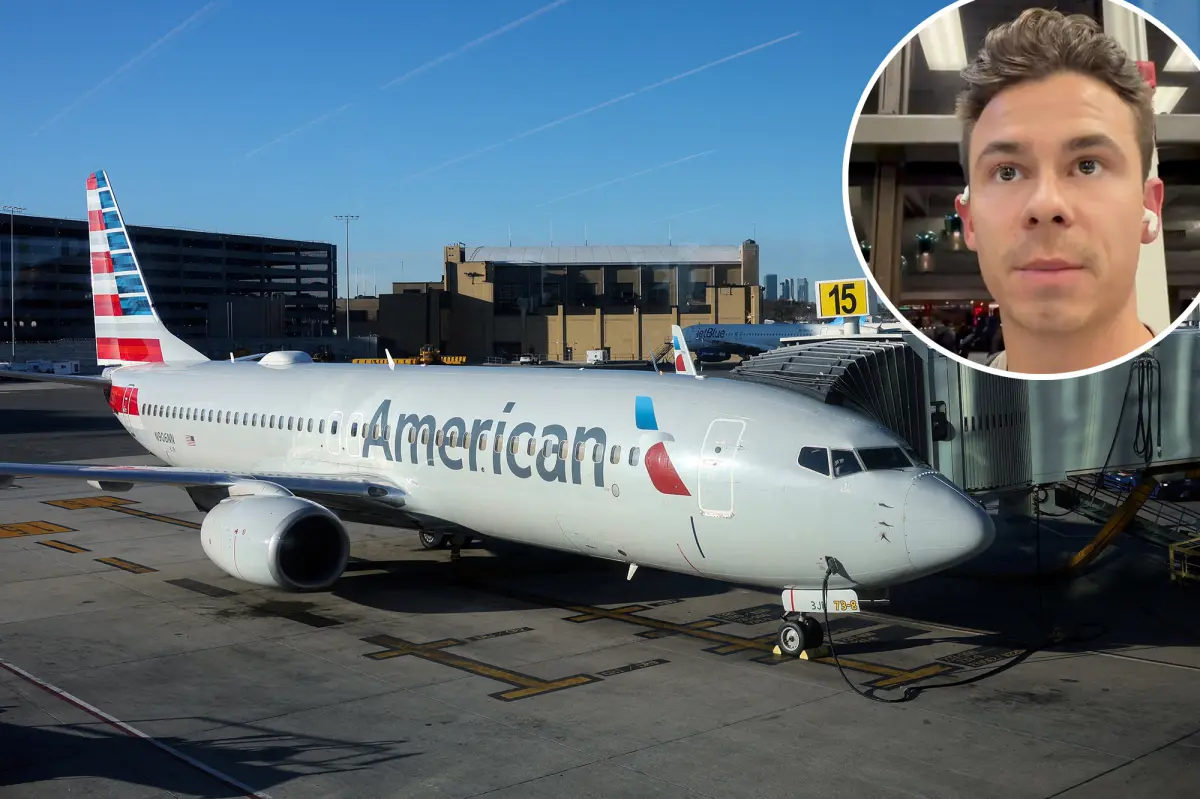
For the modern traveler, booking a flight has increasingly begun to feel less like planning an exciting journey and more like entering a high-stakes lottery where the odds are heavily stacked against the consumer. This anxiety-inducing reality was thrust into the public spotlight recently when Tyler Jackowski, a popular digital creator with a massive following of 3.8 million on TikTok, decided to document what can only be described as a travel disaster of epic proportions. Jackowski’s routine trip from Dallas to New York quickly devolved into a prolonged, agonizing test of human patience, prompting him to share his harrowing experience in a viral video that has struck a profound nerve with fed-up flyers worldwide. Captioned with the painfully relatable hook, “POV: you flew with American Airlines,” the video captures the slowly escalating dread of a routine flight turned upside down by a cascade of corporate missteps and systemic failures. It did not take long for his post to capture the internet’s attention, rapidly amassing millions of views and serving as a digital lightning rod for a global community of travelers who are entirely exhausted by the increasingly chaotic, expensive, and unpredictable nature of modern aviation.
The nightmare began just as passengers were preparing for the final leg of their journey, believing they were a mere thirty minutes away from touching down at their destination in New York. Instead of the familiar chime signaling the start of their descent, the cabin was met with a jarring announcement from the flight deck: the aircraft was running dangerously low on fuel and would have to make an unscheduled, immediate diversion to Philadelphia. The plane eventually landed safely in the City of Brotherly Love, but rather than taxiing to a gate where passengers could at least stretch their legs or buy food, the aircraft was directed to a remote holding spot on the tarmac to undergo refueling. For forty-five excruciating minutes, the plane sat in silence, with the airline offering absolutely no updates or announcements over the intercom to ease the growing anxiety of those on board. When communication finally resumed, it was characterized by a frustrating blend of false hope and looming disaster; crew members assured passengers they were almost ready to go, but casually dropped the caveat that there was a strong chance the pilots and flight crew might “time out” due to federal shift limits, which would legally prevent them from flying any further that day. However, staff confidently maintained that if they could manage to push back within the hour, they would easily beat the clock, temporarily pacifying the weary travelers with empty promises of a swift departure.
Unfortunately, this fragile optimism was shattered almost as soon as the plane finally pushed away from the gate. Instead of heading to the runway for takeoff, the aircraft sat idle on the tarmac for another thirty minutes before a grim announcement over the intercom confirmed the passengers’ worst fears: the crew had officially timed out, and the plane would have to slowly crawl back to the gate. It was at this moment of utter defeat that Jackowski, realizing his day was completely derailed, began frantically searching on his phone for train tickets as an alternative way to escape Philadelphia and get back to New York. Once the plane returned to the gate, the airline staff desperately tried to control the rising tide of anger in the cabin by assuring everyone that there was no need to panic. They claimed that a replacement pilot was already flying in from Chicago and would arrive in just forty-five minutes to take over the flight. Sensing a compounding disaster, exhausted passengers began begging the crew to just let them off the aircraft so they could arrange their own ground transportation to New York, but they were initially met with a strict refusal, told they were legally required to remain on board.
The situation rapidly devolved from frustrating to downright absurd when the airline finally conceded to letting passengers off the plane, but delivered a catch that felt like an act of psychological warfare: their checked luggage would not be allowed to leave with them. The crew announced over the intercom that any passenger choosing to disembark would have to leave their bags on the aircraft, meaning they would not see their belongings for several days, or potentially over a week, unless they chose to pay out of pocket to have their own bags mailed to their homes. While passengers carrying only lightweight personal items eagerly scrambled to exit the aircraft, those with large, checked suitcases were left trapped in an agonizing dilemma, forced to choose between their time and their personal belongings. To make matters worse, the crew then announced that gate agents had to manually write down the name of every single passenger choosing to leave the plane before they would allow the new captain to board, adding another thirty minutes of bureaucratic foot-dragging to the ordeal. Just when the remaining passengers believed they had survived the peak of the administrative chaos, a final, devastating blow was delivered over the speakers: the airline was abandoning the plan entirely and ordering every single person to deboard the aircraft immediately.
Once inside the chaotic terminal, the stranded passengers were met with further disappointment when they were told they would have to wait indefinitely for the airline to source an entirely new crew, and that their luggage would remain completely inaccessible unless they wanted to deal with the logistics of mailing it to themselves later. Jackowski continued to document the agonizing unfolding of events in real-time, capturing a particularly maddening update where gate agents admitted that while a new set of flight attendants had officially been assigned to their flight, the airline literally had no idea where those crew members currently were. This candid, unfiltered look into the operational disarray of a major carrier resonated deeply with the online public, pulling in over 2.6 million likes and sparking an avalanche of furious comments from other victimized travelers. Users flooded the comments section to share their own travel horror stories, offering advice on how to legally demand compensation up to four times the ticket price for such egregious delays, while others praised Jackowski for exhibiting what they called “the most respectful breakdown” they had ever witnessed, marveling at his ability to maintain his composure under such immensely frustrating circumstances.
Ultimately, Jackowski’s disastrous journey is not just an isolated incident of bad luck, but rather a glaring symptom of a deeply broken global aviation system where corporate efficiency is prioritized far above customer welfare. Disgruntled commenters pointed out that these systemic failures are rampant across the entire industry, noting that rival carriers like Delta are no better, and expressing a shared grief over the fact that passengers routinely pay exorbitant prices only to be treated like an inconvenience by the very companies they fund. The persistent issues of jet fuel shortages, inadequate staffing, and abysmal communication have turned what should be a straightforward public utility into a stressful, hostile environment for consumers. Until major airlines are held legally and financially accountable for the cascading logistical failures that derail the lives of their customers, travel experiences will continue to decline, and viral videos like Jackowski’s will remain a painful, relatable reminder of the indignities of modern flight.