




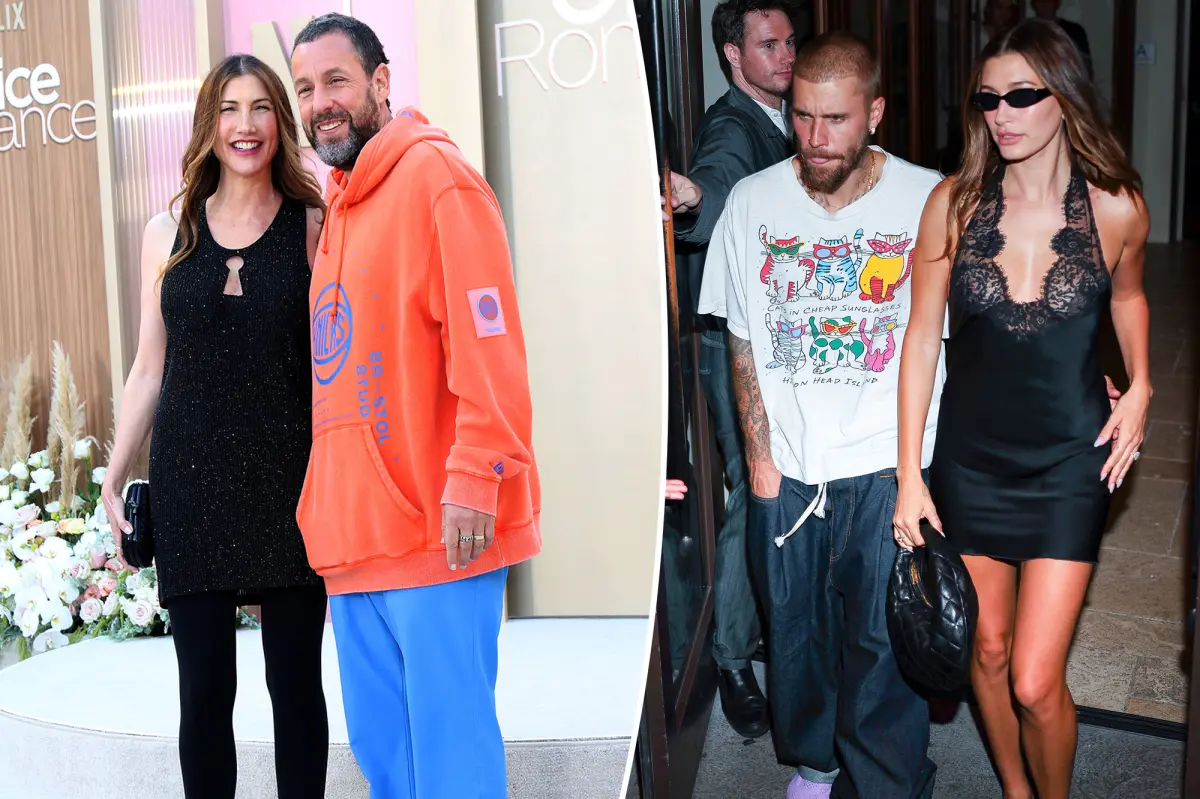
The glittering red carpets of Hollywood have long served as the ultimate global stage for high fashion, artistic expression, and calculated elegance, but a baffling and increasingly pervasive trend is threatening to dismantle decades of sartorial decorum. It seems that a growing contingent of the world’s most prominent husbands have decided that showing up to major public events looking like they spent the day working from home—specifically taking critical Zoom meetings with their cameras firmly switched off—is the pinnacle of modern personal expression. Take, for instance, the beloved actor Adam Sandler, who recently attended the high-profile premiere of his wife Jackie’s new film, “Office Romance,” looking less like a supportive, proud spouse and more like he was running late for a casual workout at the local Planet Fitness. Sandler graced the red carpet clad in an oversized, baggy New York Knicks hoodie, paired with remarkably ill-fitting cobalt blue trousers that billowed chaotically over a pair of noticeably dirty, scuffed sneakers. This jarring visual disparity was made all the more striking by the physical contrast of him standing next to his wife, who looked effortlessly chic and highly sophisticated in an elegant, all-black ensemble complete with a beautifully coordinated, cute black clutch. Unfortunately, Sandler is far from alone in championing this lazy aesthetic; we frequently witness similar stylistic offenses from pop star Justin Bieber, who regularly steps out alongside his flawlessly styled, glamorous wife Hailey wearing ankle-length athletic shorts, excessively sagged jeans that hang down to his mid-thigh, and bizarre, alien-like sunglasses. This frustrating lifestyle phenomenon, which has earned these husbands the moniker of the “Schlub Hub,” sends a disappointing and unbalanced message to onlookers, suggesting that while women are expected to invest immense time, energy, and resources into presenting their absolute best selves, their male partners are entirely exempt from making even a modicum of effort, reducing a shared celebration of achievement to a display of stubborn, lazy indifference.
At its core, underdressing so severely for significant public events is not simply an eccentric, harmless style choice; it represents a profound lack of social courtesy and respect for both the occasion and the people you are with. When we choose how we present ourselves to the world, we are actively communicating our values and our level of respect for those around us, and showing up to a partner’s professional milestone in gym clothes can easily be interpreted as a form of self-absorption and disregard. This sentiment is widely shared by the general public, as evidenced by a wave of online criticism and disappointment directed at Sandler’s recent red carpet appearance next to his immaculate wife. On platforms like Reddit, observers did not pull their punches, with one commenter calling him a poser and a loser who pretends to be entirely disinterested in fame but constantly positions himself in the spotlight of the paparazzi and major film promotions. Another rightly pointed out that while a casual, relaxed vibe might be tolerable when a star is promoting their own solo projects, supporting a spouse’s hard-earned creative work demands a basic level of effort—suggesting that he could have easily thrown on some clean khakis and a neat golf shirt—as a simple gesture of solidarity and pride. When a husband refuses to dress up for his wife’s big night, he effectively steals her thunder, turning what should be a celebration of her hard work into a viral public debate about his own eccentric, lazy wardrobe choices, which is ultimately deeply unfair to the woman standing proudly beside him.
In stark contrast to this culture of deliberate carelessness, investing time, thought, and financial resources into one’s wardrobe can be a deeply rewarding, meditative, and transformative experience. As a man in my thirties, which makes me nearly two decades younger than Sandler, I made a conscious decision to reject the tide of pajama-clad conformity and instead embrace a more sophisticated, intentional approach to personal style. Over the past two years, I have invested upwards of ten thousand dollars—an amount that is a mere drop in the bucket for ultra-wealthy celebrities who refuse to dress well—to curate a bespoke wardrobe filled with tailored trousers made from vintage fabrics, immaculate 1980s blazers, and carefully selected accessories. This financial and emotional commitment was not born out of mere vanity or superficial competition; rather, it was driven by a desire to enter a new decade of my life with a sense of dignity, purpose, and self-respect. Selecting and coordinating an outfit each morning has evolved into a highly meditative and grounding daily ritual, akin to savoring a meticulously brewed cup of artisanal coffee before starting the day. Adding finishing touches, such as stacking unique antique gold rings on both of my hands, allows me to express my individuality and creativity, proving that fashion and jewelry are not exclusive domains of women but are powerful tools of self-expression, confidence, and strength for any man willing to care.
The real-world benefits of this sartorial mindfulness extend far beyond personal satisfaction, frequently opening doors to genuine, unexpected human connections in our increasingly cold and disconnected society. When you step out into the world looking polished and put-together, people notice, and they often respond with warmth, curiosity, and respect. For instance, during a recent subway commute downtown, a woman stopped me mid-journey simply to compliment my aesthetic, starting with my antique gold rings before expanding her appreciation to my entire outfit, from my wide-leg dress pants down to my highly polished leather loafers. The woman, who later introduced herself as Steph, explicitly noted that not every man pays such close attention to detail, and she was genuinely happy to see a guy who did. What could have been another mundane, silent train ride instead blossomed into an incredibly engaging, heartfelt conversation between two complete strangers about the lost art of dressing well and what personal style means in the modern era. Moments like these reveal a simple truth: people appreciate effort, and when a man takes pride in his appearance, it serves as a visual invitation for positive social interactions, reassuring others that he is someone who respects himself and, by extension, respects the spaces and people he encounters throughout his day.
There is a persistent, misguided belief among some men that wearing whatever they want, whenever they want, is a sign of supreme confidence and rugged individualism, but the reality is much less flattering. Clothing that consists of low-slung athletic pants, worn-out shirts riddled with holes, and filthy, unwashed sneakers does not project strength or cool indifference; instead, it often causes others to actively avoid or ignore you, drawing attention for all the wrong reasons. True confidence does not require you to rebel against basic standards of hygiene and decorum, nor does it ask you to make a mockery of events that require formal respect, with the red carpet being one of the absolute highest-stakes arenas for visual presentation. When a man refuses to meet the basic expectations of a formal setting, he is not exhibiting free-spirited independence; he is displaying an adolescent refusal to participate in the shared social agreements that keep our communities cohesive and respectful. Dressing well is an act of generosity to those around us, a signal that we value their presence enough to present our best selves, whereas stubborn sloppiness is a silent declaration that one’s personal comfort trumps everyone else’s experience.
Ultimately, the battle against the “Schlub Hub” is a call to action for husbands and partners everywhere to reclaim their style, step up their game, and show up for their loved ones with the aesthetic dignity they deserve. It is never too late to learn how to navigate a closet, to discover the confidence of a well-fitted blazer, or to understand that looking good is a worthy investment in one’s relationships and self-worth. For wives who have spent years praying to the fashion gods for their style-challenged spouses to finally retire their threadbare sweatpants and battered gym shoes, there is hope on the horizon. By submitting a brief description and photos of your sartorially struggling partner to the lifestyle desk at the NY Post, you might just secure him a life-changing makeover that will help him see himself, and the world, in a whole new, stylish light. Elevating a partner’s style is not about changing who he is at his core, but rather helping him reveal a polished, respectable version of himself that honors both his potential and the incredible partner standing proudly by his side, proving that a little effort and care can transform not just an outfit, but an entire life.