





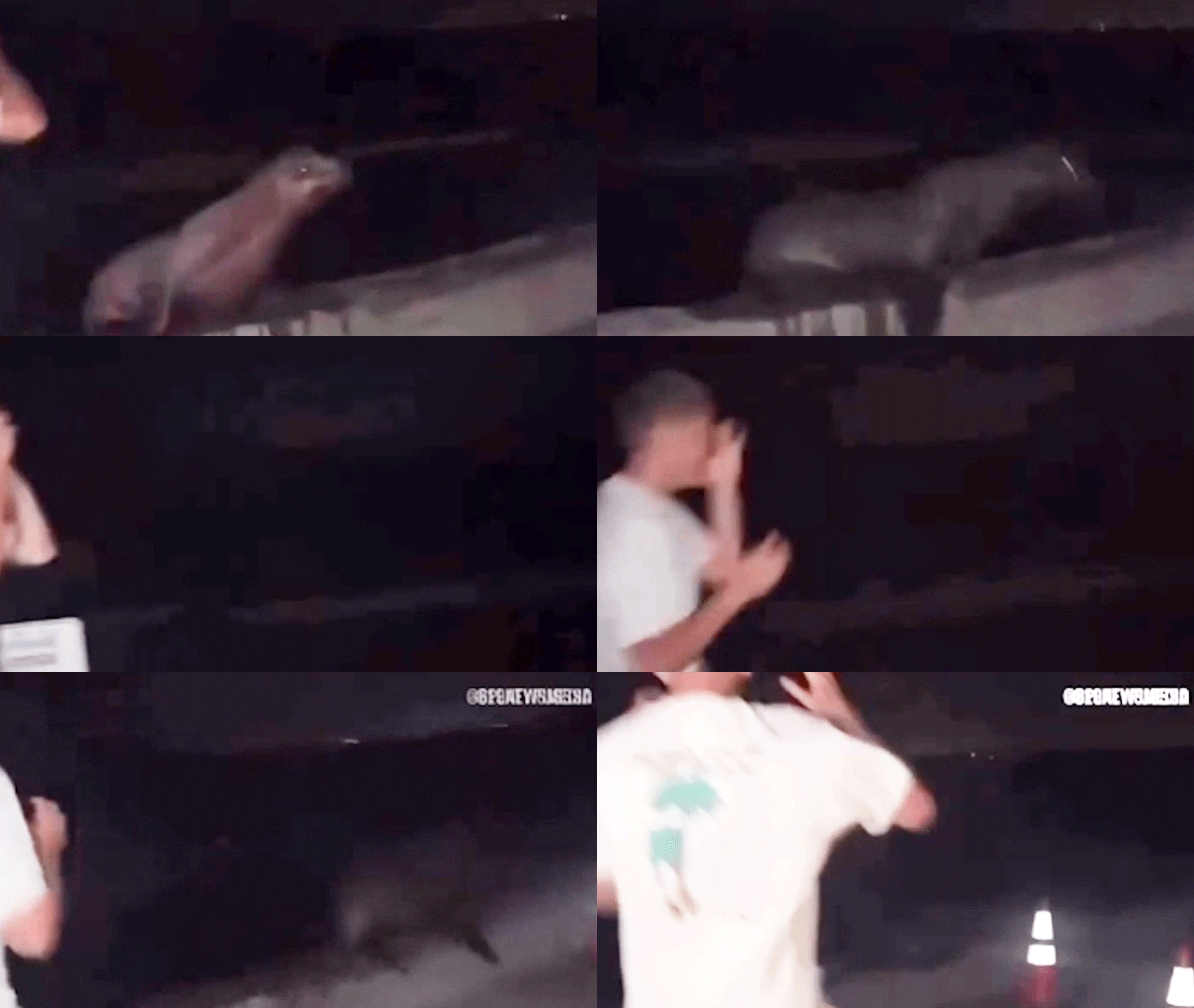
In the sun-drenched coastal haven of La Jolla, California, a disturbing act of cruelty unfolded that would capture national attention and serve as a stark reminder of the legal and ethical boundaries protecting our planet’s wildlife. An 18-year-old teenager, Tyler Muehl, found himself at the center of a federal investigation after a video surfaced showing him repeatedly kicking a defenseless sea lion in the face. The incident, which occurred on a peaceful July afternoon, was not merely a lapse in judgment but a flagrant violation of federal law, specifically the Marine Mammal Protection Act, which strictly prohibits the harassment and disturbance of marine animals. The footage, which quickly went viral across social media platforms, depicted a scene that sparked outrage and condemnation from animal rights activists, law enforcement, and ordinary citizens alike, transforming a local beach altercation into a nationally discussed case about wildlife protection and accountability.
According to the criminal complaint filed in federal court and statements from the Justice Department, the confrontation began when Muehl approached a sea lion that was resting quietly on a seawall, a common sight in the La Jolla area where marine life often shares the shoreline with beachgoers. What made this encounter particularly egregious was the deliberate and aggressive manner in which the teenager initiated contact. As seen in the viral video, Muehl approached the animal with his hands raised in what appeared to be a fighting stance, seemingly preparing for a physical confrontation with the marine mammal. In a bizarre display of bravado, he even compared himself to Max Holloway, a well-known Ultimate Fighting Championship (UFC) fighter, suggesting perhaps a misguided attempt to emulate combat behavior in a completely inappropriate and harmful context. This theatrical approach quickly escalated into violence as he proceeded to kick the sea lion four times, with each blow causing the animal to recoil, flinch, and demonstrate clear signs of distress and physical pain. The prosecutor’s office noted that the animal’s immediate reaction—rearing back, flinching, and attempting to recoil from the attack—served as clear evidence of the harm being inflicted.
The situation grew even more troubling as the sea lion attempted to escape its aggressor. Rather than showing any remorse or empathy, Muehl reportedly chased after the terrified animal, delivering additional kicks as it stumbled and struggled to flee along the seawall. The sea lion, clearly frightened and in distress, eventually managed to find its escape route, but the damage had already been done—not only to the animal’s physical state but also to any sense of safety it had enjoyed in its natural habitat. The video footage, which was captured by an unknown individual and subsequently shared online, provided undeniable evidence of the attack, prompting a swift response from federal authorities. The National Oceanic and Atmospheric Administration (NOAA), the federal agency responsible for protecting marine life, immediately launched an investigation into the incident, working to identify the perpetrator and build a case against him. Within days, Tyler Muehl was identified and contacted by authorities, leading to his eventual appearance in federal court, where he would face charges that carried potentially serious consequences, including up to one year in federal prison and fines reaching $100,000.
The legal proceedings against Muehl concluded with a guilty plea, as he admitted to the misdemeanor violation of the Marine Mammal Protection Act, a significant piece of legislation enacted to safeguard the well-being of marine animals like sea lions, seals, and whales. In the federal courtroom, Muehl accepted responsibility for his actions, acknowledging that he had indeed kicked the sea lion on multiple occasions and chased the animal as it attempted to flee. As part of his plea agreement, he conceded that the viral video accurately represented what had occurred on that July 22 afternoon, removing any potential defense that the footage had been edited or taken out of context. The U.S. Attorney’s office, led by Adam Gordon, emphasized the severity of the offense through a series of statements that underscored the importance of protecting marine wildlife. “Federal crime. Federal consequences,” Gordon wrote in a statement, signaling that such behavior would not be tolerated and would be met with serious legal repercussions. The case highlighted the growing tension between human activity and wildlife preservation in coastal communities, where encounters between people and marine animals have become increasingly common, raising questions about how to balance recreational use of beaches with the need to protect vulnerable species.
The public reaction to the incident was swift and fierce, reflecting a broader societal concern for animal welfare that has intensified in recent years. People for the Ethical Treatment of Animals (PETA), one of the most prominent animal rights organizations in the world, took to social media to express their outrage, crafting a succinct yet powerful message that resonated with thousands of followers. “Assault is ASSAULT, no matter the species. Leave animals ALONE, and always speak up when you witness abuse,” the organization wrote on their X account (formerly Twitter), capturing the sentiment of many who viewed the video. The comment underscored a fundamental principle of animal rights advocacy: that cruelty toward animals is not merely an act of poor judgment but a serious moral failure that must be condemned and punished. The widespread sharing of the video and the subsequent legal actions also served as a deterrent message to others who might consider engaging in similar behavior toward wildlife, reminding the public that federal laws apply to everyone, regardless of their age or intentions. The incident became a teaching moment, prompting discussions about responsible wildlife viewing practices and the importance of maintaining safe distances from wild animals, both for their protection and for human safety.
The case also brought renewed attention to the struggles of marine animals in popular tourist destinations, where their natural habitats increasingly intersect with human activities. Sea lions, while sometimes considered nuisances by commercial fishermen and waterfront property owners, are a vital part of the marine ecosystem and enjoy federal protection under the Marine Mammal Protection Act, which was signed into law in 1972. This legislation makes it illegal to harass, feed, hunt, capture, or kill marine mammals, with harassment defined broadly to include any act that disturbs the animal’s natural behavioral patterns, including resting, breeding, or feeding. NOAA official Eric Morgan emphasized this point in his public statements following the guilty plea, noting that “intentionally striking or kicking a marine mammal is not only illegal, it is dangerous for the well-being of the animal.” His remarks served as a reminder that these protections are not merely legal formalities but essential for ensuring the survival and health of marine species that face numerous threats from human activities, including climate change, ocean pollution, and habitat destruction. The fact that sea lions are frequently counted as vulnerable populations makes incidents like this even more troubling, as each act of harassment can have lasting impacts on the animals’ ability to thrive in their natural environment.
Looking forward, the case’s outcome will be determined during the sentencing hearing scheduled for October 20, where U.S. District Judge will decide Tyler Muehl’s fate. With the guilty plea on recordaine, he faces potential incarceration of up to one year and monetary penalties of up to $100,000, though the actual sentence will depend on various factors, including his criminal history, remorse, and circumstances surrounding the offense. The case has also raised questions about the broader implications of such actions, particularly in a state like California, which has some of the most progressive animal protection laws in the country. As the sentencing date approaches, many will be watching to see whether the court delivers a sentence that adequately reflects the severity of Muehl’s actions and sends a strong message about the consequences of wildlife harassment. Beyond the legal outcome, this incident serves as a reminder of our collective responsibility to protect and respect the animals with whom we share our beaches and oceansrand the importance of speaking up when we witness instances of cruelty or environmental degradation. The sea lion, an innocent victim of senseless aggression, has become a symbol of the need for greater compassion and awareness in our interactions with the natural world, forcing us to confront uncomfortable questions about human behavior and our relationship with the other species that call this planet home.