





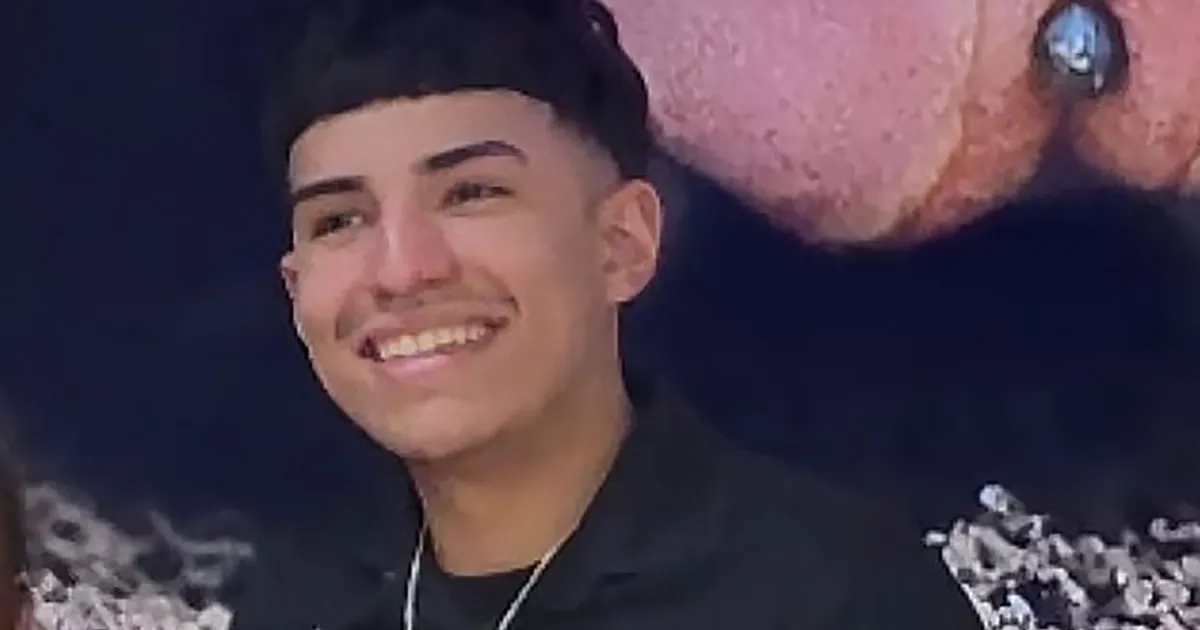
The vibrant city of San Antonio, Texas, is a place where basketball is not merely a sport but a unifying cultural lifeline, a shared heartbeat that connects neighborhoods, generations, and families in a collective tapestry of pride. When the San Antonio Spurs clinched a thrilling victory over the Oklahoma City Thunder in Game 6 on Thursday, May 28, the entire city erupted into its signature, high-octane celebration. Amidst this sea of euphoria was seventeen-year-old Jose Luis Rodriguez III, warmly known to his friends and family as Joey, a young man whose love for his hometown team burned with the fierce, uncomplicated passion of youth. Caught up in the infectious waves of adrenaline and joy that flooded the streets, Joey joined the ranks of excited fans poured onto the roadways. Seated high on the passenger-side window frame of a moving pickup truck—a precarious yet common posture during these chaotic celebrations—Joey was living in the moment, cheering alongside his community. Tragically, the high-flying excitement shattered in an instant when the vehicle struck a concrete curb with sudden force. The abrupt impact threw Joey from his perch, sending him falling headfirst onto the unforgiving pavement. The sheer violence of the impact caused catastrophic head injuries, leaving him motionless on the street as bystanders watched in horror. Emergency medical responders rushed Joey to a local emergency room, where doctors and nurses fought frantically to bring him back from the brink of death; for eight agonizing minutes, the teenager had no detectable pulse. Though medical teams managed to restart his heart before transferring him to a specialized trauma center, the tragic reality soon set in as neurologists declared Joey brain-dead, leaving his family to grapple with a devastating nightmare that began in a moment of pure celebration.
The sequence of events leading up to that fateful night reveals a poignant, deeply human struggle between parental protection and the natural teenage desire to be part of something larger than oneself. Before the game had even ended, Joey had eagerly approached his parents, asking for their permission to join the rowdy post-game street celebrations that were bound to take over the city if the Spurs forced a decisive Game 7. Intuiting the unpredictable and often hazardous nature of these spontaneous street rallies, his parents initially gave him a firm, protective “no,” hoping to keep their son safe at home. However, driven by the intense social pull that defines adolescence, Joey sought a compromise, reassuring his parents that he would be accompanied by responsible adult supervision before heading out into the night with his friends. It is a classic, heart-wrenching scenario that plays out in household after household—a young man testing his boundaries, eager to share a historic moment with his peers, and parents desperately trying to balance trust with safety. The realization that Joey circumvented their boundaries to join his friends in the unmonitored chaos of the streets adds an unbearable layer of grief and “what-ifs” to an already agonizing situation. His aunt, Yvonne Hudson, recalled the terrifying aftermath, describing the sheer volume of blood left on the pavement, a stark, visceral reminder of how quickly a night of triumph can transform into an unspeakable tragedy.
Inside the sterile walls of the trauma center, a quiet but fierce emotional war is being waged between the cold finality of medical science and the enduring power of familial love. On one side stands the grim assessment of the medical team and Joey’s aunt, Yvonne, who pragmatically acknowledges that the seventeen-year-old is not expected to survive his extensive brain injuries, preparing herself and the family for the inevitable, heartbreaking loss. On the other side is the unshakeable, resilient spirit of Joey’s grandmother, who refuses to let go of the boy she helped raise. Clinging to her devout faith, she speaks of a belief in Miracles and the divine, finding solace and a glimmer of hope in the fact that Joey’s internal organs are still functioning, kept alive by supportive technology. This painful dichotomy—the clinical reality of brain death contrasted with a family’s desperate, prayerful vigil—captures the raw, fragile nature of human grief. The grandmother’s resolve to stay strong for her grieving son, her daughter-in-law, and the rest of their fractured family is a testament to the quiet heroism found in hospital waiting rooms across the world, where love stubbornly refuses to yield to despair, even when the data offers no comfort.
To fully understand how Joey’s tragedy unfolded, one must understand the deeply entrenched history of San Antonio’s sports culture, specifically the beloved tradition of the “honking” celebrations. Since 1999, when legendary coach Gregg Popovich led the Spurs to their very first NBA championship, victories have been met with a unique civic ritual. Minutes after the final buzzer, thousands of fans flood the downtown streets, forming massive gridlocks of cars, trucks, and SUVs, creating a deafening chorus of car horns, music, and cheers. This tradition is a beautiful display of community solidarity, but over the decades, it has also developed a dangerous undercurrent. In the heat of the moment, the boundaries of safety often dissolve; fans routinely hang out of passenger windows, sit on top of moving vehicles, and dance in truck beds, driven by a collective euphoria that temporarily blinds them to the physics of motion and gravity. What began as a harmless release of civic joy has periodically escalated into dangerous territory, where the thrill of the victory overshadows the basic instincts of self-preservation. Joey’s accident is a heartbreaking reminder of the hidden costs of these collective rituals, illustrating how easily a beloved community tradition can turn hazardous when the frenzy of a crowd overrides personal safety.
The bittersweet complexity of this tragedy became even more pronounced just two nights later, when the Spurs defeated the Oklahoma City Thunder in the high-stakes Game 7, securing their triumphant return to the NBA Finals for the first time since 2014. While the city erupted in joy once again, the dark shadow of Joey’s accident hung heavily over the organization and the community. In the post-game press conference, amidst the flashing cameras and the rush of victory, rookie sensation Dylan Harper chose to use his platform to speak directly to the hearts of the fans. Displaying a level of maturity and empathy that transcended his rookie status, Harper bypassed the typical athletic platitudes to deliver a heartfelt, urgent plea for safety. Emphasizing how much the players love, appreciate, and rely on the passionate support of the San Antonio community, Harper begged the fans to look out for one another and celebrate responsibly. His words, “We understand y’all are excited but you got to be safe out there,” served as a crucial, grounding counterweight to the surrounding hysteria, bridging the gap between the glamorous world of professional sports and the fragile, real-life consequences of the fans who support them.
As San Antonio prepares to face the New York Knicks in the highly anticipated NBA Finals beginning on Wednesday, June 3, the city finds itself at a profound cultural crossroads. The upcoming series promises to bring intense excitement, media scrutiny, and public gatherings, but the memory of Joey’s fall serves as a sobering caution sign. For Joey’s family, the roaring crowds and the squeak of sneakers on the court will be replaced by the quiet, steady hum of hospital machinery and the agonizing process of saying goodbye to a life cut far too short. This tragedy challenges sports fans everywhere to redefine what it means to celebrate, urging a shift in behavior where collective joy is expressed through safe, respectful, and mindful appreciation rather than reckless, adrenaline-fueled stunts. The ultimate hope of Joey’s family, and of players like Dylan Harper, is that the young man’s devastating accident will not be in vain, but will instead inspire a lasting change in fan culture, ensuring that future victories are celebrated with a renewed commitment to preserving the precious lives of those who make the community so vibrant in the first place.