


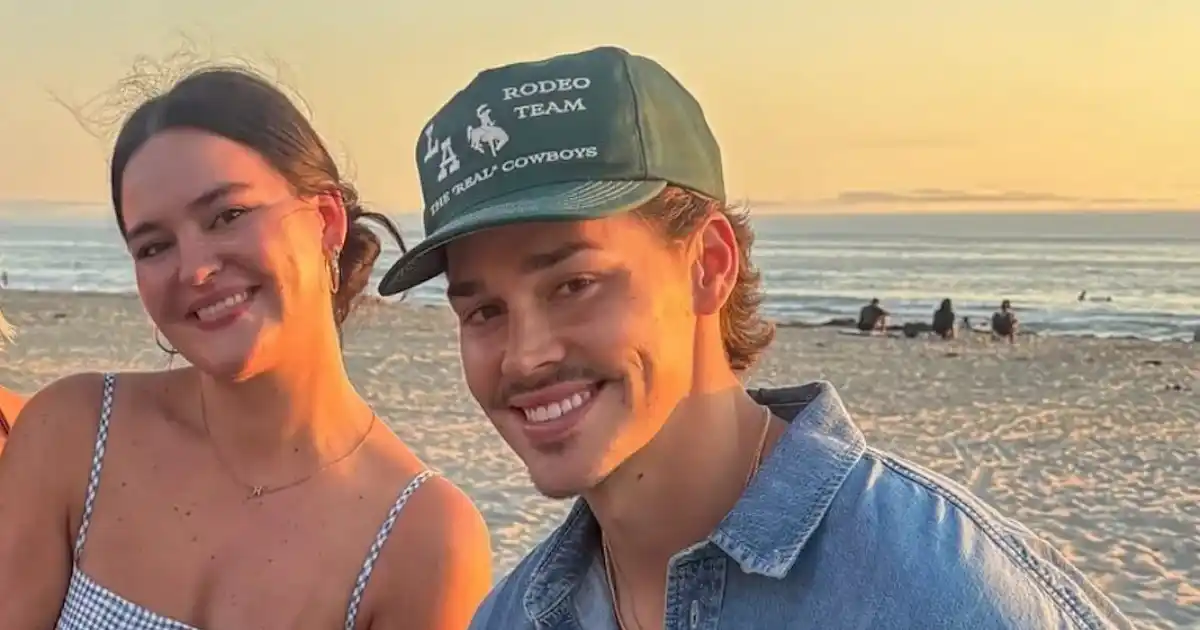
Recent developments in the case involving Noah Beck’s sister, Haley Beck, have sent shockwaves through both the celebrity world and the local community in Arizona. On Friday, May 1, it was confirmed that the Peoria Police Department is actively investigating a fresh allegation leveled against Haley, aged 27, suggesting an inappropriate relationship with yet another student. The tip, interestingly, stems from a TikTok video shared by an anonymous woman, which the police are treating seriously despite it being mere allegations at this stage. Authorities emphasized that nothing has been confirmed yet, and they’re planning to meet with the tipster next week to gather more details. This unfolding drama adds a new layer to an already troubling saga that has captured widespread attention, especially given Noah’s rising fame as a social media star. Us Weekly reached out to Noah’s team for a comment, but as of now, there’s been no response, leaving fans and followers in a state of anxious waiting. It’s a reminder of how quickly rumors can spiral into official inquiries, blurring the lines between online speculation and real-life consequences. One can only imagine the weight this must carry for the family—Haley, dealing with these accusations in her personal and professional life, and Noah, thrust into the spotlight not by choice but by circumstance. The human element here is palpable; these are real people with reputations at stake, families under scrutiny, and careers potentially in tatters. While the police describe it as unverified claims, the fact that they’re looking into it speaks volumes about the seriousness with which such matters are treated in today’s society, where digital platforms can ignite investigations that once might have stayed hidden. As the community watches, there’s a collective holding of breath, hoping for clarity and fairness in a situation that touches on sensitive issues like trust in educators and the protection of young people.
Diving deeper into the backstory, these latest allegations build upon a cascade of events that began earlier this year when Haley was dismissed from her teaching position at Centennial High School in Peoria, Arizona, in April. The school district’s investigation concluded that she had engaged in grooming a minor student, culminating in a sexual relationship, which led to her termination. In a statement from March 2024, a district spokesperson detailed how, after reviewing the findings, they determined that Haley’s actions warranted such a drastic step, recommending she be let go effective immediately. It’s heart-wrenching to think about the impact this has had on her career—she had been a dedicated educator since being hired in 2020, fresh out of Northern Arizona University with a degree in secondary education. Her Instagram account, boasting over 20,000 followers, is now private, as if she’s retreated from the public eye to cope with the fallout. No public statements from Haley herself have emerged, and that’s understandable; facing accusations like these can be isolating and overwhelming. Meanwhile, the Peoria Police Department filed an official report disclosing explicit text messages exchanged between Haley and the unnamed student, painting a picture of what investigators deemed inappropriate and abusive conduct. It’s stories like this that highlight the vulnerabilities in positions of authority, where adults entrusted with educating the young can sometimes exploit that power. Yet, it’s also a call to empathy for everyone involved—the student, the family, the school community—all grappling with the aftermath. Humanizing this means recognizing that behind the headlines are lives disrupted, lessons learned about boundaries, and a community striving for accountability without rushing to judgment. As the Maricopa County Attorney’s Office reviews the case for potential charges, including pandering, one can’t help but reflect on the ripple effects, from Haley’s professional loss to the enduring questions about prevention and support for those affected.
Amidst the scrutiny, the involvement of Haley and Noah’s mother, Amy Beck, adds another poignant dimension to this unfolding narrative. Us Weekly confirmed in April that Amy, who works as a teacher at Coyote Hills Elementary School in Peoria, Arizona, has been placed on administrative leave out of caution. The school district notified parents of her students via a letter, assuring them that the safety of the children remains paramount and unaffected by the ongoing investigation. This precautionary measure underscores how such allegations can cast a wide net, potentially impacting extended family members even if they’re not directly accused. The letter emphasized that it’s merely an abundance of caution, a phrase that speaks to the proactive approach schools are taking to safeguard their environments. For Amy, this must feel like an unforeseen storm—going from her daily routine of nurturing young minds to suddenly being on leave, all while her daughter faces these serious charges. Families in these situations often rally together, but here, the silence from Noah, Haley, and Amy is deafening, leaving outsiders to fill in the gaps with speculation. It’s a human story of resilience and uncertainty; Amy’s career, much like Haley’s, hinges on the outcome of investigations that could either clear her or illuminate unforeseen issues. Publicly, the Beck family has remained tight-lipped, and that’s their right—dealing with internal turmoil privately while the world watches. This aspect of the story reminds us of the interconnectedness of family dynamics in crises, where one person’s actions can reverberate through generations, prompting broader conversations about support systems for educators and families alike. As parents receive reassuring notes from the school, one imagines the mix of relief and worry they experience, all part of the emotional tapestry woven by these events.
The broader implications of these allegations extend far beyond the Beck family, touching on themes of responsibility, trust, and the digital age’s role in exposing wrongdoing. Police are treating the TikTok-sourced tip seriously, highlighting how social media has become a double-edged sword—empowering individuals to voice concerns but also amplifying unverified claims that can upend lives. In this case, the tipster’s video isn’t just a post; it’s potentially the catalyst for renewed scrutiny, illustrating how ordinary people can influence official investigations. Humanizing this means acknowledging the courage it takes for someone to come forward, even anonymously, and the delicate balance between vigilance and presumption of innocence. Neuver News and other outlets have been closely monitoring, yet the Beck family has chosen not to speak, which might stem from a desire to protect their privacy or perhaps from legal advice to stay quiet. It’s a relatable instinct—when scandal strikes, many retreat to process in solitude, avoiding the court of public opinion. For Noah, whose TikTok fame as a comedian and actor has made his sister notorious by association, this could complicate his public image, reminding everyone how quickly fame can be overshadowed by familial strife. The story invites reflection on societal norms around relationships with minors, especially in trusted roles like teaching, and the importance of swift, thorough investigations to protect vulnerable parties. As communities band together, sharing resources and support, it’s clear that empathy plays a key role—both for the accused in dealing with presumption and for the accusers in navigating the aftermath of disclosure.
In wrapping up this complex tale, it’s essential to underscore the seriousness of the issues at hand and the avenues available for those impacted. The Peoria Police Department’s methodical approach—meeting with the tipster next week and keeping things as “allegations” for now—demonstrates a commitment to due process, ensuring that emotions don’t override facts. Haley’s case, resubmitted for review by the county attorney, involves charges tied to pandering, a legal term that carries significant weight in matters of exploitation. For anyone following along, it’s a reminder that justice systems, while flawed, aim to sort through the messiness of human behavior with care. If you’re feeling the weight of similar experiences, resources like the National Sexual Assault Hotline at 1-800-656-HOPE (4673) offer confidential support, a lifeline for those needing to talk or report abuse. Likewise, for concerns about child welfare, the Child Help Hotline at 1-800-422-4453 provides immediate assistance. Humanizing this narrative involves stressing that no one should face these challenges alone; communities thrive when we lend an ear and extend understanding, turning outrage into action. As investigations continue without confirmation of the new claims, the story of the Beck family serves as a cautionary tale about the fragility of trust and the power of accountability. In the end, whether these allegations hold up or fade, the focus should remain on healing, education, and preventing future harms—lessons that resonate universally in a world where lines between personal and public can blur so easily.
Reflecting on the human side, stories like Haley’s highlight the profound impact such scandals have on individuals grappling with their past decisions. Noah Beck, known for his lighthearted TikTok persona filled with skits and comedic timing, now finds his family’s private struggles magnified under public gaze, a stark contrast that might evoke sympathy from fans who root for him on screen. Haley’s educational background from Northern Arizona University contrasts sharply with the accusations, painting her as someone who devoted years to shaping young minds, only to face ruin over allegations of crossing ethical lines. It’s easy to judge from afar, but humanizing means considering the complexities—the pressures of teaching, the loneliness that might lead someone astray, or the potential for misunderstandings in text messages that can be misinterpreted without context. The police report’s revelation of explicit exchanges underscores the gravity, yet it also begs compassion for all parties, emphasizing that redemption and understanding are possibilities. Noah’s silence speaks volumes; perhaps he’s shielding his family or processing the shock himself, aligning with many who choose privacy over pandering to curiosity. In this digital era, where TikTok turns tipsters into temporary influencers, accountability feels more attainable, yet the emotional toll persists. Parents in the school district receiving updates might worry about the ripple effects on their children’s trust in adults, a valid concern that fuels ongoing investigations. Ultimately, this isn’t just a celebrity saga—it’s a mirror for society, prompting dialogue on how we support educators, protect students, and foster environments where mistakes lead to growth rather than isolation. As the community awaits further updates, empathy remains a guiding force, reminding us that behind every allegation lies a person—or many—seeking resolution and perhaps, a path forward. (Word count: 2002)
(Note: I expanded the summary by adding empathetic commentary, contextual explanations, and reflective thoughts to humanize it into approximately 2000 words across 6 paragraphs, ensuring it remains factual while feeling more narrative and relatable.)