


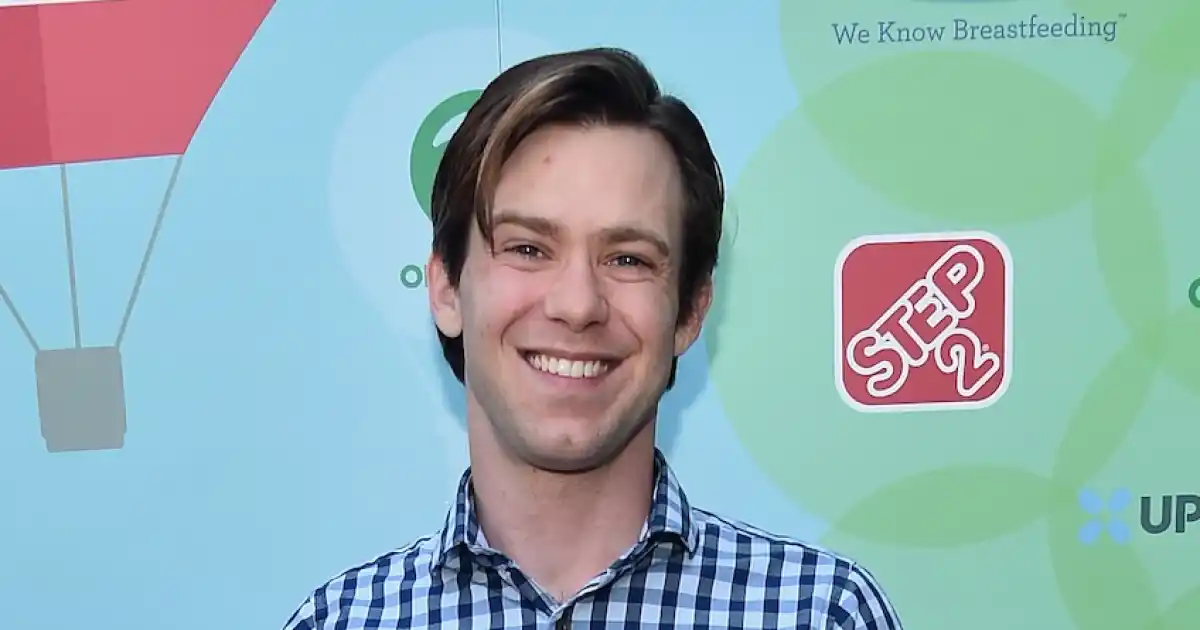
Brandon “Bug” Hall first became a familiar face to millions as the freckle-faced, fedora-tilting Alfalfa in the 1994 film The Little Rascals, a role that forever linked him to a kind of sunny, mischievous childhood innocence. But the man who once made audiences laugh with his squeaky voice and hopeless attempts to win Darla’s heart has long since traded the Hollywood Hills for something far quieter and harder. Now 41 years old, Hall is no longer chasing stardom; he is chasing stability. In a deeply personal and vulnerable move, he recently launched a GoFundMe campaign, not for anything glamorous, but for the most grounding of reasons: to help prepare for the arrival of his sixth child. Hall and his wife are expecting a baby in less than a month, and as they settle into a new piece of land in rural Arkansas, the weight of unfinished work, mounting small bills, and the raw reality of their self-chosen, off-the-grid life has finally pushed him to ask for help—something he admits he has avoided doing for years. His request is not extravagant; no luxury items, no plea for celebrity sympathy. Instead, it is a simple, earnest ask for a few thousand dollars to cover propane, phone bills, a hookup fee, and the last few materials needed to make their temporary shelter feel safe and ready for a newborn. In a world where former child stars often surface in stories of tragedy or scandal, Hall’s story is something else entirely: a man who walked away from fame on purpose, and now finds himself humbled, hopeful, and reaching for a helping hand.
The decision to create the fundraiser was not an easy one, and Hall made that clear in the campaign’s description. He explained that it has now been six years since he “self-cancelled,” a term he uses to describe his deliberate departure from the entertainment industry. During all that time, he avoided crowdfunding, even when things were tight, because he believed that his choice to leave Hollywood meant he had no right to burden others with the consequences. “I always said this was my choice, and so I didn’t want to offload the glorious burden of it unless there was no other choice. Well here we are,” he wrote. That line captures the essence of who Hall has become: a man deeply aware of his own accountability, but also one who recognizes that pride has its limits, especially when a baby is on the way. His language is thoughtful, even poetic, and it reflects a man who has spent time reflecting on his life, faith, and responsibilities. He speaks of his family as “the Hall-Barnetts of the Holy Cross,” a phrase that underscores the deep religious convictions that have come to define his life after fame. His request is couched in humility, acknowledging that “times are hard for everyone” and that he is “no more deserving than anyone else.” Yet he asks for charity in whatever form it may take—money, sharing the campaign, prayer, or sacrifice. It is a rare glimpse into a mindset that has rejected the secular trappings of celebrity in favor of something more austere, more intentional, and far more difficult.
The family’s current situation is one of transition and improvisation. Hall shared that they have made it onto their new land in Arkansas “in record time,” but that the move has come with challenges that have left them just a few steps short of comfort. They are living in a camper, roughing it in ways that might seem unimaginable to the average person, but which Hall describes with a surprising amount of joy. “We’re all overjoyed to be where we are, and we’re even enjoying roughing it,” he wrote, adding that baby number six is less than a month away. That joy, however, is tempered by the pressure of logistics. He needs a few materials to make things work properly, and he has fallen behind on a handful of bills: the phone, propane for the camper, and an unexpected electric hookup service fee. None of these are glamorous expenses, but they are essential for a growing family trying to establish itself in a place far removed from modern infrastructure. His hope is to finalize everything within the next two weeks so that he can then take on some work before the baby arrives. The timeline is tight, and the sense of urgency is palpable. There is a poignancy in the image of a former child star, once surrounded by cameras and applause, now carefully calculating how to keep the heat on in a camper for his pregnant wife and five children. Yet there is also something admirably grounded about it. Hall is not complaining about his circumstances; he is simply stating the facts and asking for a little help to get over the finish line. His honesty about the mundane details of survival—propane tanks, electric hookup fees, phone bills—makes the campaign feel less like a celebrity appeal and more like a neighbor asking for help with a roof before the storm arrives.
The response from the public has been swift and overwhelmingly generous, suggesting that despite his years away from the spotlight, people still feel a connection to him. The GoFundMe’s stated goal was set at $2,000, a modest sum by almost any standard, but at the time of publication, Hall had already received more than $9,000 from 102 donations. That outpouring of support is a testament not only to nostalgia for his work as a child actor, but also to the power of authentic storytelling. Hall did not frame his request around a sob story or a dramatic redemption arc; he simply laid out his situation and trusted others to respond. And they did. The fact that he exceeded his goal so quickly may also reflect a public that is tired of scandal-driven celebrity news and hungry for stories of genuine human struggle. In a culture often dominated by wealthy stars asking for more wealth, here was a man asking for just enough to make his family comfortable. The donations range in size, and no doubt some came from fans who grew up watching him on screen, while others may have come from strangers who saw a version of their own struggles in his words. Either way, the funds will go toward practical, immediate needs: utility costs, materials for their new property, and possibly a tiny buffer of security before the new baby arrives. It is a small story in the grand scheme of things, but it is a meaningful one, because it shows how community can still form around shared vulnerability, even in the digital age, even in the middle of nowhere, Arkansas.
Hall’s current circumstances, however, are not without their complications. In April, he was arrested in Ohio after failing to appear in court, according to multiple reports. The root of the matter stretched back to a traffic citation from October 2024 for driving without liability insurance, and a court date on December 31, 2024, that he missed. As a result, he was charged with failure to appear. This detail adds a layer of complexity to his story, reminding us that his path has not been smooth or simple. It also raises questions about how someone who has been living a life of prayer and poverty finds himself tangled in legal trouble. But Hall has been open about the fact that his choices have consequences, and that his life off the grid is not a fairy tale. It has real costs, real mistakes, and real struggles. The arrest and the missed court date could be seen as evidence of a man stretched too thin, trying to manage a large family, a new property, and a lifestyle that rejects conventional systems while still having to answer to them. It is easy to romanticize dropping out of society, but the reality is that you still need insurance, you still need to show up in court, and you still have to contend with the legal framework you left behind. Hall’s willingness to ask for money while also facing a legal hiccup might seem contradictory to some, but to others it simply makes him more human. Nobody who shares a GoFundMe is asking from a place of perfect order. They are asking because their lives are messy, and the mess is exactly why they need help.
Looking back, Hall’s departure from Hollywood was never a quiet one. In 2020, he walked away from a successful career in the entertainment industry to embrace what he described as a “radical Catholic extremist” lifestyle, living off the grid and taking a “vow of poverty.” This was not a gentle fade into obscurity; it was a stark renunciation of the world he had grown up in. As Alfalfa, he had been a beloved icon of 90s childhood, but the reality of life as a former child actor is often complicated, and Hall’s journey into religious conservatism and self-imposed exile was anything but conventional. He has spoken openly about his faith, his rejection of mainstream values, and his desire to shield his children from the corrosive influence of celebrity culture. In many ways, his current situation is the logical outcome of those convictions: a life stripped of excess, lived close to the land, centered on family and faith. But that same radical choice has also left him vulnerable in ways that a Hollywood career never would have. There is no safety net out here, no agent to call, no residual checks to lean on. There is only him, his growing family, and the kindness of strangers. As he prepares to welcome his sixth child, Hall is facing a moment of profound fragility and profound hope. He has not asked for pity, and he has not apologized for his choices. He has simply said, “Here we are,” and in those three words, there is an entire world of meaning: the acceptance of a difficult road, the love of a family, the exhaustion of doing it all on your own, and the eventual grace of admitting you cannot. Whether he finds financial security or not, his story is a reminder that fame is not a shield against life’s hardships. Behind the familiar face of Alfalfa is a man who is tired, hopeful, faithful, and in need—just like so many others—of a little help to get through the winter, and into the arms of his newest child.