




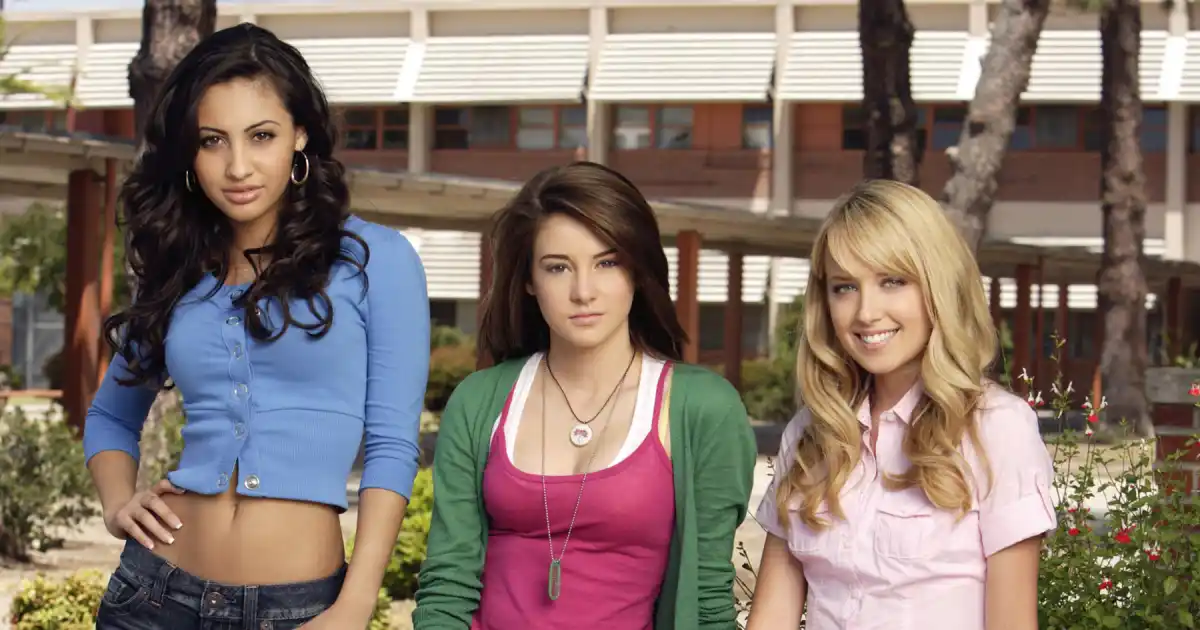
The journey of a creative spirit in the entertainment industry is rarely a straight line, but rather a winding path marked by self-discovery, evolving ambitions, and the rare, enduring human connections that withstand the fleeting nature of Hollywood. For multi-hyphenate artist Megan Park, this journey is beautifully exemplified by her unbreakable, decade-spanning bond with actress Shailene Woodley. Having met on the set of the hit teen drama The Secret Life of the American Teenager in the late 2000s, the two forged a friendship that has defied the industry’s reputation for transient relationships. Park, now a seasoned writer and director, warmly refers to Woodley as her “ride or die,” a steadfast anchor in an otherwise turbulent profession. This profound personal connection has naturally bled into their professional lives, with Woodley previously appearing in Park’s critically acclaimed directorial debut feature, The Fallout. As Park launches her latest television endeavor, the Prime Video series Sterling Point, the exciting possibility of another creative reunion with Woodley looms large. For Park, collaborating with those who share her history is not merely a nostalgic exercise, but a source of genuine joy and creative safety. The prospect of bringing Woodley into the world of Sterling Point highlights a beautiful truth about Park’s creative philosophy: the best art is made in the company of those who truly know, support, and challenge you, turning the collaborative process of filmmaking into an extension of a deeply rooted, lifelong sisterhood.
To fully appreciate the evolution of Megan Park’s career and her artistic perspective, one must look back at the cultural landscape of the late 2000s and early 2010s, an era when The Secret Life of the American Teenager reigned supreme on ABC Family. Running from 2008 to 2013, the series was a foundational piece of teen media, navigating highly dramatized, urgent storylines centered around teenage pregnancy, high school romance, and the complex web of family dynamics. For Park and a young ensemble cast that included Woodley, Kenny Baumann, Francia Raisa, and veteran star Molly Ringwald, the show was a whirlwind experience during a vastly different cultural epoch. Looking back, Park reflects on this formative period with a mix of deep nostalgia and practical gratitude, noting how vastly different the landscape of television production was compared to today’s streaming-dominated world. For a young actress, the grueling schedule of a long-running network drama served as a masterclass in the realities of television production. It was on those sets that Park demystified the mechanics of filmmaking, learning the distinct, vital roles of every crew member behind the scenes and developing an intuitive comfort with the camera. Yet, beyond the technical training, the most enduring legacy of her time on the show was the tight-knit community of actors who navigated that unique, high-pressure era together—a surrogate family with whom Park remains remarkably close to this very day.
Despite the invaluable lessons and lifelong friendships she garnered from her early acting years, Park eventually found herself grappling with a profound sense of creative disconnect. As she navigated various acting roles throughout her young adulthood, she frequently felt that the scripts she was handed failed to mirror the authentic, messy, and nuanced realities of what it actually felt like to grow up. The young adult genre of that era was often characterized by sanitized, over-dramatized representations of youth, written by older creatives who relied on moralizing tropes or hyper-polished dialogue rather than the genuine, often awkward ways teenagers actually communicate and process emotion. This realization sparked a quiet revolution within Park, driving her to transition from in front of the camera to behind it. Her desire was simple yet profound: to cultivate a space in the young adult genre that honored the authentic, vulnerable, and unvarnished experiences of the modern generation. Her transition to directing has been defined by this search for truth, as seen in her poignant exploration of trauma in The Fallout and her subsequent coming-of-age projects. By centering her work on genuine human emotion, mental health, and the complex beauty of youth, Park has established herself as a vital, empathetic voice in modern storytelling, bridging the gap between what teenagers actually experience and how they see themselves reflected on screen.
This shift from actress to director has also brought about a significant, highly personal transformation in how Park views her own place in the industry. Unlike many performers who transition to directing with the intention of eventually starring in their own projects, Park has embraced a refreshing and resolute boundary, expressing that she does not miss acting in the slightest. The relief of stepping away from the intense physical scrutiny and vulnerability of performing has allowed her to channel her entire creative energy into guiding others. This professional boundary was humorously tested on the set of Sterling Point, where her young cast members repeatedly and cheekily petitioned for her to make an onscreen cameo as the “dead mom” of the story. Park playfully declined the offer, laughing off the dark suggestion and asserting that directing herself is a challenge she has no interest in pursuing. This lighthearted behind-the-scenes anecdote speaks volumes about the warm, collaborative, and incredibly trusting environment Park fosters on her sets. By stepping completely into her authority as a director, she creates a protective, nurturing container for her actors, ensuring they feel safe to take emotional risks—a luxury she recognizes is not always guaranteed to young performers in Hollywood.
With her new series Sterling Point now streaming on Prime Video, Park’s artistic vision has found a fitting home in the modern landscape of prestige streaming television. This project represents the maturation of her storytelling style, combining her sharp directorial eye with a deeply humanized approach to character development. Streaming platforms have opened up unprecedented avenues for creators like Park, allowing them to bypass traditional network constraints and tell stories that are richer, more tonally complex, and far more reflective of real life. Sterling Point captures the bittersweet essence of transition, identity, and community, treating its young characters with the dignity and intellectual respect they deserve. Through this series, Park continues to challenge the outdated conventions of youth media, proving that audiences are hungry for stories that balance lighthearted humor with genuine emotional weight. By focusing on the quiet, relational moments that define human connection, she creates television that feels less like a highly produced spectacle and more like an intimate, shared conversation between the characters and the audience.
Ultimately, Megan Park’s journey from a young actress finding her footing on a network drama to a self-assured, visionary filmmaker is a powerful story of creative self-actualization. She has successfully redefined her relationship with the industry, choosing to step away from the spotlight to shine it more brightly and authentically on others. While she remains fiercely committed to her home behind the camera, she leaves a tiny, tantalizing window open for rare, boundary-pushing independent directors like Sean Baker, proving that her profound respect for pure cinematic artistry remains absolute. As she continues to shape the future of young adult storytelling, she does so grounded by the enduring relationships that have anchored her from the very beginning. Her lifelong friendship with Shailene Woodley stands as a beautiful testament to the power of shared history, mutual support, and the magic that happens when young artists grow up, reclaim their narratives, and continue to lift each other up. Through her work on Sterling Point and beyond, Megan Park is not just directing television; she is humanizing the creative process, one authentic story at a time.