

On an October Friday night in Tennessee, under the kind of bright lights that make high school football feel like the most important thing in the world, Bo Bryan went down. Thomas Boyer “Bo” Bryan, the 18-year-old quarterback for Battle Ground Academy, was in the middle of a game against Pope John Paul II when he took a sack and landed hard on his right shoulder. In a split second, the season changed. The training staff rushed out, the stadium noise faded into that strange hush that happens when a player stays down, and Bo got up slowly, but he did not go back into the huddle. He walked to the sideline with his right arm in a sling, his shoulder wrapped, his face a mixture of pain and frustration. For Luke Bryan, watching his son from somewhere in that Friday night crowd, it was likely one of those moments every football parent prays they never have to see. You send your kid out there to play the game he loves because he wants to lead his team and make his own name. You take pride in his toughness, his smile, his love for the sport. But no amount of parental pride can fully prepare you for the sight of your child walking off the field hurt, his senior season suddenly hanging by a thread. The game continued, but something in the air had changed. The score mattered less than the boy on the sideline. Parents looked at each other with that unspoken understanding: that could have been my son. The band played on, the cheerleaders kept cheering, but all anyone could think about was what had just happened to Bo.
Bo’s first thought was that it was just a stinger. Any athlete who has ever played contact sports knows that feeling—the electric jolt, the temporary numbness, the fear that something might be wrong before the sensation fades and you convince yourself you are fine. But this did not fade. When Bo reached the sideline and the trainers started working on him, he knew in his gut that this was something more serious. He later told The Tennessean that he would need an X-ray, and that single sentence cast a shadow over the entire night. There is nothing more uncertain than waiting to find out how bad an injury really is. Your mind races through all the possibilities, from a bruised shoulder to something that could end a season. Battle Ground Academy coach Bobby Bentley was careful not to assume anything. “I don’t know what we’re looking at yet,” he told the paper after the game. “We’ll have to figure this thing out. That’s the challenge for us as a team and as coaches. What do we do? How do we do it? We’re going to figure it out.” His words were honest and steady, but they also revealed the reality of high school football: a team is only as strong as its quarterback, and when the quarterback goes down, everyone has to ask hard questions. The next game plan, the next practice, the next huddle—all of it suddenly felt uncertain. Bo’s teammates had seen him take hits before, bounce up, and lead them down the field. This time was different, and everyone felt it.
The next day, Bo gave everyone an answer. In a social media post shared to his Instagram Story, he wrote: “Broke my collarbone last night. Thank everyone for your thoughts and prayers. We will be back.” It was a short, matter-of-fact message from a young man who had just received some of the worst news a high school quarterback can hear. A broken collarbone is not just painful; it is one of those injuries that forces an athlete to stop doing the thing he loves most. Every breath, every laugh, every attempt to roll over in bed can send a shock of pain through the shoulder. For a quarterback, the collarbone is central to everything—throwing, lifting, even the simple motion of pulling on a helmet. But Bo did not complain. He did not ask why. He did not use his family’s fame to make the moment about anything other than gratitude and resolve. “Thank everyone for your thoughts and prayers.” “We will be back.” Those words said more about Bo than any scouting report ever could. They revealed a young man who understood that injuries are part of football, that setbacks are part of life, and that the only way through pain is forward. He was not promising that he would play next week or even this season. He was promising something bigger: that he would not let this break him.
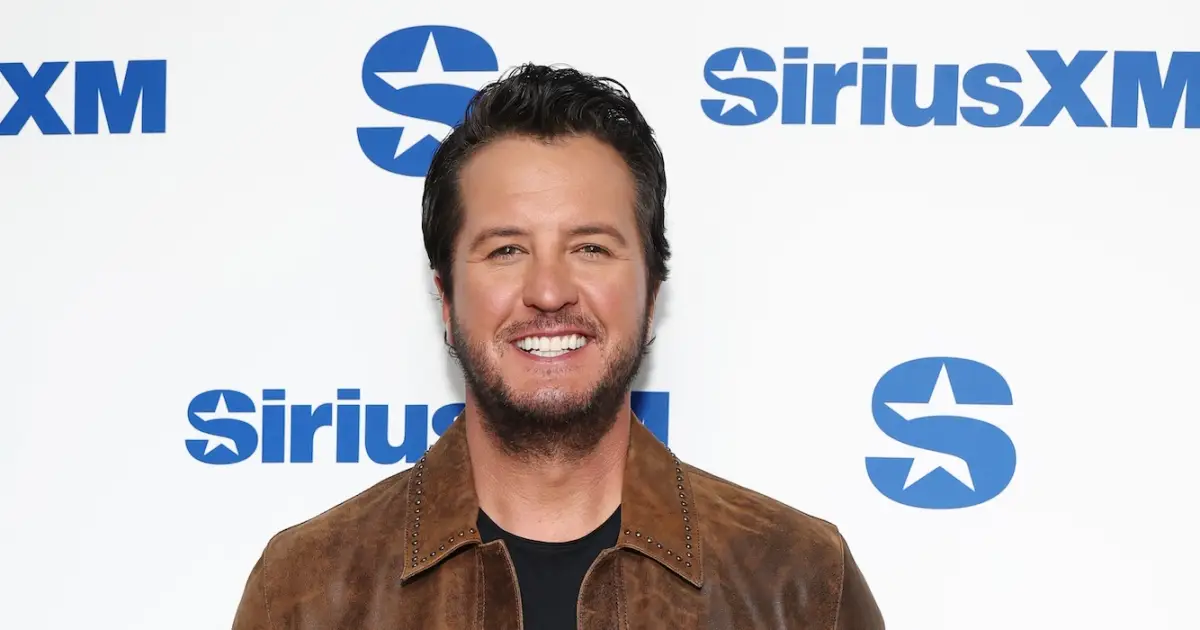
To understand where Bo learned that kind of resilience, you have to look at the family he comes from. Luke Bryan and his wife, Caroline Boyer, welcomed Bo into the world in 2008, and their second son, Tatum “Tate” Christopher Bryan, arrived in 2010. On paper, the Bryans are a celebrity family, but their story has always been grounded in something much deeper than fame. Years ago, Luke’s sister Kelly and her husband Ben Lee Cheshire died unexpectedly, leaving behind three children. Luke and Caroline stepped in without hesitation, taking in Til, Kris, and Jordan and raising them alongside Bo and Tate. That kind of love does not just happen by accident. It is taught in the quiet moments, the hard days, the times when a family has to hold each other up because the world has fallen apart. Bo grew up in a home where grief was real, but so was love. He watched his parents turn loss into commitment, tragedy into tenderness. A broken collarbone is painful, but it is not loss. It is not the death of a loved one. It is not the kind of sorrow that reshapes a family forever. Bo already learned the most important lesson his father could ever teach him: you can hurt, you can grieve, you can be afraid, but you do not quit. You keep showing up. You keep saying “We will be back,” because that is what people do when they know they are loved and they know what they are fighting for.
Long before the injury, Luke Bryan had been watching his son’s senior season with the kind of pride that makes a parent’s heart feel like it might burst. In September, he spoke with USA Today High School Sports and opened up about what it meant to see Bo grow into a quarterback and a leader. “His senior year, he’s learning as he goes,” Luke said. “Everything that happens to him this year, it’s the first time he’s had all these pressure situations. The ups, the downs.” He spoke about a moment when Bo’s coach trusted his instinct, and how proud that made him. “The main thing is you see the hard work that he puts in and you just want the hard work to pay off,” Luke said. “Nights like tonight is when you get to celebrate that.” He also reminded everyone that Bo was still young in his development as a quarterback because he had spent much of his life as a two-sport and three-sport athlete. He was just beginning to turn the corner, and confidence was everything. “No bigger game than that tonight,” Luke said. “I’m just so proud of him.” Those words feel even more powerful now. Luke was proud before the injury. He was proud of the touchdowns and the wins, the progress and the potential. But now, he has something even greater to be proud of: the way his son stood up under pressure, took the bad news, and chose to believe in his own future. That is not something a coach can teach. That comes from inside a young man’s heart.
So what happens next? Bo will rest. He will see doctors, take X-rays, and begin the slow, frustrating process of healing. He may be back on the field this season, or he may not. For a senior in high school, every week on the sideline feels like an eternity. He will have to watch his teammates practice without him, run plays without him, and fight through games while he stands on the edge of the action with his arm in a sling. It will not be easy. But Bo has already shown that he understands something important: a quarterback leads even when he cannot throw. He will be there for his team. He will study the game, encourage the backup, and keep his mind sharp while his body heals. And his family will be there with him. Luke and Caroline, Tate, his cousins, his coaches, his teammates—they will all wrap around him the way the Bryan family has always wrapped around its people. The promise “We will be back” might not mean a return to the field this year. It might mean something simpler and stronger: I will not let this define me. There will be more Friday nights, more games, more chances to prove himself. The collarbone will heal. The heart will not be broken. And somewhere in Tennessee, a father will watch his son take the field again, maybe not today, maybe not this season, but eventually—and he will know that all the hard work, all the ups and downs, all the prayers and hopes were worth it. Bo Bryan will be back. The only question is when.