





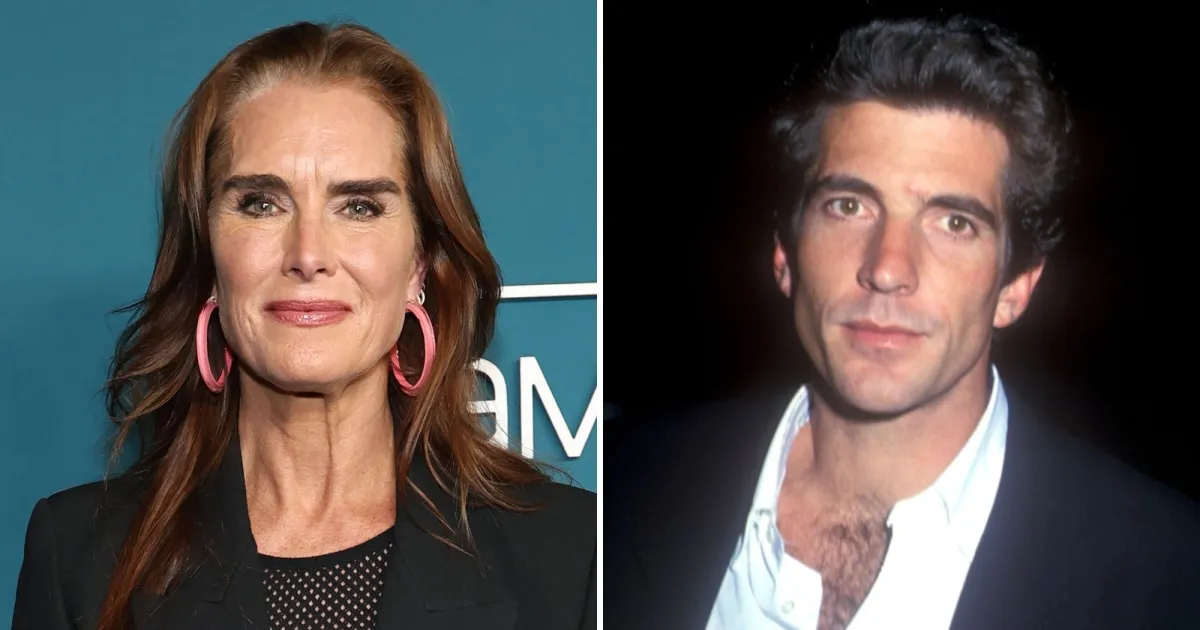
The passage of time has a curious, almost magical way of turning our most private, youthful heartbeats into public spectacles, a surreal reality that the iconic Brooke Shields recently navigated with her trademark grace, vulnerability, and self-aware humor. Sitting down opposite host Andy Cohen on a recent episode of Watch What Happens Live, the sixty-year-old actress, model, and cultural icon found herself unexpectedly transported back to the vibrant, high-stakes atmosphere of the late 1980s. This sudden trip down memory lane was prompted by the release of FX’s new anthology series, Love Story, which, since premiering in February, has captivated television audiences with its dramatization of the glittering, tempestuous, and ultimately tragic romance between John F. Kennedy Jr. and Carolyn Bessette-Kennedy before their untimely deaths in an airplane crash in 1999. While the television show has received a highly polarized mix of reviews from the public and the real-life figures who populated that elite New York social circle, Shields approached the series with an open mind and a remarkably warm heart. She confessed to Cohen and the viewing audience that she watched the series religiously from start to end, thoroughly enjoying the production and praising the exceptional, nuanced caliber of the acting. Yet, watching the series was far more than just a casual evening of television entertainment for Shields; it was a deeply personal, almost haunting encounter with her own past. The show touches upon the glittering constellation of young, famous, and beautiful people who orbited JFK Jr. during his bachelor years—a modern Camelot in which Shields herself was a major, shining star. As she watched fictionalized representations of her youth play out on a screen, she was forced to reconcile the glossy public myth of her life with her actual, deeply human lived experiences, highlighting the bittersweet nature of seeing one’s own memories curated, processed, and broadcasted for the consumption of a modern audience who only knows these late cultural icons as historical figures.
With a genuine, radiant smile and an easy, grounded demeanor that has endeared her to generations of fans, Shields was quick to clarify the exact nature of her connection to the late political heir, ensuring that the public did not inflate a youthful spark into an exaggerated, overarching melodrama. She candidly explained that while the public might romanticize her history with the handsome Kennedy, her reality was far more innocent, sweet, and intensely relatable to anyone who has ever harbored an overwhelming infatuation. “I didn’t have a love story, I had a crazy, crazy crush,” Shields confessed on the late-night show, stripping away the glamorous armor of Hollywood celebrity to reveal the vulnerable young teenager and twenty-something she once was beneath the headlines. She went on to explain, with a cheeky but utterly sincere directness, that while they certainly dated, their physical intimacy had its clear boundaries, humorously questioning whether a romance even “counts” in the cultural lexicon if the threshold of sleeping together was never crossed. Despite the physical restraint of their brief dating relationship, Shields holds no bitterness, cynicism, or regret about their time together, describing JFK Jr. as incredibly “lovely” to her. This revelation humanizes both Shields and Kennedy, painting a tender picture of two incredibly famous young people trying to navigate the complex, often terrifying waters of mutual attraction under the blinding spotlight of global scrutiny. By defining their bond not as a grand, sweeping tragedy but as a sweet, dizzying crush, Shields successfully demystifies the untouchable legacy of JFK Jr., reminding us that behind the grand myth of Camelot’s crown prince was simply a kind, charming young man who left a lasting, warm impression on a young woman who was trying her best to protect her own heart. This dynamic represents a universal coming-of-age experience, where the dizzying heights of infatuation are met with the sobering realities of personal boundaries.
The fascinating intersection of Brooke’s past and her present-day family life took an even more bizarre and delightfully meta-theatrical turn through her daughter, Rowan Henchy. At twenty-three years old, Rowan is carving out her own path in the competitive entertainment industry and happened to be working as a production assistant on the very set of FX’s Love Story. The sheer, mind-bending irony of a young woman working behind the scenes of a prestige television drama, only to discover that her own mother is a character written into the script, is the stuff of classic Hollywood legend. Shields recounted to People magazine her utter surprise and amusement when Rowan called her from the set, highly amused and slightly bewildered, to ask if the rumors of her mother’s 1980s fling with the most eligible bachelor in America were actually true. Shields, who shares Rowan and her twenty-year-old sister Grier with her longtime husband, writer and producer Chris Henchy, met her daughter’s modern curiosity with absolute, refreshing transparency. Rather than shying away from her colorful past, hiding behind maternal modesty, or shutting down the query, Shields warmly embraced the moment, reassuring her daughter that she would be more than happy to share all the wild, beautiful stories from her youth, confirming with a simple, proud “yes” that she had indeed captured the attention of John F. Kennedy Jr. This open, honest dialogue between mother and daughter beautifully illustrates the strong, trusting bond they share, transforming what could have been a highly awkward generational divide into an opportunity for laughter, storytelling, and an intimate passing of the torch. In a world where celebrity parents often fiercely guard their ancient secrets, Shields’ willingness to lay her cards on the table for her children demonstrates a profound level of emotional security and deep maternal warmth.
This playful, modern dynamic between the generations was brought to delightful public light when Rowan decided to bring her mother’s legendary romantic history to the theater of social media. In a viral TikTok video that perfectly captured the lighthearted, teasing nature of modern mother-daughter relationships, Rowan used the backdrop of Charli XCX’s high-energy pop anthem “Boom Clap” to jokingly probe her mother about the intimate details of her youth. Over screen-text that cheekily wondered aloud if the famously handsome JFK Jr. was actually a good kisser, Rowan lip-synched to the music before panning the camera over to Shields herself. Without missing a beat, the legendary actress leaned into the fun, playfully mouthing along to the lyrics before the screen revealed her definitive, glowing verdict: “One of the best.” This brief, viral moment did more than just break the internet with its candid nostalgia; it humanized Shields in a way that formal interviews rarely can, showcasing her ability to laugh at herself, celebrate her past, and connect with her daughter on her own digital turf. It stripped away the lofty, tragic romance often associated with the late Kennedy heir and reframed him through the lens of a universally understood youthful joy—dating a handsome boy who was excellent at kissing. By transforming what could have been a solemn, untouchable historical reference into a light, joyful, and deeply human mother-daughter joke, Shields and Rowan demonstrated how humor can be used to keep memories alive without letting them become heavy, proving that the ghosts of our past romances do not always have to be met with tears. This infectious joy resonated deeply with millions of viewers online, bridging the gap between the elusive, highly manicured celebrity royalty of the twentieth century and the highly accessible, authentic content of the twenty-first.
While the TikTok video focused on the playful, nostalgic surface of her memories, Shields had previously bared the deeper, more vulnerable emotional core of her connection to JFK Jr. during a highly intimate and introspective interview on The Howard Stern Show in 2023. During that conversation, Shields pulled back the curtain on the psychological complexity of her decision to keep their romance strictly non-physical, painting a heartbreakingly honest portrait of a young woman fiercely guarding her own heart. She recalled that they did indeed share a deeply romantic, genuine date, but she deliberately chose not to sleep with him because she, in her own words, “kind of loved him too much.” For Shields, JFK Jr. was not just another celebrity conquest or a casual summer fling; he was someone of immense, precious value, someone so overwhelming in his charisma and stature that she found herself completely frozen in his presence. The fear of intimacy was rooted in a very real, very human terror of abandonment and heartbreak; she was poignantly aware of his reputation and feared that if she gave in to her desires, the magic would dissolve, he would stop speaking to her, and she would be left completely devastated. Rather than playing a tactical, coquettish game of hard-to-get, Shields was acting out of pure, protective self-preservation, knowing that if she surrendered her physical self to him, she would be surrendering her entire universe, her heart, and her soul. This profound level of psychological honesty elevates their story from a simple tabloid footnote into a deeply moving meditation on the courage it takes to say no, showing that sometimes, the most profound acts of love are the ones where we choose to protect our own vulnerability, even when standing face-to-face with the most desirable man in the world.
This same emotional maturity and lack of ego shine through in Shields’ attitude toward her other legendary, lifelong friendships, most notably her deep and historically significant bond with the late King of Pop, Michael Jackson. When questioned during her appearance on Watch What Happens Live about whether she had seen the highly anticipated 2026 musical biopic Michael, Shields responded with her signature class and total lack of resentment. She admitted that she had not yet had the opportunity to view the film, but expressed a genuine, warm eagerness to do so, while casually dismissing the popular media narrative that she should be offended or upset by her character’s absence from the script. For decades, the media has tried to sensationalize and dissect her close, supportive relationship with Jackson, yet Shields remains completely unbothered by her omission from the cinematic retelling of his life, reminding critics and fans alike that their bond was built on real, lived friendship rather than a desire for screen time or public validation. “No, he was my dear friend,” she stated simply, a quiet defiance against the Hollywood machine that often seeks to commodify personal relationships for drama. Through her reflections on both JFK Jr. and Michael Jackson, Brooke Shields emerges not just as a survivor of the Golden Age of celebrity culture, but as a preservationist of genuine human connection. Her ability to look back on her extraordinary youth with a blend of humor, deep emotional intelligence, and a complete lack of bitterness serves as an inspiring blueprint for how to grow older with self-respect, reminding us all that our memories are ours to keep, protect, and cherish, far beyond the reach of Hollywood scripts, tabloid headlines, or the passing of time.