






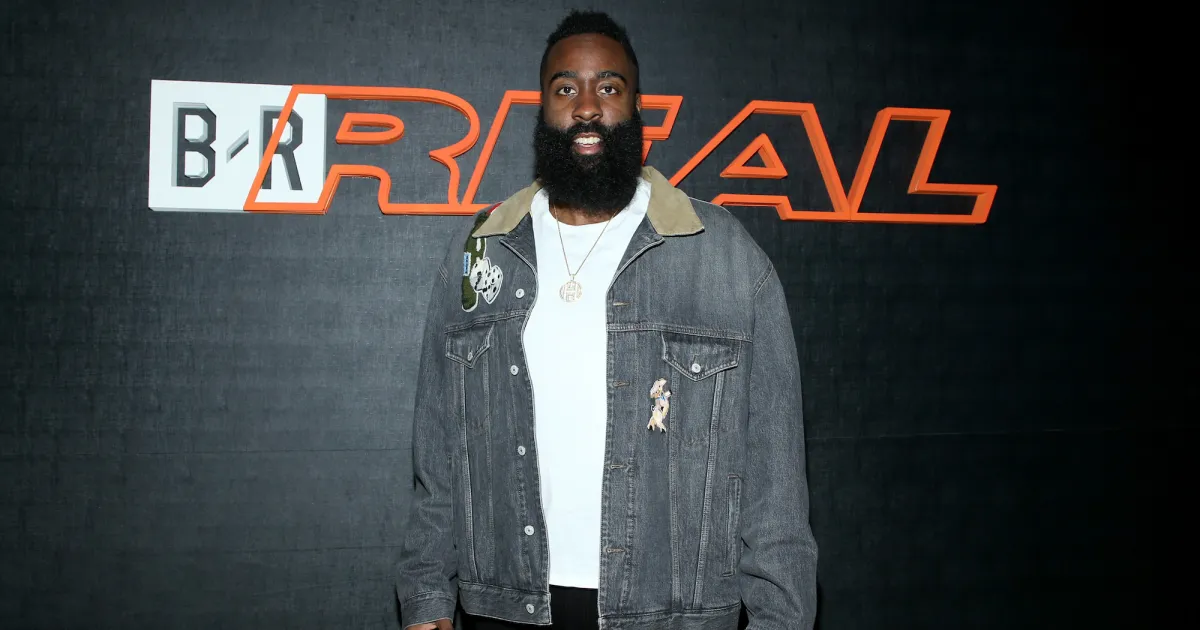
The fragile intersection of public celebrity, personal vulnerability, and the harsh realities of the legal system was thrust into the spotlight on Saturday, June 13, when Cleveland Cavaliers star guard James Harden was arrested in Texas. The 36-year-old NBA veteran was taken into custody by local law enforcement officers on a misdemeanor charge of unlawful carrying of weapons, an incident that quickly sent shockwaves through the sports world after being exposed by media outlets. According to initial reports, the arrest occurred after police discovered a handgun inside his vehicle during a routine interaction. While the details surrounding the traffic stop remain scarce, the administrative machinery of the justice system moved swiftly; Harden was processed and subsequently released on bond within just a few hours of his arrest. With a formal court date scheduled for Monday, June 22, the basketball icon now faces the daunting task of navigating a highly publicized legal battle in the state where he spent the most defining years of his career. As of now, neither Harden nor his representatives have issued a formal public statement regarding the incident, choosing instead to let the initial media storm play out in silence while legal counsel prepares for the upcoming hearing. For a player who has spent nearly two decades under the intense scrutiny of the public eye, this sudden legal entanglement serves as a stark reminder of how quickly an athlete’s life can pivot from the triumph of the hardwood to the sobering reality of a courtroom.
This unexpected legal hurdle arrives at an already critical juncture in Harden’s professional life, catching him during the fragile period of transition that follows a grueling and emotionally exhausting postseason run. Having been drafted into the league in 2009 as a prodigiously talented young prospect, Harden has spent the last fifteen years chasing the elusive championship ring that would cement his legacy among the greatest to ever play the game. His latest quest took place in the passionate sports landscape of Ohio, where he joined the Cleveland Cavaliers in 2025 with the hope of providing the veteran poise and elite playmaking necessary to push a young, hungry roster over the championship hump. That dream, however, was brutally cut short in late May when the Cavaliers were eliminated in the Eastern Conference Finals by a ruthless New York Knicks team. The bitterness of that defeat is only magnified by the current landscape of the league, as those very same Knicks are currently battling the San Antonio Spurs in the 2026 NBA Finals, holding a commanding 3-1 lead and standing on the absolute precipice of basketball immersion. Watching the team that defeated you fight for the Larry O’Brien Trophy from the sidelines is a unique form of professional torture, leaving athletes like Harden to spend their summers reflecting on the minute details, the missed rotations, and the cold stretches of play that separated them from immortality.
The profound disappointment of that postseason exit was still visibly weighing on Harden during his final post-game press conference last month, where he offered a candid and highly analytical autopsy of the Cavaliers’ playoff demise. Sitting before reporters, the veteran guard did not mince words about the basic, unforgiving physics of basketball: sometimes, the ball simply refuses to go in. “I think that they made shots, some, obviously, open and some just tough shots,” Harden remarked, pointing to the shot-making display put on by the New York Knicks. “I don’t think we made really any. … I think we accomplished a lot, still short of the goal but I think we accomplished getting to the conference finals. Now, there’s another level to get to [or] maybe two levels to get to.” His voice carried the quiet weariness of a seasoned warrior who understands that in the postseason, the margin between victory and defeat is microscopic. He went on to identify the core vulnerability of the Cavaliers’ roster, pointing to their lack of collective experience under the highest levels of postseason duress. “I think a lot of that is just, you know, maybe our first time together and the first two series we had opportunities to handle the series much quicker than we did, and we didn’t take advantage of it,” he admitted, pointing to the blown leads and extended series that ultimately drained the team’s energy reserves before they could reach the final round.
Perhaps the most humanizing aspect of Harden’s postseason reflection was his willingness to openly show public vulnerability, admitting that despite his years of experience, the sting of defeat never actually gets easier to digest. He conceded that the premature end to the Cavaliers’ season was “a little frustrating,” a simple phrase that carries immense weight when uttered by a player who has dedicated his entire adult life to the pursuit of basketball perfection. This frustration was compounded by the incredibly accelerated timeline under which Harden was forced to operate upon his arrival in Cleveland. “I think being here two and a half, three months [while] that team’s been together for some years, which you still don’t get brownie points for, but I think we’re in a good space and we got some work to do, but we had a good season,” he explained to the media. This statement highlights one of the most under-discussed challenges in modern professional sports: the extreme difficulty of mid-season integration. Forcing a high-usage superstar into an established ecosystem in a matter of weeks is akin to performing open-heart surgery on a running patient; it requires an immense amount of cognitive and emotional labor from everyone involved, and the fact that Cleveland even reached the Eastern Conference Finals under these circumstances is a testament to their raw talent and adaptability.
Despite the obvious pain of coming up short, Harden’s perspective remained remarkably forward-looking, choosing to view the silver linings of their campaign as the foundation for a much grander future rather than the eulogy of a wasted year. He spoke with genuine pride about the resilience his locker room displayed during some of the most hostile environments imaginable, painting a picture of a young squad that grew up exceptionally fast under the bright postseason lights. “It’s our first time going through whatever we were going to go through, and I think we accomplished a lot, you know, winning a Game 7 at home, winning a Game 7 on the road and getting to the conference finals,” he pointed out, highlighting the historic difficulty of winning two ultimate elimination games in a single playoff run. To Harden, these high-pressure survival stories are the scars that forge championship DNA, teaching young players how to breathe when the walls of an arena are closing in on them. Looking ahead to the summer, he outlined a clear blueprint for collective self-improvement, emphasizing that the team’s primary objective must be to leverage their newfound chemistry into a more dominant regular season. “Now, we have to take another two steps starting this summer, but take another two steps and being even better. Now, you get a full season of understanding what we have as a group and uh setting ourselves up, like, positioning-wise for better,” he concluded, eyeing the strategic advantages that come with a top playoff seed and home-court advantage.
To truly understand the gravity of Harden’s current situation, both on and off the court, one must view it through the prism of his legendary, highly migratory, and deeply complex career. He is a basketball nomad who has defined different eras of the modern NBA, beginning his journey as a dynamic sixth man with the young, hyper-athletic Oklahoma City Thunder, before transforming into a historical offensive powerhouse and MVP winner with the Houston Rockets, where he revolutionized how the game of basketball is played. Subsequent, high-profile stings with the star-studded Brooklyn Nets, the Philadelphia 76ers, and his hometown Los Angeles Clippers ultimately led him to this latest chapter with the Cleveland Cavaliers in 2025. This rich history means that every action Harden takes—whether it is a brilliant pass on the court or a highly publicized arrest in Texas—carries the massive momentum of a Hall of Fame legacy. As he approaches his late thirties, the window for athletic immortality is rapidly closing, and the physical toll of his long career is matched only by the emotional weight of his ongoing championship chase. As Monday, June 22 approaches, the basketball world will be watching closely, hoping that this iconic figure can navigate his current legal storm with the same grace, intelligence, and resilience that have defined his legendary journey on the court.