





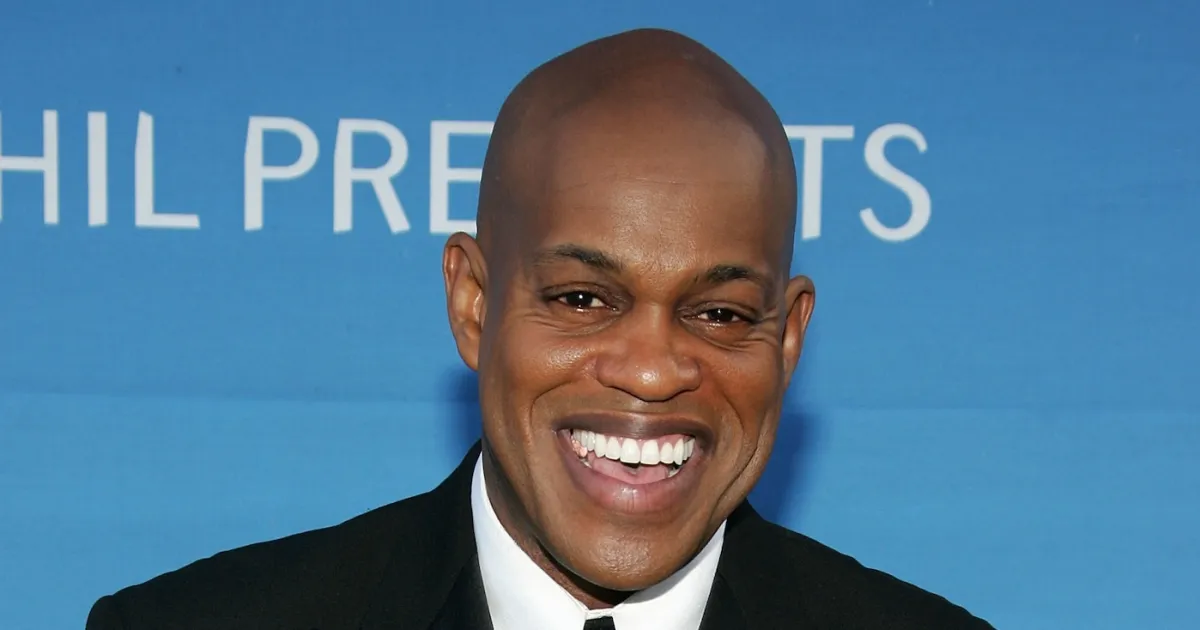
The world of classical and operatic music is one that thrives on the power of the human voice to convey the deepest, most complex dimensions of our shared existence—our joys, our deepest sorrows, and our quietest, most vulnerable hopes. For decades, Jubilant Sykes was a master of this profound art form, a Grammy Award-nominated baritone whose rich, resonant, and deeply expressive tones did not merely fill grand halls but penetrated the very souls of those fortunate enough to hear him perform. From the historic and hallowed stage of New York’s Carnegie Hall to the majestic, acoustically perfect spaces of the John F. Kennedy Center for the Performing Arts in Washington, D.C., and across the Atlantic to London’s renowned Barbican Center, Sykes was celebrated not only for his technical brilliance but for the profound warmth, humanity, and spiritual depth he breathed into every single performance. He was a unique, boundary-crossing singer who bridged genres with effortless grace, seamlessly blending classical operatic discipline with the raw, evocative emotion of traditional spirituals and contemporary styles, making him a deeply respected and beloved figure among his musical peers and global audiences alike. At 71 years old, he had successfully built a life defined by creative triumph, artistic integrity, familial devotion, and a legacy of grace that should have seen him ease into a peaceful, celebrated elder statesmanship of the arts, surrounded by the love of his family and the enduring respect of the music world. Instead, that magnificent voice was prematurely, shockingly, and violently silenced inside his own Los Angeles home on December 8, 2025, leaving a community of global admirers, close friends, and a devastated family grappling with an unimaginable, echoing void that no melody, no matter how beautiful, can ever truly heal.
The chilling and heart-wrenching details surrounding that fateful December evening paint a tragic portrait of sudden, terrifying domestic chaos that instantly shattered the quiet sanctuary of the Sykes family home. On that night, the delicate, peaceful fabric of their everyday lives was instantly torn apart in a matter of terrifying minutes, a tragedy made even more agonizing because it unfolded in the close, intimate quarters of their shared residence. His loving wife, Cecelia Sykes, was engaged in the ordinary, peaceful routine of taking an evening shower when the quiet of her home was suddenly and violently pierced by her husband’s desperate, panicked screams, pleading with her to call emergency services. Stricken with immediate fear, Cecelia stepped out of the shower and was instantly thrust into a living nightmare that would haunt any spouse or mother for the rest of her days: she was confronted with the unfathomable sight of her 32-year-old adult son, Micah Sykes, standing directly over his father in the midst of a brutal, frenzied assault, wielding what appeared to be an artifactual sharp-edged weapon. The sheer terror of that singular moment—where the roles of loving wife, protective mother, and helpless, traumatized witness collided in a flash of violence—culminated in a frantic, trembling call to the Santa Monica Police Department, a call that marked the dreadful transition of a cherished family dynamic into a devastating, cordoned-off crime scene that would forever alter the course of their lives and capture the sorrowful attention of the entire nation.
In the painful aftermath of this unthinkable act, a newly released autopsy report from the Los Angeles Department of Medical Examiner has laid bare the staggering, heart-wrenching physical reality of Jubilant’s final moments, detailing a level of violence that defies easy comprehension and speaks to a catastrophic struggle. Obtained exclusively by media outlets on Tuesday, July 21, the comprehensive medical and forensic documents detail that the acclaimed singer suffered an overwhelming 78 total stab wounds, with the official cause of death determined to be multiple stab wounds and the manner of death formally ruled as a homicide. The detailed forensic examination paints a vivid, albeit painful, picture of the physical trauma suffered, cataloging at least 73 distinct force wounds within the medical summary, which included 68 sharp-force injuries and five blunt-force injuries distributed across his body. Strewn immediately next to Jubilant’s lifeless body, law enforcement officials located the primary instruments used in this devastating assault: a heavy, ten-pound physical fitness dumbbell heavily stained with apparent blood, and a formidable, curved knife boasting a blade measuring approximately nine inches in length and two inches in width. Adding a layer of tragic clarity to this grim physical scene, the toxicology analysis conducted during the post-mortem examination confirmed that Jubilant had absolutely no illicit substances, recreational drugs, or prescribed medications in his system at the time of his passing, underscoring the absolute vulnerability of an elder father who was pronounced dead on the scene by arriving emergency medical responders.
Yet, behind the cold, clinical, and horrific facts of the medical examiner’s autopsy report lies a deeply complex, sorrowful, and human narrative of a family long haunted by the relentless, suffocating shadow of severe mental illness. Micah Sykes, the adult son who now stands accused in his father’s tragic death, was not a stranger to profound psychological struggles; rather, his life had been deeply compromised and derailed by severe schizophrenia, a challenging condition that neighbors and acquaintances noted had previously driven him to periods of homelessness, instability, and alienation on the streets. This was a tragedy born not out of simple, calculated malice, but within the fragmented, agonizing, and terrifying spaces of a broken mind that had slipped through the clinical and social safety nets of society and modern medicine. Neighbors in the tight-knit Los Angeles community recalled Micah’s increasingly erratic behavior in the months leading up to the incident, as well as the quiet, private pain the Sykes family endured as they tried to support and protect an adult son who was visibly battling mental demons far beyond his or their control. Santa Monica Police Lieutenant Lewis Gilmour later confirmed that while investigators were immediately made aware of Micah’s extensive and documented mental health history, the precise psychological trigger or immediate conflict that incited the deadly physical altercation remained frustratingly obscure, leaving detectives to piece together a puzzle where there are no real winners, only a family utterly destroyed by the tragic reality of how untreated, severe mental illness can consume both the sufferer and those who try hardest to love them.
The slow, agonizing, and highly complex wheels of the American criminal court system have begun to turn in the aftermath of this tragedy, reflecting the ongoing struggle of society to balance legal accountability with the stark realities of severe psychiatric impairment. Following his initial arrest on suspicion of murder, Micah was held on a massive four-million-dollar bond; however, Los Angeles County prosecutors successfully argued for his status to be altered to “no bail,” leading a judge to order him held in custody indefinitely without the possibility of release. Deputy District Attorney Cesar Rodriguez presented a compelling and deeply tragic case to the court, emphasizing that Micah was not being appropriately medicated or managed for his schizophrenia diagnosis, making him an unpredictable and extreme risk to both himself and the community at large. Although his formal arraignment was originally scheduled for early June, the complex legal, psychological, and psychiatric evaluations necessary to determine his competency to stand trial in a case of this magnitude have resulted in multiple delays, with his court date recently being pushed back from June to Thursday, August 6. For the surviving members of the Sykes family, especially his mother Cecelia, this protracted legal process represents an open, weeping wound, forcing them to relive the terror of that December night through legal jargon, safety protocols, and the public gaze, all while carrying the profound weight of a grief that is compounded by the knowledge that the perpetrator of this horrific violence is their own struggling child.
As the public and the media watch these painful legal proceedings unfold, it is vital that the true, shining essence of Jubilant Sykes is not permanently overshadowed by the grim, sensationalized details of his tragic passing, but rather remembered through the extraordinary gift of music he shared so generously with the world. He was a man who spent his life elevating the human spirit, using his voice to heal, inspire, and connect people across cultural, social, and geographic divides, and it is this legacy of harmony, beauty, and emotional depth that must ultimately define his memory in the annals of music history. This profound family tragedy serves as a devastating, urgent wake-up call regarding the critical importance of proactive mental health intervention, systemic support for families dealing with severe illnesses like schizophrenia, and the necessity of compassionate care before crises escalate into irreparable loss. For those who find themselves or their loved ones struggling in the deep, dark valleys of mental illness, emotional crisis, or feeling overwhelmed by circumstances, avenues of hope, empathy, and immediate professional assistance do exist, symbolized by resources like the 988 Suicide & Crisis Lifeline, which offers free, confidential support via call, text, or online chat at any hour of the day or night. In honoring the life and memory of Jubilant Sykes, we are called not only to remember the beauty of his magnificent baritone voice but to recommit ourselves to fostering a world of greater empathy, vigilance, and proactive care, ensuring that the light of those who bring beauty to our world is never again extinguished by the preventable darkness of untreated pain.