



It was only a few months ago that Xona’s founders were standing in an empty warehouse, trying to imagine a satellite company from scratch. Today, that warehouse is a working factory, and the California-based startup has just raised a staggering $250 million Series D round at a $2.45 billion valuation—arriving just seven months after its previous $170 million Series C. The new round was led by Future Ventures, the venture capital firm cofounded by Steve Jurvetson, the same man who backed SpaceX in its earliest days and later served on its board. Jurvetson’s firm first invested in Xona in 2024, and this time it contributed $78.5 million of the new funding. Brian Manning, Xona’s CEO and a former SpaceX engineer, says the company hadn’t planned to raise more money so quickly. But the world came knocking. “We hadn’t actually intended to do another funding round this soon,” he admits. What changed? A wave of incoming demand that Manning sees as proof that Xona is no longer just a promising idea. The company, which he cofounded in 2019 with seven fellow alumni of Stanford’s aeronautics and astronautics department, has moved from ambitious sketches to physically building satellites. “We started the year with technically an empty warehouse,” Manning says, “and now we have a functional satellite factory.” That kind of speed and momentum is rare in the capital-intensive space industry, but Xona is trying to prove that the age of government-only navigation is over—and that private companies can build something better.
Steve Jurvetson is not a casual space investor. He was an early investor and former board member at Tesla, he holds a stake in Elon Musk’s Boring Company, and his name has become synonymous with betting big on transformative technology. But among his many interests, satellites have quietly become something of a specialty. In fact, his portfolio now spans the three major satellite markets in a way that looks almost like a deliberate map of the industry. SpaceX’s Starlink is the communication arm, beaming high-speed internet down to millions of users around the globe. Planet, the geospatial imaging company, spends its days photographing Earth from above, tracking changes in agriculture, forests, and cities. And then there is Xona, which is attacking a third segment that has never really been disrupted: navigation. For decades, the world has relied on the U.S. military’s GPS system, a network of mid-orbit satellites that tells phones, planes, ships, and cars where they are. GPS is free, familiar, and foundational, but it was designed in an era before cyberattacks, before self-driving cars, before the commercial space economy. Jurvetson sees Xona as the bold attempt to finally modernize that third pillar. “Fortune favors the bold,” he says, with a phrase that has apparently guided his investment career. He points out that entire new commercial space markets—rideshare launches, daily observation of the entire Earth—were almost unimaginable before SpaceX and Planet created them. Xona, he believes, has the same ambition: to bring commercial innovation to a domain historically reserved for nation-states.
The problem Xona is trying to solve begins with the weakness of GPS itself. The system was developed by the U.S. Defense Department in the 1970s, and its signal is still transmitted from satellites orbiting at a high, mid-altitude orbit. That design makes the signal reach a wide area, but it also means the signal arrives at Earth surprisingly faint. In a crowded electromagnetic world, those weak signals are increasingly easy to disrupt. Jammers can drown them out with competing transmissions, and more sophisticated attackers can “spoof” them with imitation radio waves that trick receivers into seeing false locations. This has become a serious problem on the modern battlefield: Russia’s electronic warfare tactics have forced Ukrainian forces to supplement GPS with backup navigation systems, sometimes scrambling drones or missiles mid-flight. But it’s not only a military issue. Commercial airlines, shipping fleets, delivery trucks, and ordinary drivers all depend on GPS without thinking about it. The consequences of that dependence are growing. Manning raises a familiar frustration: GPS often cannot tell whether a car is moving on the highway or on the off-ramp, let alone exactly which lane a driver needs to be in. In a world where we are moving from hands-on driving to hands-off autonomy, that is no longer good enough. “The world’s in a pretty dangerous place relying on GPS alone,” Manning says. The future, in his view, demands something radically more reliable: not just knowing what road you’re on, but knowing to the centimeter where you are, to the point that you can safely take your hands off the wheel. That kind of precision is exactly what traditional GPS struggles to provide without extra correction services, and it’s where Xona intends to shine.
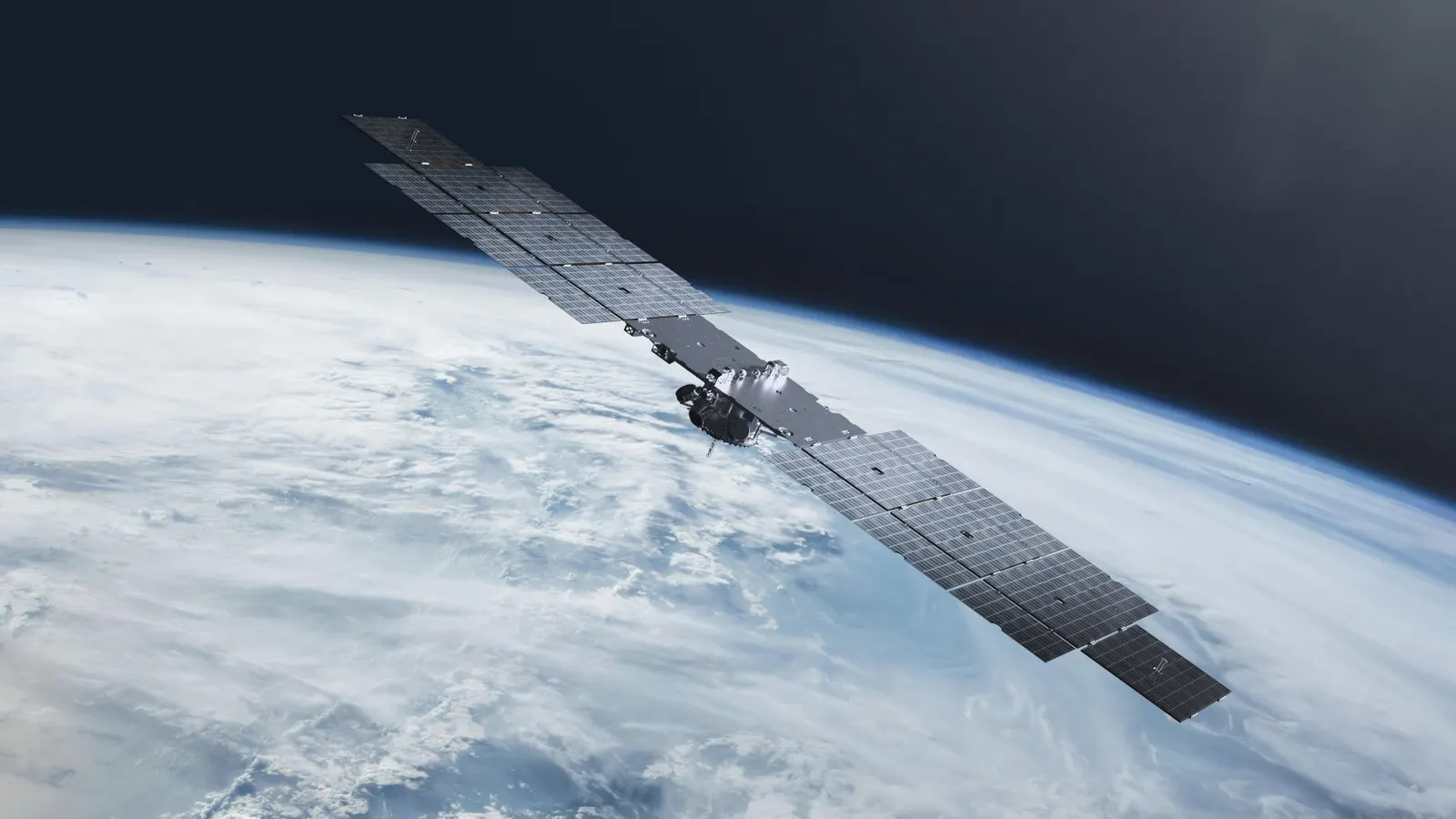
So what is Xona building? The company’s initial constellation, called Pulsar, is planned as a network of 258 satellites flying in low Earth orbit, far lower than the GPS constellation. Being closer means their signals arrive at Earth with far more strength, making them harder to jam and less vulnerable to spoofing. The satellites are designed from the ground up for precise navigation, with wide-bandwidth radio waves and advanced software that can lock onto location with remarkable accuracy. Xona says it will offer centimeter-level precision, something GPS usually achieves only after applying correction data from ground stations. Think of it as going from an old analog radio that picks up static and interference to a high-definition streaming signal that doesn’t drop. The business model follows the playbook that Starlink popularized: mass-produce satellites in-house, launch them into orbit in large batches, link them into a commercial network, and sell access to customers. Instead of trying to compete with GPS on its own turf, Xona is creating an alternative that can provide the reliability and precision that the next generation of autonomous systems demands. Pulsar is not intended to cover only cars and trucks; it could serve autonomous tractors in agriculture, construction equipment that needs to place materials within inches, drones delivering packages, ships maneuvering in tight harbors, and even passenger aircraft navigating through crowded airspace. The company’s approach is a bet that precise, tamper-resistant navigation is no longer a nice-to-have but a core infrastructure need for the coming age of autonomy and always-connected mobility.
Of course, bold plans attract attention, and Xona is already looking over its shoulder at a potential giant. The irony is that its biggest rival might be its own anchor investor’s other space company: Elon Musk’s Starlink. Starlink currently focuses on communications and does not offer standalone navigation services, but SpaceX has hinted that it may eventually move into that market. Theoretically, Starlink could either launch new purpose-built navigation satellites or try to upgrade the software in its existing communications satellite constellation. The latter option would be difficult, and early research suggests it may not be straightforward, but the possibility remains. Jurvetson, who benefits from both companies’ success, isn’t losing sleep. He argues that Xona holds the upper hand because its satellites were designed for precise navigation from the very beginning—not adapted to it as an afterthought. The market seems to agree. Xona’s total funding has now climbed above $570 million, including this latest $250 million round. And the company just hit perhaps its most critical milestone yet: this week, it launched six satellites into orbit on a SpaceX Falcon 9 rocket, officially beginning the rollout of its commercial network. Four of those satellites will eventually support paying customers, including Topcon, a Japanese company that makes positioning tools for agriculture and construction. The remaining two are devoted to testing Xona’s in-house satellite design, validating every component and system in the harsh environment of space.
Now the pace is only going to accelerate. More launches are on the way as Xona works toward what it says will be the first-ever commercial satellite network dedicated exclusively to navigation. The company expects to begin beta service early next year, and initial customers will test the system in real-world applications—plowing fields, guiding machines, and helping vehicles understand their exact place in the world. If all goes according to plan, the future of navigation might no longer have a single government-run name on it. Manning is unapologetic in his vision. “Within the next five years, everything around the world—every plane, train, truck, ship, watch, phone—is going to be guided by something other than GPS,” he predicts. “We think it’s likely going to be us.” That is a bold claim, but Xona has already done what seemed impossible a year ago: it filled its empty warehouse, built functional satellites, raised more than half a billion dollars, and put hardware in orbit. The road ahead is still long, and competitors may emerge, but the company has established something that few startups ever get: the sense that the future is changing shape, and that they are among the ones shaping it. For Jurvetson, that is exactly the point. Commercial space, once the sole province of governments, is now a place where ambitious newcomers can challenge the old order. Xona is betting that navigation is the next frontier—and it is determined to get there first.