






In the modern world of e-commerce, the excitement of a purchase is often followed by a far less thrilling reality: the process of managing returns. Online shopping has made it almost effortless to buy clothing and accessories at any hour, but the journey afterward has historically been riddled with friction. The typical post-purchase experience involves waiting for items to arrive, trying them on, and then facing the hassle of returning anything that doesn’t work out. If a shopper misses the narrow window for returns, the item often becomes a loss, sitting in a closet unworn. This pervasive problem is now being addressed by Seel, an AI-driven operations platform for commerce. The company has launched a new resale capability within its existing order center, giving shoppers a way to recover value from their gently used items even after a retailer’s return window has closed. By integrating resale directly into the portal where shoppers already manage their orders, Seel is solving one of the most persistent pain points in the shopping journey, offering a better outcome for both consumers and the merchants who serve them.
Seel’s approach is built on a foundational thesis about the massive inefficiencies in the retail ecosystem. The company recognizes that brands and marketplaces collectively spend hundreds of billions of dollars annually moving products around the globe, managing support, handling returns, and marketing to clients. Seel’s CEO and co-founder, Zack Peng, sees this as a massive opportunity to streamline the entire commerce lifecycle through artificial intelligence. The company has built what it calls an “agentic layer” that sits on top of the existing commerce infrastructure, focused entirely on the post-purchase experience. This strategy has proven highly successful, with Seel scaling sevenfold over the past year. The company has reached a triple-digit revenue run rate and is now profitable, a significant achievement for a startup. Having raised $50 million from prominent investors like Afore Capital and Lightspeed Venture Partners, Seel is demonstrating that there is a massive unmet need for intelligent solutions that make the after-purchase process as smooth and satisfying as the click-to-buy moment. Over 50 million consumers use Seel’s AI-powered features, which handle six billion dollars in GMV annually, a nearly tenfold jump in volume over the previous year. Clients include major names like Poshmark, TikTok Shop, and U.K. department store Debenhams, indicating broad market trust in its platform.
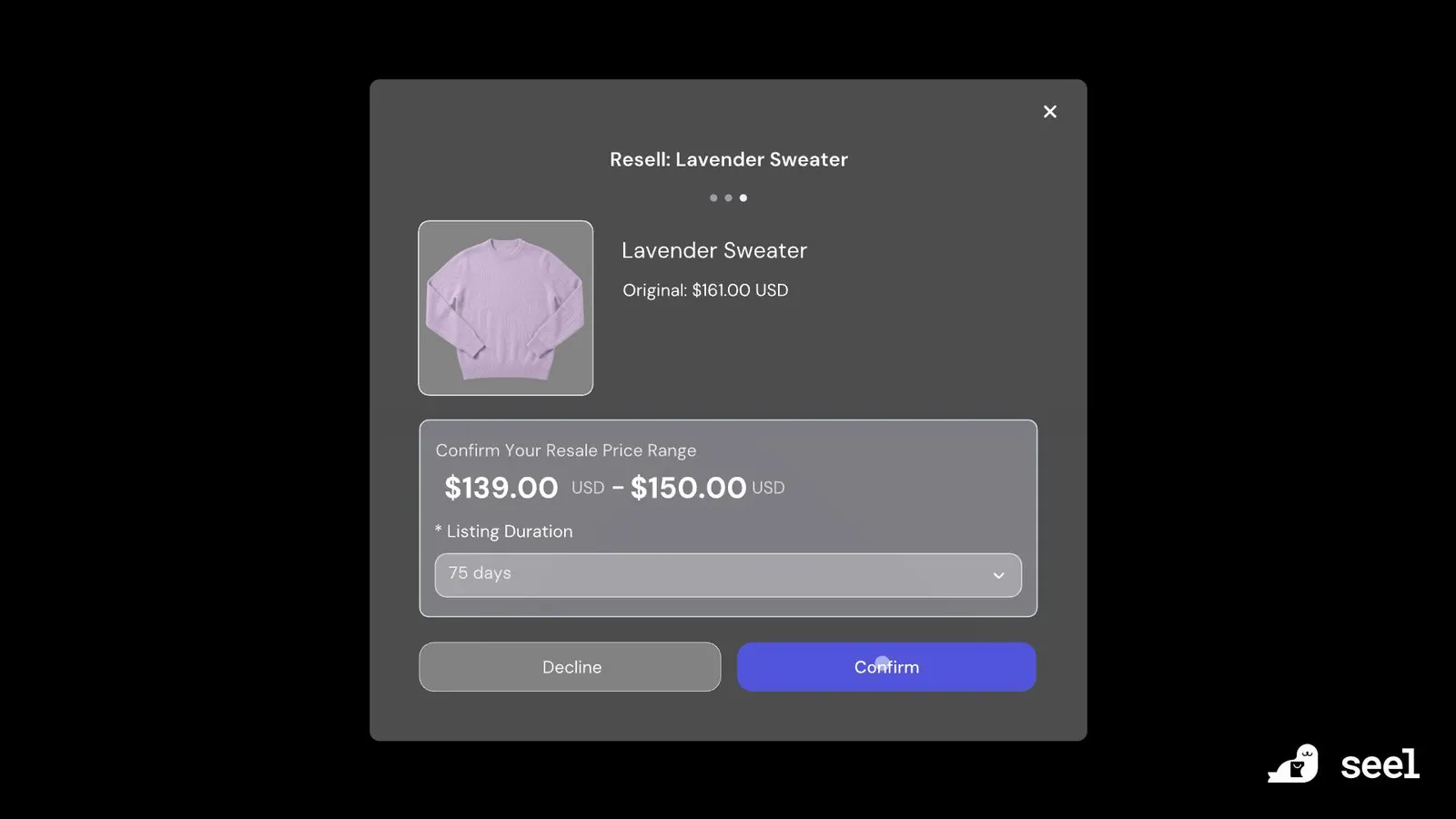
Secondhand shopping has long been lauded for its benefits: it offers affordable prices for buyers, provides a new revenue stream for sellers, and reduces environmental waste. Yet despite these advantages, resale accounts for less than three percent of all U.S. e-commerce transactions. The primary friction point has been the sheer effort required to list an item. To resell a single piece of clothing, a user traditionally has to create listings on various platforms, monitor price changes, and respond to potential buyers, a process that is time-consuming and often discouraging. Seel’s new offering radically changes this equation by automating the entire process. When a shopper uses the resale feature, the platform instantly generates compelling listings using the original product data, ensuring the descriptions are authentic and attractive. The AI agent then lists the item across seven different marketplaces simultaneously, maximizing exposure and the likelihood of a sale. By handling the entire lifecycle, Seel has effectively removed the barriers that previously made resale a niche activity, turning it into a seamless extension of the shopping experience that virtually anyone can utilize with the push of a button.
The power behind this new feature is the sophisticated automation that happens behind the scenes. Seel’s AI agents are not just posting static listings; they are actively managing the entire sales process in real-time. The platform runs auctions and continuously updates prices based on current market data to find the market-clearing price, ensuring the seller gets the best possible return on their item. It even messages potential buyers when appropriate. When an item sells, the platform immediately checks the inventory across all other marketplaces and removes the listing to prevent any confusion or double-selling. This automated inventory synchronization is a game-changer, as it solves a major logistical headache for sellers. Furthermore, the entire fulfillment process is automated. Seel sends shipping labels and instructions directly to the seller, who can then simply package the item and send it to the new buyer. There is no need for complex negotiation strategies or constant app monitoring; the AI agent handles the heavy lifting, turning what was once a manual, stressful side hustle into a passive and effortless way to recoup value.
For merchants, this resale capability extends the post-purchase experience in a way that fosters trust and deepens customer relationships. Innovative features, such as instant refunds for eligible requests and real-time shopping assistance on storefronts, are helping small retailers deliver service experiences that would previously have been impossible without a massive support staff. According to Peng, resale is a perfect example of AI unlocking net new experiences that are not just about cutting costs but about creating entirely new value for the consumer. The traditional customer service model is often frustrating, with impersonal bots failing to understand intent and slow response times a major issue for shoppers who need immediate help, such as updating a shipping address. Seel addresses these issues directly, replacing friction with intelligent, automated solutions. For smaller brands and retailers, which make up a large portion of Seel’s clientele, this technology is crucial. They can now offer high-end, AI-powered services that large corporations provide, but without the exorbitant costs. Even with unlimited resources, building such an intelligent system in-house would be a monumental task, making Seel an essential partner for these businesses looking to compete in a crowded and increasingly digital shopping landscape.
Investors see this as a fundamental shift in how commerce will operate. The focus on the consumer experience is moving away from just the acquisition cost and initial conversion, towards a more holistic view of the customer lifecycle. The ease of buying and returning items on platforms like Amazon has set a high bar, but many merchants have forgotten the importance of what happens after the purchase. A seamless post-purchase experience is now a key differentiator that sets a brand apart from its competition. Anamitra Banerji, a managing partner at Afore Capital, points out that AI is making huge strides in areas ranging from software to robotics and law. However, while AI has made inroads into commerce, there hasn’t yet been a standout agentic commerce platform that provides merchants with a comprehensive toolkit dedicated to generating sales and managing the customer journey. Seel is positioning itself to fill this void. By automating the entire lifecycle—from the moment a customer places an order to the point where an item is eventually resold—Seel is creating a continuous loop of value. As the platform grows, it is poised to become a defining leader in the agentic commerce space, reshaping not just how returns and resales are handled, but how the entire retail ecosystem connects businesses with the ever-evolving needs of modern consumers, securing a future where buying and selling is more flexible, efficient, and rewarding for everyone involved.