




Bitmine Slows Ethereum Acquisitions: A Shift in the Crypto Treasury Landscape
In the ever-volatile world of cryptocurrency, where fortunes can swing like a pendulum in a storm, one player’s strategic pivot has caught the industry’s attention. Bitmine Immersion Technologies, a prominent player often hailed as the crypto world’s most ambitious buyer, has notably throttled back its aggressive drive to amass Ethereum’s native token, ether ($ETH). Led by the outspoken chairman Tom Lee, the company has scaled down its weekly purchases significantly following a relentless spree that catapulted it to holding the globe’s largest Ethereum treasury. This move, signaled amid broader market recovery signals, underscores a calculated pause in what has been one of the crypto sector’s most audacious accumulation campaigns. As the digital assets market navigates post-downturn turbulence, Bitmine’s decision to moderate its pace offers a fascinating case study in balancing ambition with prudence.
The firm’s latest figures paint a vivid picture of this deceleration. Last week alone, Bitmine acquired 26,659 ether, a transaction valued at approximately $63 million based on prevailing market prices at the time. This haul represents a stark reduction—roughly one-quarter of the average weekly volume they had been scooping up in the preceding months. The shift has ensured their Ethereum holdings now exceed 5.2 million ether, equating to about 4.31% of the total circulating supply, as detailed in the company’s Monday update. Such numbers aren’t mere statistics; they reflect Bitmine’s status as a heavyweight influencer in Ethereum’s ecosystem. By cornering this substantial slice of the pie, the company has positioned itself as a force that could sway market dynamics, much like how major institutional investors shape traditional stock markets. Observers note that this strategic build-up, happening against the backdrop of a sluggish recovery, demonstrates Bitmine’s confidence in Ethereum’s long-term potential, even as many others retreated from the fray.
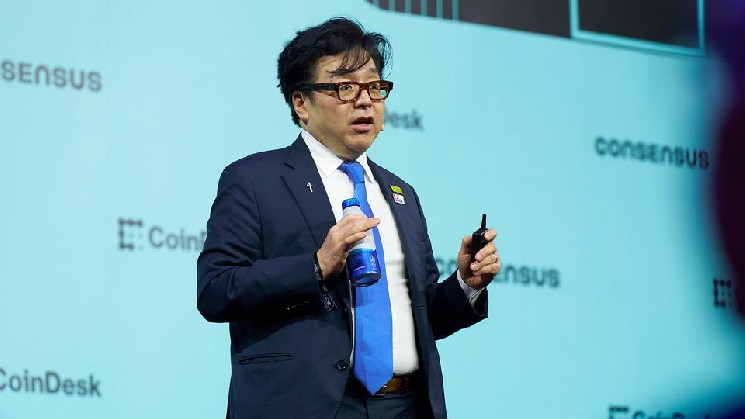
Tom Lee’s commentary at the Consensus 2026 conference in Miami last week added context to this slowdown, revealing a mind attuned to strategic horizons. Speaking to a packed audience of industry insiders, he indicated that Bitmine was considering easing its acquisition speed after what he described as “one of the fastest accumulation runs in the crypto market.” The chairman hinted at an approach nearing its aspirational target of securing 5% of Ethereum’s overall supply, a milestone that would cement Bitmine’s dominance. In a follow-up statement issued on Monday, Lee elaborated further, stating that the company had consciously dialed back its weekly buys from over 100,000 ether, far exceeding the levels of the past. This moderation, he explained, aimed to elongate the timeline, projecting that their prior aggressive pace would have them hitting the 5% mark by mid-July—now a more measured goal. Lee’s words, delivered with the assurance of a seasoned veteran, echo the sentiments of many in the field who advocate for sustainable growth over reckless expansion, especially in a sector where overcommitment can lead to ruinous downfalls, as seen in past crypto crashes.
Bitmine’s restrained strategy stands in welcome contrast to the broader market’s trepidation, where many treasury firms have hit the brakes or settled into hibernation mode. Amid the recent downturn, Bitmine has emerged as one of the rare major digital asset treasuries continuing to ramp up investments, a testament to its resilient outlook. Since the dawn of 2026, the company has amassed over a million ether, a remarkable feat when compared to the cautionary pulls from others in the space. This persistence has not only bolstered their position but also served as a potential lifeline for Ethereum’s valuation, injecting sustained buying pressure into a market otherwise bogged down by bearish sentiment. Analysts argue that such steadfastness from a player of Bitmine’s caliber could be instrumental in stabilizing prices and fostering investor confidence, illustrating how individual actors can drive herd-like shifts in collective behavior. As economists often liken it to corporate giants weathering economic recessions by investing through the trough, Bitmine’s moves suggest a belief that this protracted buying phase might yield outsized rewards when the sector rebounds in earnest.
Beyond Ethereum’s core, Bitmine’s portfolio paints a broader canvas of financial acumen, with total crypto and cash holdings reaching a staggering $13.4 billion. While Ethereum remains the crown jewel—complemented by a modest yet strategic 201 bitcoin— the company also boasts $775 million in cash reserves, providing ample liquidity for opportunistic maneuvers. Equity stakes in ventures like Beast Industries and Eightco Holdings further diversify their arsenal, blending tech innovation with traditional capital plays. Tom Lee’s renewed optimism for a “crypto spring” encapsulates this forward-looking stance, citing Ethereum’s nascent recovery and parallels in software and growth stock rallies. If ether sustains closes above $2,100 by May’s end, Lee posits, it would mark the unprecedented trifecta of consecutive monthly gains in a bear market—a phenomenon that could signal thawing frost and blossoming opportunities. His projections, grounded in historical data comparisons, challenge skeptics who view cryptocurrencies as mere speculative whims, instead positioning them as macro-economic barometers sensitive to broader investor moods and technological advancements.
Pivoting toward operational expansions, Bitmine has ramped up its staking initiatives, weaving Ethereum’s utility into a lucrative revenue stream. With over 4.7 million ether staked—accounting for more than 90% of its holdings—the firm has locked in approximately $11.1 billion in assets, accruing passive income through consensus rewards. This ambitious deployment underscores Ethereum’s evolution from a transactional platform to a staking powerhouse, aligning with post-Merge improvements that have made it a beacon for yield-seekers. At the forefront of this is the MAVAN staking platform, inaugurated earlier this year and tailored for institutional clients while bolstering Bitmine’s own treasury machinations. By democratizing access to high-stakes rewards, MAVAN not only amplifies Bitmine’s influence but also champions decentralized finance’s ethos, potentially attracting a wave of corporate adopters wary of traditional banking’s volatility. As the company refines its approach in this burgeoning segment, it signals deeper integration into the crypto infrastructure, where staking could emerge as a cornerstone for long-term wealth generation. Overall, Bitmine’s multifaceted strategy—from tempered acquisitions to staking innovations—reflects a nuanced adaptation to market rhythms, one that could redefine how corporations navigate the digital frontier in the years ahead. With eyes on the horizon, investors and analysts alike are watching closely, eager to see if this embryonic shift heralds sustainable growth or merely the calm before another crypto tempest.