


Veteran Trader Peter Brandt Remains Unapologetically Bearish on XRP, Even as Ripple Expands Its Banking Footprint
A Skeptic Who Hasn’t Budged
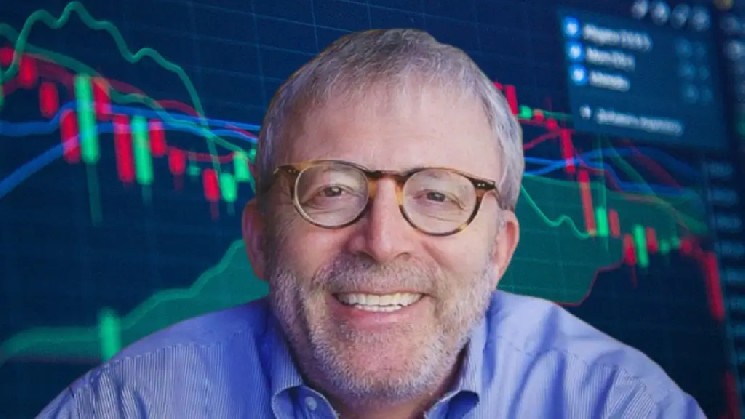
Peter Brandt has been around long enough to know that hype fades, and in the fast-moving world of cryptocurrency, he prefers to judge assets by the fundamentals he can see — not the headlines they generate. The veteran trader, known for decades of market commentary and sharp-tongued analysis, made that clear once again in a recent interview, where he reaffirmed his long-standing skepticism about XRP, the digital token tied to Ripple’s payment ecosystem. Despite Ripple’s steady stream of bank partnerships and its growing presence in cross-border payment discussions, Brandt made plain that his views have not shifted. In fact, he didn’t mince words: as he drew a sharp line between Bitcoin and XRP, he referred to XRP directly as a “dumb coin.”
The comment immediately caught the attention of the crypto community, where XRP has long enjoyed a dedicated base of supporters. To them, the token represents the future of global payments, especially through Ripple’s blockchain-based financial infrastructure. But Brandt sees things differently. Throughout the interview, he acknowledged that Ripple has made meaningful progress — and that XRP is, in some ways, a useful instrument — but he argued that utility alone is not enough to justify the kind of long-term value appreciation that many investors hope to see. For Brandt, the distinction between what a coin is built to do and what it can realistically offer as an investment lies at the core of his skepticism.
The interviewer, clearly aware of XRP’s loyal following, pressed Brandt on whether recent developments had changed his assessment. Ripple’s collaborations with banks around the world, plus the company’s legal and operational progress, were front and center. Yet Brandt stayed firm. He is not impressed by the scale of Ripple’s ambitions, nor does he believe that the token’s role inside a financial network automatically translates into rising value for those who hold it. It is that core belief — repeated by Brandt over the years — that continues to put him at odds with XRP enthusiasts, and his latest interview shows he has no intention of softening his stance.
Bitcoin’s Store of Value vs. XRP’s Transaction Role
To understand Brandt’s criticism of XRP, it helps to first understand how he views Bitcoin. He made this contrast clear from the early moments of the interview, describing Bitcoin primarily as a “store of value.” While he conceded that Bitcoin today carries a significant amount of speculative weight, he insisted that its properties also give it a lasting financial role — something he feels cannot be said for XRP. For Brandt, Bitcoin is more than just a digital currency; it’s a way of storing wealth outside traditional financial systems. That quality, he suggests, gives Bitcoin a valuation logic all its own.
XRP, on the other hand, was created with a different goal in mind. It is designed to facilitate fast, low-cost global transactions. Ripple has spent years positioning itself as a bridge between traditional banking and blockchain technology, and XRP is meant to serve as the fuel for that system. But Brandt argues that being useful in everyday financial transactions doesn’t make a token a good investment. He framed XRP as an asset focused on usage rather than wealth preservation, and he was blunt about what that distinction means in practice. In his eyes, investors who pile into XRP expecting it to behave like Bitcoin are relying on a flawed valuation model.
This is not to say Brandt dismisses transaction-focused blockchain technology entirely. He acknowledged that XRP can be used cheaply and effectively for transfers, and he didn’t dispute that Ripple has built a real product. What he objects to is the assumption that those qualities automatically make the token more valuable. Just because something has a practical purpose doesn’t mean it deserves to appreciate in price. And with Bitcoin, he explains, the story is different: its scarcity, decentralization, and established role as digital gold set it apart. XRP, by comparison, is a tool — an efficient one, perhaps, but a tool nonetheless. And tools, as Brandt sees it, are judged by their function, not by their promise as investment vehicles.
Banking Deals, Supply Questions and Unanswered Risks
During the conversation, the interviewer turned to Ripple’s continued push into the traditional banking world. Over the years, Ripple has announced partnerships with financial institutions across the globe, pitching its payment network as a faster and more transparent alternative to legacy systems. For many XRP supporters, these deals are the clearest sign that the token’s time is coming. If banks are using the technology, the logic goes, the demand for XRP will inevitably follow. But Brandt wasn’t moved. He maintained his skepticism, and this time he pointed to a concern that often gets less attention than Ripple’s partnership announcements: the token’s supply.
In Brandt’s view, there are serious question marks surrounding XRP’s total supply and whether it could expand further in the future. That uncertainty makes it difficult for him to treat XRP with the same confidence he feels toward Bitcoin, which has a fixed supply and a clear issuance schedule. If the amount of XRP in circulation can change, he argued, then the mechanics of supply and demand look very different from those of assets like Bitcoin. And for an investor trying to gauge long-term value, that kind of uncertainty matters. A token that can be more easily minted or released could face downward price pressure, regardless of how useful it is in practice.
That said, Brandt did give credit where he felt it was due. He repeatedly noted that XRP plays a role in the payments ecosystem and that it can be used efficiently. But in the same breath, he stressed that practical utility doesn’t eliminate the structural questions that continue to trouble him. Banks can use XRP, and the network may process transactions smoothly, but none of that answers the fundamental question hanging over the token: how much economic value does its use actually generate for holders? For Brandt, that tension remains at the heart of why he can’t get behind XRP, no matter how many banking partnerships Ripple announces.
The Dollar Dilemma: Why Useful Things Don’t Always Go Up
One of the most striking arguments Brandt made during the interview was his comparison between XRP and the U.S. dollar. He pointed out that the dollar itself is incredibly useful for transactions, and that nearly every person and business on the planet can use it effectively to buy goods, pay services, and settle debts. Yet no one expects the dollar to appreciate merely because it works well as a medium of exchange. In fact, most people understand that holding dollars is rarely the best way to grow wealth over time — inflation is a constant reminder of that reality. Brandt argued that XRP suffers from the same fundamental problem.
His point was clear: “Just because something can be used in transactions doesn’t automatically mean it has to be more valuable.” The statement cuts to the core of what he believes separates transactional currencies from true investment assets. People don’t buy a hammer because they expect it to rise in value; they buy it because it serves a function. The same, he suggested, applies to tokens like XRP. It may work beautifully as an instrument for moving money across borders, but that doesn’t mean the token should become more valuable over time. On the contrary, a purely transactional asset might behave more like cash — stable, useful, but not necessarily a wealth-building tool.
According to Brandt, the real question mark for XRP is the point at which its transaction-oriented use will translate into genuine economic value for the token itself. It is one thing for banks to use Ripple’s network; it is another thing entirely for that usage to flow back into the price of XRP in a measurable and sustainable way. Brandt remains unconvinced that this will happen, and he believes too many investors have glossed over that uncertainty. In his view, XRP’s supporters are leaning on the idea that usefulness equals value, but real-world markets don’t work that way. If the token can’t demonstrate a clear connection between usage and long-term appreciation, he sees no reason to change his negative outlook.
A New Framework for Valuing Crypto Assets
Brandt’s critique of XRP isn’t just a one-off complaint. It’s part of a broader argument about how investors should evaluate digital assets in the first place. During the interview, he insisted that cryptocurrencies should be sorted into categories based on their actual use cases, rather than lumped together under the general label of “crypto” and judged by the same standards. In his mind, Bitcoin deserves its own category because it is primarily a store of value, while XRP belongs to a very different group: assets designed for transactions. Each category, he argued, has its own valuation logic, and applying the same metrics to all of them is a mistake.
He also made room for a third category, one that includes networks like Ethereum. Unlike XRP, which is built for payments, Ethereum is a platform where developers can build decentralized applications. That capability opens up a different kind of economic opportunity, and Brandt clearly sees more potential in it. He described Ethereum as a “good asset,” and he expressed positive views on both Ethereum and Solana, saying he believes both have the potential to climb higher. The contrast with his assessment of XRP is striking. While he views XRP as a useful but uncertain token, he treats networks that enable broader blockchain innovation with far more respect.
This framework helps explain why Brandt remains so resistant to XRP’s bull case. It’s not that he hates the technology or denies that Ripple has achieved things. It’s that he believes XRP is being evaluated through the wrong lens. Store-of-value assets are judged by scarcity and trust, while application platforms are judged by utility and developer activity. Transaction-focused coins, by contrast, face a much harder path: they must prove that their everyday use generates enough demand to push up the token’s value. So far, Brandt hasn’t seen convincing evidence that XRP can do that. And until he does, his skepticism will likely remain exactly where it has been for years — firmly in place.
Where Brandt Stands on Ethereum, Solana and the Bitcoin Core
Despite his harsh words for XRP, Brandt’s outlook on the broader cryptocurrency market is far from entirely bearish. In the interview, he singled out Ethereum and Solana as digital assets with real potential, acknowledging that both platforms have carved out important roles in the ecosystem. Ethereum, in particular, earned his praise as a “good asset,” a phrase that stands out next to his dismissal of XRP as a “dumb coin.” But even with his positive comments, Brandt made it clear where his ultimate allegiance lies.
He stated plainly that he prefers to hold the majority of his cryptocurrency portfolio in Bitcoin. That preference reflects the core thesis he has championed throughout his career: Bitcoin offers something that other digital assets don’t — a time-tested identity as a store of value. It has survived multiple market cycles, faced down criticism, and grown into an asset that institutional investors increasingly take seriously. For Brandt, that track record matters more than any feature set or partnership announcement. He doesn’t need XRP to work well in a payments system; he needs an asset that will preserve wealth over the long run, and he believes Bitcoin does exactly that.
Brandt’s latest comments are a reminder that not every meaningful development in crypto translates into a bullish signal for every coin. Ripple’s progress with banks is real, and the company has built a product that clearly has potential in global finance. But for Brandt, that’s not enough to justify a positive stance on XRP. His framework — dividing assets into store-of-value, transaction-focused, and application-based categories — offers a disciplined way to think about a market that often confuses movement with momentum, and utility with value. Whether investors agree with him or not, his message is consistent: understand what an asset truly is, and don’t expect it to become something it was never designed to be.
This article is for informational purposes only and does not constitute investment advice. Cryptocurrency markets are highly volatile, and investors should conduct their own research before making any financial decisions.