





The Iron Wall: Beijing’s Shanghai Outpost Reaffirms Unyielding War on Digital Assets
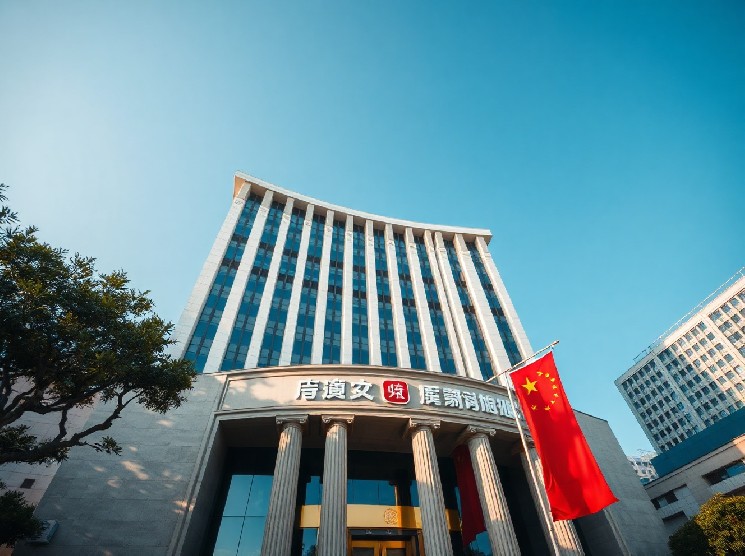
In the gleaming financial district of Lujiazui, where Shanghai’s skyscrapers pierce the clouds as a testament to China’s economic modernization, the nation’s central bank has once again drawn an uncompromising line in the sand. During its highly anticipated second-half work meeting for the year, the Shanghai headquarters of the People’s Bank of China (PBOC) issued a stark, unequivocal warning to the financial sector: the crusade against cryptocurrency trading and speculative activities remains an absolute, non-negotiable priority. According to an extensive report originally published by the domestic media outlet The Paper, this high-level gathering served not merely as a routine administrative review, but as a powerful reiteration of Beijing’s long-standing regulatory posture. By identifying the suppression of digital assets as a core administrative objective for the remainder of the year, the PBOC’s Shanghai branch has signaled to both domestic players and international observers that the Chinese state has no intention of softening its historic embargo on decentralized finance. This announcement arrives at a critical juncture in the global financial narrative, effectively dampening any lingering market speculation that China might quietly dismantle its regulatory walls in response to the growing mainstream acceptance of cryptocurrencies in Western capital markets.
A Decade of Defiance: Tracing the Historical Trajectory of China’s Sovereign Crypto Ban
To fully comprehend the significance of the PBOC’s latest pronouncement, one must examine the long and calculated evolution of China’s regulatory hostility toward virtual currencies, a campaign that spans more than a decade of aggressive policy interventions. The groundwork for the current regime was laid as early as 2013, when Beijing first restricted banking institutions from facilitating Bitcoin transactions, a defensive posture that escalated dramatically in 2017 with a blanket ban on Initial Coin Offerings (ICOs) and the forced closure of domestic fiat-to-crypto exchanges. The proverbial hammer fell with absolute finality in September 2021, when a powerful coalition of ten Chinese government agencies, led by the PBOC, declared all cryptocurrency-related business activities entirely illegal, branding them as illicit financial endeavors that threaten national security. From Beijing’s perspective, this hardline stance is not an impulsive reaction to technological novelty, but a deeply calculated macroeconomic strategy designed to protect the sovereign supremacy of the Renminbi, maintain strict capital controls, mitigate the systemic risks of capital flight, and clear a frictionless path for the adoption of its own state-sponsored CBDC, the Digital Yuan (e-CNY).
Tightening the Digital Dragnet: Decoding the Mechanics of the PBOC’s New Enforcement Directives
The directives emerging from the PBOC Shanghai branch’s mid-year assembly reveal a highly sophisticated, multi-layered enforcement strategy that targets the subtle channels through which digital asset platforms still attempt to engage with Chinese citizens. Rather than relying solely on broad-brush prohibitions, municipal regulators are now focusing their attention on the “online marketing of financial products” by licensed institutions under their jurisdiction, aiming to dismantle the covert advertising and promotional networks that bypass the Great Firewall. Under the guise of innocent educational seminars, technology consulting, or decentralized social media channels, many illicit entities have sought to lure retail investors back into speculative trading; however, the PBOC’s renewed focus on stringent standardization and aggressive administrative enforcement aims to close these loopholes permanently. By mobilizing local security bureaus, internet watchdogs, and municipal financial supervision offices, Shanghai’s regulatory apparatus is constructing a digital dragnet designed to detect and penalize peer-to-peer (P2P) desks, over-the-counter (OTC) clearinghouses, and virtual private network (VPN) services that facilitate capital outflows into offshore exchanges.
The Ideological Rift: Why Beijing Prioritizes Sovereign Financial Stability Over Decentralized Innovation
This unyielding stance highlights a fundamental ideological rift between the regulatory philosophies of Eastern and Western financial superpowers, particularly as the United States, Europe, and parts of Asia attempt to integrate digital assets into traditional market structures. While Western jurisdictions have increasingly embraced a philosophy of “regulation through enforcement and integration”—culminating in the historic approval of spot Bitcoin and Ethereum exchange-traded funds (ETFs) on Wall Street—China views this framework as a dangerous capitulation to speculative volatility. In the eyes of the PBOC and the state apparatus, decentralized public ledgers present an existential threat to systemic financial stability, acting as primary conduits for illicit wealth transfer, underground gambling, sophisticated money laundering networks, and rampant consumer fraud. By prioritizing state-controlled financial security over the chaotic, market-driven innovation associated with Web3 technologies, Beijing is betting that a tightly regulated, state-monitored digital economy, powered by blockchain networks under government oversight, will ultimately yield a far more stable and resilient financial ecosystem.
A Tale of Two Systems: The Global Decoupling and the Paradox of Hong Kong’s Crypto Ambitions
The international implications of China’s persistent crypto crackdown have fundamentally restructured the global digital asset landscape, sparking a massive migration of capital, mining infrastructure, and entrepreneurial talent to more welcoming jurisdictions. When the 2021 ban initially took effect, it triggered a dramatic “crypto exodus” of mining operations to North America, Central Asia, and Africa, while leading exchange platforms quickly severed ties with mainland users or relocated their headquarters to hubs like Singapore and Dubai. Intriguingly, this domestic hostility stands in stark contrast to the development of Hong Kong, which, under the unique framework of “One Country, Two Systems,” has actively positioned itself as a highly regulated global hub for digital assets, complete with a licensing regime for retail exchanges and the launch of its own spot crypto ETFs. This dual-track strategy allows Beijing to observe, experiment with, and capture the economic benefits of the global web3 revolution through Hong Kong’s heavily monitored sandbox, all while keeping the mainland’s capital markets entirely insulated from the perceived contagion of speculative crypto assets.
The Path Forward: Navigating a Permanently Bifurcated Global Financial Landscape
As the dust settles on the PBOC Shanghai branch’s latest warning, the message to global financial institutions, investors, and technological developers is clear: China’s regulatory wall is not a temporary policy phase, but a permanent structural fixture of its economic architecture. For multinational corporations and financial service providers operating within the country, maintaining absolute compliance is paramount, as any perceived association with digital asset transactions risks drawing severe regulatory penalties and reputational damage. The ongoing enforcement by the PBOC serves as a reminder that the future of global finance will remain deeply bifurcated, split between a decentralized, public-ledger ecosystem flourishing in Western and select Asian hubs, and a highly centralized, state-curated digital economy dominant within China’s borders. For market participants worldwide, navigating this dual-reality requires constant vigilance, a deep respect for jurisdictional boundaries, and an understanding that while the global crypto narrative continues to evolve at a breakneck pace, the gatekeepers of China’s financial system remain completely unmoved.