






Regulatory Crossroads: How the CLARITY Act Vote Is Reshaping Bitcoin’s Market Position
A Defining Moment for Digital Asset Regulation
The intersection of Washington policymaking and digital asset markets has rarely felt more consequential than it does at this moment. When the Securities and Exchange Commission recently brought the CLARITY Act to a vote, and the Commodity Futures Trading Commission subsequently stepped back into a fallback position, the cryptocurrency industry found itself standing at a genuine regulatory crossroads. According to a detailed analysis released by BitGo Research, the implications of this legislative moment extend far beyond the corridors of government power and into the very heart of how digital assets are valued, traded, and perceived. The report argues that the outcome of this vote will play a decisive role in shaping Bitcoin’s positioning against other digital assets, potentially reordering the competitive hierarchy that has defined the crypto market for years. For traders and investors alike, the message is unmistakable: these developments warrant close and sustained attention, as the ripples emanating from Washington are likely to reach even the most distant corners of the digital asset ecosystem. The analysis underscores a growing recognition that regulatory clarity—or the conspicuous absence of it—has become just as influential as market fundamentals in determining where capital flows and how prices move. In an industry that has long prided itself on operating beyond the reach of traditional financial institutions, the reality is that government oversight has become an inescapable force shaping the market’s trajectory. The question now is not whether regulation will come, but rather what form it will take and which assets will emerge stronger or weaker as a result.
Understanding the CLARITY Act and the Regulatory Divide
At the heart of this uncertainty lies a piece of legislation that has become a flashpoint for the broader debate over how digital assets should be governed in the United States. The CLARITY Act, formally known as the Classification of Legal Assets and Regulatory Integrity Through Yield Act, is designed to establish clearer guidelines for determining whether a digital asset should be classified as a security or a commodity. This distinction is far from academic; it determines which federal agency holds jurisdiction and, consequently, what compliance burdens and legal frameworks apply to a given token. The SEC, as the primary regulatory authority overseeing securities markets, has long maintained that many cryptocurrencies fall within its purview, particularly those that meet the criteria established by the Howey Test, a legal standard derived from a 1946 Supreme Court case. Under this framework, an asset can be deemed a security if it involves an investment of money in a common enterprise with a reasonable expectation of profits derived from the efforts of others. The CFTC, by contrast, has asserted its own authority over digital assets that function more like commodities, with Bitcoin and Ethereum frequently cited as prime examples of assets that should fall under its watch. The recent vote and the CFTC’s subsequent fallback have thrown this jurisdictional tug-of-war into sharp relief, leaving market participants to navigate a fragmented and often contradictory regulatory landscape. For an industry that thrives on clarity and predictability, the ambiguity has become a persistent source of anxiety, influencing everything from listing decisions on major exchanges to the willingness of institutional investors to commit substantial capital. The stakes are enormous, and the resolution of this jurisdictional dispute will likely determine the regulatory trajectory of the entire digital asset space for years to come.
Market Pulse and Mixed Signals
The broader cryptocurrency market is currently reflecting a complex tapestry of mixed signals, with various assets displaying divergent momentum and investor sentiment. While some digital currencies have shown remarkable resilience in the face of regulatory headwinds, others have struggled to maintain their footing amid the prevailing uncertainty. Interestingly, BitGo’s analysis notes that there is currently no reported trading volume for SEC-related assets, a telling indicator that the market has yet to fully price in the potential consequences of the regulatory developments. This absence of immediate market reaction, however, should not be mistaken for indifference or complacency. Rather, it suggests a market operating in a state of heightened anticipation, waiting for the next piece of information that could catalyze significant price movements in either direction. The ongoing discussions surrounding the CLARITY Act and the SEC’s broader regulatory posture are likely to influence trading sentiment in the near term, and the market appears poised on the edge of a potential shift. Traders are acutely aware that clarity from regulatory bodies could trigger a wave of activity, while continued ambiguity could prompt a retreat to the sidelines and a period of subdued trading. The current environment is reminiscent of the calm before a storm, where the absence of volatility masks the underlying tension and the potential for dramatic movement once the situation becomes clearer. For those closely watching the market, the message is to remain vigilant and prepared for a sudden shift in momentum.
Whale Behavior and Institutional Positioning
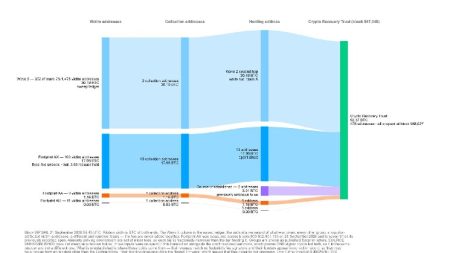
One of the more intriguing aspects of BitGo’s research focuses on the behavior of whales—the large wallet holders whose movements can send ripples through the market and often serve as harbingers of broader trends. The analysis suggests that regulatory uncertainty is having a measurable impact on whale behavior, as significant digital asset movements may indicate preparations for shifts in market dynamics. When major players begin repositioning their holdings, it often serves as a leading indicator of where the market is headed, and the current patterns are no exception. The report implies that these large-scale movements are not random or arbitrary; they are calculated responses to the evolving regulatory landscape, reflecting a sophisticated understanding of the risks and opportunities that lie ahead. Institutional investors, in particular, are keenly sensitive to regulatory risk, and the lack of clear guidelines has made them cautious about committing substantial capital to the space. The compliance burdens, legal uncertainties, and potential for enforcement actions have created a formidable barrier to entry that has kept many traditional financial players on the sidelines. However, the prospect of regulatory clarity could unlock a wave of pent-up demand, as institutions that have been waiting for the right moment would finally have the certainty they need to deploy their capital. This dynamic creates a fascinating tension within the market: the very uncertainty that is currently suppressing activity could, once resolved, unleash a powerful surge of investment that transforms the competitive landscape. The behavior of whales and institutional players in the coming weeks will offer valuable clues about which direction the market is likely to move.
The Stakes for Bitcoin’s Competitive Position
The implications of these regulatory developments for Bitcoin’s competitive positioning cannot be overstated. As the original and most widely recognized cryptocurrency, Bitcoin has long enjoyed a status that sets it apart from other digital assets, often described as digital gold and viewed as a store of value rather than a speculative security. Its classification as a commodity by the CFTC has provided a degree of regulatory certainty that many altcoins lack, giving it a competitive advantage in attracting institutional capital and mainstream adoption. However, the CLARITY Act and the broader regulatory debate have the potential to reshape this landscape in profound ways. If clearer guidelines emerge that favor a more permissive classification framework, Bitcoin’s relative advantage could be diminished, as other digital assets gain the same regulatory legitimacy and compete more effectively for investor attention. Conversely, if the regulatory environment becomes more restrictive, Bitcoin’s established status could make it a safe haven within the crypto ecosystem, attracting capital fleeing from assets facing greater regulatory scrutiny and reinforcing its position as the dominant digital asset. BitGo’s analysis suggests that traders should carefully consider these scenarios, as the competitive dynamics between Bitcoin and other digital assets are likely to shift in response to the regulatory outcomes. The report emphasizes that Bitcoin’s positioning is not static; it is continually being redefined by the interplay of regulation, market forces, and technological development. Understanding these dynamics will be essential for anyone looking to navigate the market successfully in the months ahead.
The Road Ahead and What Traders Should Watch
Looking forward, the path ahead is fraught with both risk and opportunity, and the decisions made in Washington will reverberate across the global digital asset market. What traders should watch next includes any updates from the SEC regarding the CLARITY Act and potential responses from the CFTC, as well as statements from key lawmakers and regulators that might offer insight into the direction of policy. The timing of these developments will be crucial, as the market is currently operating in a state of heightened sensitivity to regulatory news, and even the slightest signal could trigger significant movement. If regulatory clarity emerges, it could lead to increased investment and trading activity across the digital asset space, with Bitcoin likely to be a primary beneficiary given its established status and widespread recognition. On the other hand, ongoing uncertainty may provoke caution among investors, leading to subdued trading volumes and a prolonged wait-and-see approach that could dampen market performance. The overall sentiment hinges on how these regulatory discussions unfold, and the implications for market dynamics and trader behavior are significant. For now, the message from BitGo Research is one of vigilance and preparation. In a market where regulatory developments can overshadow even the most compelling technological advancements, staying informed is not just a matter of due diligence—it is a strategic imperative. The coming weeks and months will reveal whether the CLARITY Act becomes a catalyst for a new era of regulatory clarity or another chapter in the ongoing saga of uncertainty that has defined the crypto industry’s relationship with Washington. Either way, the decisions made in the halls of power will shape the future of digital assets, and those who are prepared will be best positioned to navigate whatever comes next.