


Circle and Binance Double Down on USDC as Stablecoin Balances Surge on the Exchange
A Five-Year Pact, a $100 Million Stake, and a New Chapter in Stablecoin Distribution
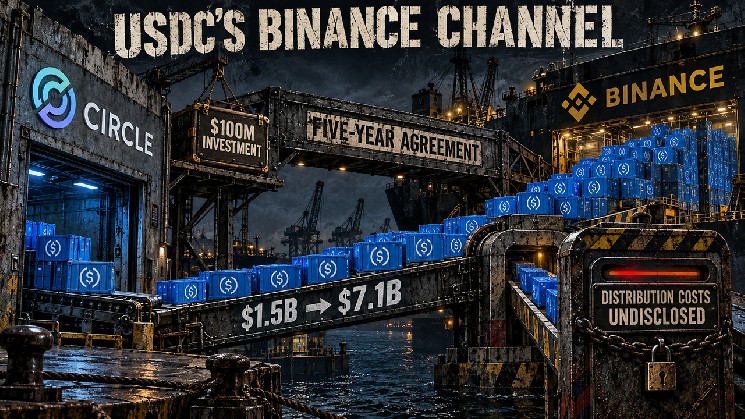
Circle is betting that Binance’s massive user base can turn USD Coin into a truly global digital dollar. On Sept. 22, the stablecoin issuer and the world’s largest crypto exchange unveiled a new five-year commercial agreement, alongside a $100 million equity investment from Binance in Circle. The deal replaces earlier arrangements signed in November 2024 and expanded in August 2025, and it comes after a period of explosive growth for USDC on the exchange. Binance bought 1.237 million Circle Class A shares at $80.84 per share, a 5% discount to Circle’s Sept. 17 closing price, and agreed to a two-year lockup during which it cannot sell, pledge, or hedge the position. The commercial agreement runs through September 2031, with early termination rights for either side under specified conditions. More importantly, the pact is designed to accelerate access to USDC in emerging markets, where stablecoin adoption has become an increasingly important financial on-ramp for millions of users. The announcement marks a decisive shift from a transactional distribution deal to a more strategic alliance, giving Binance both an incentive to promote USDC and a formal role in Circle’s growth story. It also sends a clear signal to the broader stablecoin market: distribution through major exchanges is the battleground where the next phase of digital dollar adoption will be won or lost.
USDC Balances at Binance Have Grown Nearly Fivefold in Less Than a Year
The scale of the shift is hard to overstate. At the start of October 2024, just before Circle and Binance signed their original agreement, Binance customers held about $1.5 billion in USDC. By Sept. 1 of this year, the exchange’s proof-of-reserves snapshot showed customer balances of about $7.1 billion—a jump of roughly 376%, or nearly fivefold. During the same period, total USDC circulation grew far more slowly. Circle reported $39.7 billion in circulation on Nov. 29, 2024, and DeFiLlama now estimates the figure at roughly $74.4 billion, an increase of about 87%. That means Binance’s share of global USDC supply has climbed from less than 4% at the start of the agreement to nearly 10% today. In other words, the exchange has become one of the most powerful distribution channels in the stablecoin market, absorbing a growing share of every newly issued USDC at a pace that dwarfs the stablecoin’s overall expansion. For a company like Circle, whose revenue depends on the yield earned from the reserve assets backing USDC, that kind of concentrated growth is both an opportunity and a risk. It demonstrates demand, but it also creates dependence on a single partner. Binance is not just another listing; it is a funnel that can move billions of dollars in stablecoin balances in a matter of months. The proof-of-reserves data, published monthly, has become one of the clearest windows into that dynamic, and the latest snapshot shows a relationship that is transforming the competitive landscape.
Closing the Gap With Tether, but Still Playing Catch-Up
The data also shows just how much progress USDC has made against its larger rival. In the Oct. 1, 2024 proof-of-reserves report, Binance customers held $21.4 billion in Tether’s USDT and only $1.5 billion in USDC—a ratio of roughly 14.3 to 1. By Sept. 1, USDT balances had risen to $32.3 billion, but USDC had climbed to $7.1 billion, narrowing the ratio to around 4.5 to 1. In percentage terms, USDT grew about 51% over that period, while USDC soared roughly 376%. Circle’s own regulatory filings tell the same story: USDC represented 5% of stablecoins held on Binance on July 1, 2024; 10% by Jan. 1, 2025; and 22% by July 1, 2025. Despite that progress, Tether remains the dominant dollar token on Binance, and its lead is still substantial in absolute terms. Yet the direction of travel is unmistakable. A distribution channel that once seemed permanently tilted toward USDT is becoming more balanced, and the renewed agreement is likely to accelerate that trend. If Binance continues to integrate USDC into its products, the gap could narrow further in the coming years. The shift matters beyond Binance. USDT has long been the default stablecoin on many Asian and emerging-market trading venues. USDC’s growing presence on the world’s largest exchange gives Circle a foothold in markets where its token had previously been an afterthought. The numbers suggest that the strategy is working, even if Tether’s overall lead remains intact.
Executives Talk of Emerging Markets and Digital Dollar Adoption
For Circle CEO Jeremy Allaire, the partnership is not just about exchange balances; it is about building the “internet financial system.” In a post on X after the announcement, Allaire said the partnership would “accelerate global and emerging market preference and adoption of USDC.” He added: “The internet financial system is expanding everywhere and this partnership will help to expand access to this new financial system to hundreds of millions of people and businesses around the world.” Binance CEO Richard Teng framed the investment in similar terms. “Trust in this industry is earned through regulation, transparency, and delivery,” Teng wrote. “Today, in recognition of all three, Binance commits $100M to Circle and extends our partnership for five years. This partnership is about bringing a stable, reliable digital dollar within reach of anyone with a phone.” The comments reflect a broader narrative in the stablecoin industry: digital dollars are increasingly seen as a tool for financial inclusion, particularly in countries with weak banking infrastructure or volatile local currencies. By pairing Circle’s USDC with Binance’s global reach, both companies are positioning themselves to capture demand from regions where stablecoins have moved from niche experiment to everyday necessity. The strategic rationale is easy to understand. The economics are more complicated. And the question that hangs over the announcement is whether Circle can afford the cost of the distribution that both executives are celebrating.
The High Price of Distribution
Circle has paid heavily to make USDC the stablecoin of choice on Binance. Under the November 2024 agreement, Circle handed over a $60.25 million upfront fee and agreed to monthly incentive payments based on USDC held both on the platform and in Binance’s corporate treasury. Those payments were calculated using a fixed rate reset quarterly at a discount to the three-month Secured Overnight Financing Rate, or SOFR, a benchmark short-term interest rate, and the percentages were in the mid-to-high double digits on an annualized basis. Binance, for its part, committed to keeping $3 billion of USDC in its treasury, subject to certain exceptions, with incentive payments requiring at least $1.5 billion to remain there. The relationship expanded again in August 2025 to include USDC held through Circle’s Modular Smart Contract Wallet infrastructure. That agreement provided for incentives equal to a high-double-digit percentage of a fixed rate tied to three-month SOFR. The new five-year contract consolidates and replaces both earlier arrangements, with Circle continuing to pay Binance a monthly incentive linked to USDC held in the wallet. Crucially, neither the new fee rate nor any minimum balance commitments have been disclosed. That lack of transparency makes it difficult to assess whether the renewed deal is more profitable for Circle than its predecessor. Analysts at Clear Street, in a note shared with CryptoSlate, said the agreement improves Circle’s visibility over one of its largest distribution channels outside Coinbase, but leaves the net economics unclear. The structure of the deal suggests that Binance is being paid handsomely to keep USDC front and center, and the absence of disclosed terms only heightens the concern.
Shareholder Status, Margin Pressure, and the Real Test Ahead
The financial reality behind the headlines is sobering. Circle generated about $668 million in reserve income in the second quarter, but distribution and transaction costs reached roughly $410 million—about 61% of that income. Non-Coinbase distribution costs rose as activity expanded across new and existing partnerships, and Binance is now a major component of that spending. Circle said distribution costs specifically related to Binance increased by $152.1 million in 2025 as the relationship deepened. The economics of the new agreement matter because the incremental revenue from holding more USDC on Binance may be largely absorbed by the incentive payments. Clear Street estimated that an additional $1 billion of USDC at a 3.5% reserve return would produce about $35 million in gross annual reserve income. If Binance receives a high-double-digit share of that income, as in earlier terms, Circle could retain only about $4 million to $7 million. That is a thin margin for a company that has staked its future on making USDC a global standard.
At the same time, the new equity investment gives Binance a share of Circle’s upside, aligning incentives in a way that did not exist before. Clear Street compared the structure with Circle’s distributor-shareholder relationship with Coinbase, although Binance’s roughly 0.5% stake is much smaller. For Binance, the equity position is a bet on a stablecoin market that is becoming increasingly important to its business. For Circle, it is a way to keep Binance focused on USDC without sacrificing the balance-linked incentives that encourage the exchange to hold and promote the token. The next test will come when Circle reports third-quarter results. Clear Street said it will be watching reported Binance USDC holdings and non-Coinbase distribution expenses for signs of how the economics are evolving. With Binance customers now holding more than $7 billion of USDC, the disclosures could reveal how much Circle is paying to preserve a channel that has grown from less than 4% of global USDC circulation to almost 10% in under two years. The partnership may be a milestone for stablecoin adoption, but it also lays bare the central challenge of the business: distribution is expensive, and the cost is only going up.