


AI Safety Warnings Jolt U.S. Tech Stocks While Cryptocurrencies Climb
As leading tech founders urge a slower race toward artificial intelligence, markets are suddenly rethinking what “progress” is worth.
A Wall Street Awakening: AI Stocks Slip, Crypto Rises
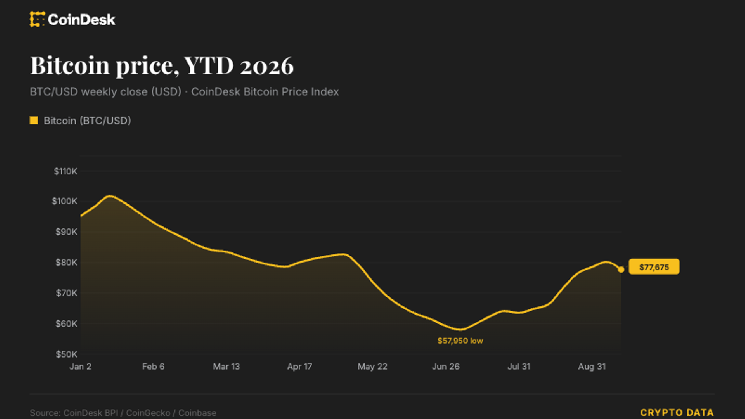
Wall Street woke up on the wrong side of the bed Monday, with technology and artificial intelligence stocks sliding in pre-market trading after a weekend of unusually candid warnings from some of the most powerful figures in the AI industry. The selling pressure was notable not because it was sudden — the sector has been volatile for months — but because it arrived at a moment when the bull case for AI had seemed nearly unshakeable. Investors who had grown accustomed to meteoric gains in chipmakers, cloud infrastructure providers, and software companies were abruptly reminded that even the architects of the AI boom had doubts about how fast it should actually proceed. The anxiety rippled through global markets, but it did not touch everyone equally. In a striking sign of divergence, cryptocurrencies rose against the grain. Bitcoin traded at about $77,800 after gaining roughly 1% in the past 24 hours, while ether climbed a similar amount to just above $2,500. The mixed reaction suggested investors were not simply fleeing risk altogether; they were reallocating it, moving capital away from assets tied to Big Tech balance sheets and toward digital currencies that have, in recent months, carved out their own trading personality. For market participants who had been braced for a quiet start to the week, the overnight action was a reminder of how quickly sentiment can shift when high-profile voices decide to challenge the dominant narrative. The technology landscape has been defined by aggressive spending on data centers, advanced semiconductors, and enormous language models, but Monday’s pre-market moves hinted that the trade is no longer a one-way bet.
OpenAI, Anthropic, and xAI Leadership Align on Safety
The catalyst for Monday’s downward drift was not an ordinary earnings miss or a hawkish central bank speech. Instead, it was a series of statements from AI founders who chose a weekend of conversations and announcements to tap the brakes. Anthropic CEO Dario Amodei made a forceful argument that the industry should slow the development of frontier models, allowing safety measures to catch up with technical capability. His call was significant on its own terms, given that Anthropic has spent years positioning itself as an AI lab with safety and ethical alignment at its core. But the moment became even more consequential when OpenAI CEO Sam Altman and Elon Musk — whose company xAI developed the Grok chatbot — voiced agreement with the broad idea. That alignment was remarkable because the rivalry between OpenAI and xAI has frequently veered into public sparring, with lawsuits, social media provocations, and competitive tensions over talent and ambition. For the two figures to stand on roughly the same side of a policy question signals that the conversation around AI safety has moved from a fringe concern to a mainstream industrial issue. It also sent a clear message to the investment community: if the people building the AI frontier are saying “wait,” then perhaps there is far more risk in the road ahead than current valuations imply. For a sell-side ecosystem that has been pricing in uninterrupted AI expansion, this was a jarring reframing of the risk narrative. The comments touched on everything from the difficulty of aligning increasingly autonomous systems to the need for deeper research on robustness and societal impact before another wave of model releases. As those comments circulated, investors began to recalibrate what a slower timeline might mean for revenue growth, capital expenditures, and the competitive advantages that have made AI companies seem almost invulnerable.
Anthropic’s IPO Path and OpenAI’s Independence
Alongside the safety conversation, the weekend news cycle was crowded with fresh signals about the corporate structure of the AI world. Anthropic, widely viewed as one of the strongest challengers to OpenAI, reportedly selected the Nasdaq for its anticipated initial public offering. For market watchers, this was a major milestone, not just for Anthropic but for the broader AI ecosystem, which has produced relatively few true public pure-plays. The choice of the Nasdaq — the traditional home of mega-cap technology companies — reinforced the notion that Anthropic intends to compete at the highest level of the public markets. It also raised expectations that an AI IPO could become one of the most closely watched listings of the decade, drawing comparisons to the blockbuster debuts of earlier internet-era giants. At the same time, Sam Altman confirmed that OpenAI would not go public in 2026, despite years of speculation about a potential listing. That confirmation arrived with little drama, but its implications are considerable. OpenAI remains one of the most valuable private companies in the world, and its decision to stay private for the foreseeable future means a large share of AI equity exposure will remain out of reach for ordinary investors. The asymmetry between Anthropic’s apparent movement toward a public listing and OpenAI’s deliberate distance from the stock market painted a fascinating picture. It suggested that the AI industry is still deciding how best to interface with public capital, with some leaders eager to unlock liquidity and others wary of the quarterly-reporting treadmill and regulatory scrutiny. For analysts, the dueling approaches could become a defining test of how the next generation of technology giants chooses to grow and govern itself.
Seoul’s Slump: Memory-Chip Makers Feel the Chill
The impact of the AI safety debate was not confined to the United States. In Asia, South Korea’s Kospi index fell 3%, with the tech-heavy index dragged down by one of the most important names in the global AI supply chain: SK Hynix. The company, whose memory chips are essential to the data centers and training infrastructure used by leading AI labs, tumbled 6% in regular trading. The drop was particularly sharp because SK Hynix had become one of the most reliable beneficiaries of the AI boom, with its high-bandwidth memory products in enormous demand among Western chip designers and cloud providers. But the logic of the selloff was easy to follow. If the world’s most prominent AI companies decide to slow the pace of model development, the immediate consequence would be a softer demand curve for the hardware that powers those models. That connection turned a few weekend comments into a global supply chain event, hitting Asia’s semiconductor complex with remarkable speed. The Korean market’s broader slide was a reminder that the AI trade is now deeply intertwined with regional economic performance, export data, and manufacturing calendars. Investors who had taken comfort in the strength of the semiconductor cycle suddenly had to wrestle with the possibility that the cycle could flatten faster than expected. For South Korea, where chipmakers occupy a central role in export-driven growth, the implications are especially grave. A prolonged slowdown in AI infrastructure spending would not only pressure corporate profits, but also feed into broader concerns about the country’s competitiveness in advanced hardware. Monday’s decline, in that sense, was not merely a stock market event. It was a warning about how fragile the AI boom looks when the founders themselves begin to question its velocity.
Premarket Blues: Megacaps, Neoclouds, and Chipmakers Under Pressure
Back on Wall Street, the pre-market trading session painted an equally grim picture for technology stocks. The Invesco QQQ ETF, which tracks the Nasdaq 100 index, fell 1.5% in early action, signaling that the pain would be broad-based and not limited to a few overheated names. The so-called neocloud providers, a relatively new category of companies that rent out AI-focused cloud computing infrastructure, were hit especially hard. Nebius, a company that has emerged as a favorite in the trade, dropped 6%, while CoreWeave slipped 5%. These firms have enjoyed a remarkable run in recent years, attracting massive orders from AI labs and leveraged financing from private markets. But they also represent the riskiest, most highly leveraged bets on continued AI expansion. If the major AI laboratories decide to pause, the demand for their expensive compute clusters could soften quickly, leaving them with enormous depreciation costs and few alternative sources of revenue. Traditional semiconductor makers did not escape the selloff either. Sandisk and Intel each lost 5% in pre-market trading, underscoring the breadth of the decline. Intel’s slide was particularly symbolic, as the company is in the midst of an attempted turnaround under new leadership and has been hoping to position itself as a key player in the next wave of AI infrastructure. For all the talk about a widening AI bubble, Monday’s action demonstrated just how many layers of the technology economy depend on a single assumption: that the AI labs will keep building bigger, faster, and more expensive models. When that assumption is questioned — even slightly — the entire stack begins to shake.
What the AI Pause Could Mean for Investors
Ultimately, Monday’s pre-market action was more than a knee-jerk reaction to a few cautionary comments. It represented a moment of introspection for a market that has, for close to two years, tended to treat AI optimism as an investment thesis with no downside. The fact that leading AI voices are now publicly questioning the pace of development — and doing so in apparent agreement with one another — forces a more nuanced conversation about how much of current equity valuations is based on fundamentals rather than faith. For retail and institutional investors alike, the takeaway may be to prepare for a regime in which AI stocks move less in lockstep and more in response to regulatory, safety, and structural concerns. The resilience of Bitcoin and ether in the face of this shift offers another lesson: digital assets have increasingly taken on a life of their own, no longer simply functioning as a leveraged bet on technology sentiment. Cryptocurrencies have developed their own institutional flows, regulatory debates, and technical cycles, and their ability to hold steady while AI equities wobbled suggests that the relationship between digital assets and the broader market is more complex than it once was. As the trading week unfolds, the question will be whether other global markets, policymakers, and corporate boards follow the lead of the AI founders who asked for a moment to think — or whether the machine just keeps going. The answer will depend on whether investors interpret the safety-focused comments as a temporary dip or as a fundamental turning point in the AI era. One thing is clear: the era of unquestioning AI enthusiasm has ended. What comes next will be a more careful, more contentious, and far more interesting phase of the story.