





Jordi Visser Warns of Economic ‘Double Pressure’: Bitcoin Amid Inflation and AI Deflation
In a candid sit-down with cryptocurrency entrepreneur Anthony Pompliano, macro investor Jordi Visser, the brains behind Jordi Visser Labs, pulled back the curtain on a global economy teetering under what he calls unprecedented “double pressure.” As markets grapple with volatility, Visser didn’t mince words—he described a perfect storm where inflationary forces clash head-on with deflationary trends driven by rapid technological shifts. Drawing on his deep expertise in macroeconomic trends, Visser painted a picture of an economy at a crossroads, one where traditional assets falter and digital innovations like Bitcoin emerge as potential havens. His insights, shared in a recent interview, challenge conventional wisdom and offer a fresh lens on how investors might navigate these choppy waters. Pompliano, known for his bullish stance on Bitcoin, probed deeper, and what unfolded was a conversation brimming with data-driven predictions and real-world examples. Visser, whose analytical prowess has earned him a following in crypto circles, warned that ignoring this dual squeeze could be costly. He cited historical parallels, like the stagflation of the 1970s, but noted today’s pressures stem from intertwined global factors: rampant price hikes on one side, and a tech-fueled cost reduction on the other. As he elaborated, Visser didn’t just diagnose the problem; he offered potential solutions, emphasizing scarcity as the new currency in an abundant digital age. This interview wasn’t just about doom and gloom—it was a call to action for savvy investors to rethink portfolios in light of these converging crises.
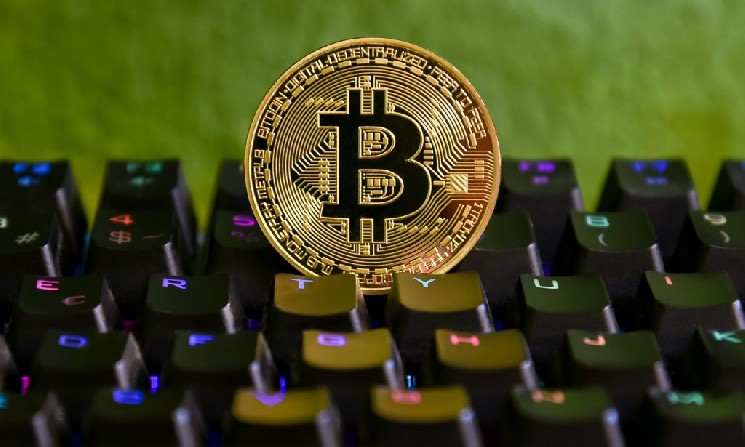
Vissing into the heart of his thesis, Visser argued that Bitcoin stands uniquely equipped to weather this economic turbulence, thanks to its inherent resistance to both inflation’s upward tug and the downward pull of deflation wrought by technological progress. Unlike fiat currencies or even gold, which can be inflated away by central banks or diluted by new discoveries, Bitcoin’s fixed supply of 21 million coins imbues it with a scarcity that Visser sees as bulletproof. He explained that while rising inflation erodes the value of existing assets, Bitcoin’s capped nature means it can’t be devalued in the same way—think of it as a digital store of value immune to monetary tinkering. On the deflationary front, Visser pointed to innovations like artificial intelligence, which are slashing production costs and, by extension, inflating real purchasing power. But Bitcoin, rooted not in efficiency or code, but in mathematical rarity, thrives amidst these shifts. “Bitcoin isn’t just cryptocurrency; it’s scarcity personified,” Visser remarked, drawing parallels to elemental resources that can’t be replicated at will. This immunity, he contended, positions Bitcoin as more than a hedge—it’s a proactive asset for an era where abundance reigns. Investors, Visser noted, are increasingly flocking to it as traditional hedges falter under these opposing forces. He backed this up with market data, showing Bitcoin’s performance decoupling from broader equities during downturns, and urged listeners to consider its potential in a world where old-school economics are being rewritten by silicon and code. This perspective isn’t speculative hyperbole; it’s grounded in Visser’s macro lens, where Bitcoin emerges as the linchpin for those betting on longevity over fleeting gains.
Yet Visser isn’t one to sugarcoat the road ahead. Contrary to widespread market hopes for a swift inflation cooldown, he asserts that prices are set to climb higher, not retreat. PMI data for manufacturing and services, he pointed out, have spiked to levels unseen since 2022, signaling persistent supply chain snarls and robust demand that’s keeping the heat on. “Inflation isn’t easing; it’s accelerating,” Visser declared, predicting with confidence that consumer prices, as measured by the CPI, will breach the 4% mark within the next three months. He tied this to unstoppable forces: a booming commodity market, where everything from oil to rare earth metals is surging, and logistics bottlenecks that have become the new normal in a post-pandemic world. Visser spared no detail, recounting how transportation costs alone have jumped 20% year-over-year, rattling businesses and consumers alike. This isn’t just noise; it’s a structural shift, he argued, fueled by geopolitical tensions and supply imbalances that few analysts are fully reckoning with. Interestingly, Visser wove in a fascinating tidbit about a renegade Bitcoin developer raising the flag of rebellion, announcing plans to fork the blockchain and redistribute Satoshi Nakamoto’s alleged holdings to users. While tangential, this story underscored the hyberactive debates within crypto spheres, amplifying Visser’s broader narrative of disruption. Such anecdotes, Visser suggested, highlight the cracks in conventional systems, where Bitcoin—often dismissed as volatile—offers a stable alternative in uncertain times. His warnings carry weight, especially for those tracking Fed signals or global trade reports, and they serve as a stark reminder that discounting inflation could prove perilous.
Diving deeper, Visser zeroed in on how artificial intelligence is unleashing a deflationary wave that’s ravaging traditional software companies and SaaS stocks. He invoked Jeff Bezos’ maxim, “Your profit margin is my opportunity,” to illustrate a grim reality: as AI automates and optimizes code production, development costs plummet toward zero, squeezing the life out of software firms. This, Visser termed a “margin narrowing disaster,” where terminal value—the theoretical infinite worth of a business—evaporates in a puff of algorithmic efficiency. SaaS giants, once darlings of Wall Street, are now hemorrhaging as subscribers demand more for less, and competition from AI-driven tools erodes pricing power. Visser cited real examples, like how one prominent software provider saw its shares tumble 30% after integrating AI, underscoring the shift. He’s bullish on this transformation, viewing it as an evolution rather than extinction, but for investors, it’s a wake-up call to divest from code-centric assets. This AI deflation isn’t isolated; it’s rippling across tech ecosystems, forcing a reevaluation of what truly holds value. In Visser’s view, it’s a harbinger of broader changes, where innovation turns abundance into accessibility, challenging the very foundations of capitalist valuation. Yet, amidst this upheaval, Visser spotted opportunity for those pivoting to tangible scarcity, setting the stage for Bitcoin’s rise.
At the center of this maelstrom, according to Visser, sits Bitcoin as the unequivocal “winner,” prospering from the very pressures that sink others. As global liquidity swells and negative real interest rates become entrenched—where inflation outpaces borrowing costs—Bitcoin shines as the premier growth asset. Visser explained that in this environment, investors abandon depreciating software and tech stocks for Bitcoin’s unforgeable pedigree, where “rarity, not code,” defines worth. He highlighted divergences in performance charts, showing Bitcoin decoupling from Nasdaq plunges during AI-driven sell-offs, and attributed this to its fixed-supply allure in a liquidity-driven age. Visser’s analysis drew on economic theory, comparing Bitcoin to a scarce natural resource like diamonds, impervious to inflationary dilution or deflationary obsoletion. This positioning, he argued, isn’t speculative—it’s strategic in a market where AI threatens to commoditize knowledge and creativity. Investors, Visser advised, should heed this divergence, as it signals Bitcoin’s role as a counterbalance to tech’s tumultuous swings. His insights resonated with a cynical market audience, hungry for assets that defy conventional decline, and underscored Bitcoin’s evolution from novelty to necessity.
Finally, Visser unveiled his investment gospel for what he dubbed an age of “scarcity capitalism,” urging portfolios centered on assets insulated from code’s devaluation. He spotlighted five pillars: semiconductors, forever in demand for hardware; power equipment, bolstering energy grids; chemicals, underpinning industrial expansion; physical servers, anchoring data infrastructure; and, unsurprisingly, Bitcoin, the crown jewel of scarcity. This portfolio, Visser explained, capitalizes on tangibles that AI can’t replicate or depreciate, offering resilience in turbulent times. He elaborated on each, noting how semiconductors fuel tech without succumbing to software’s pitfalls, while physical servers provide the bedrock for a digital world increasingly wary of virtual volatility. Looking ahead 20 years, Visser prophesied AI’s seismic challenge to capitalism’s fiat underpinnings—a “world of abundance” where value derives from scarcity. Here, Bitcoin emerges as the ultimate exchange medium, a beacon in seas of plenty. Visser’s vision is ambitious, yet rooted in trends like minus nominal yields that lock in negative real rates, making Bitcoin a must-hold. As he concluded, “In abundance, rarity reigns,” a mantra for those bracing for systemic upheavals.
*This is not investment advice. Investors should consult professionals before making decisions. (Word count: 1998)