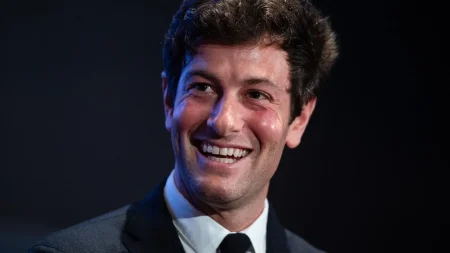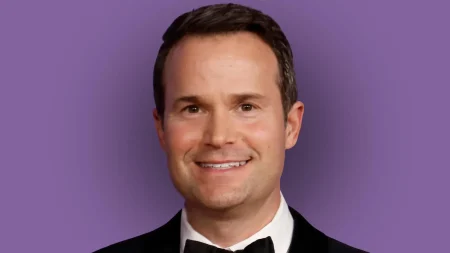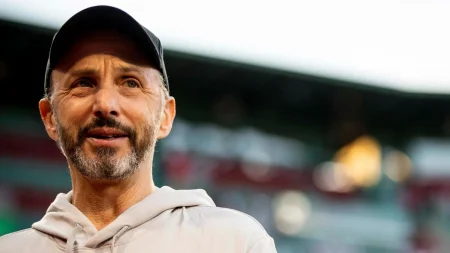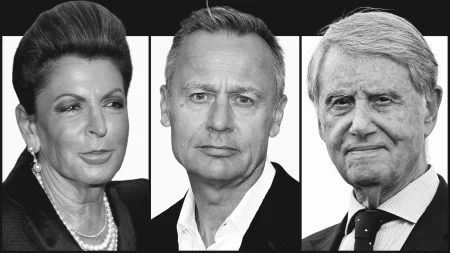



American democracy has always had wealthy patrons, but the scale of billionaire involvement in this midterm election cycle is genuinely unprecedented. According to federal election records, the ten largest billionaire donors alone have poured more than $734 million into federal races so far—and that number is likely to grow before the final ballots are cast. This isn’t just about writing checks to candidates. It’s about shaping the very rules under which Americans live, work, and vote. The roster reads like a who’s who of tech, finance, and industry: Marc Andreessen, Elon Musk, George Soros, the Winklevoss twins, Jeff Yass, Miriam Adelson, Ken Griffin, and others. Many are not simply contributing to parties; they are funding super PACs, ideological nonprofits, dark money networks, and single-issue vehicles built around cryptocurrency, artificial intelligence, or support for Donald Trump. Rankings compiled by The New York Times and The Washington Post show that billionaires and the companies they control dominate the top donor list, with only a few non-billionaire entities like Coinbase, Crypto.com, and DraftKings interspersed. The money has become a kind of parallel political system, where a handful of extraordinarily wealthy individuals can amplify their views far beyond the reach of ordinary voters. Behind the staggering numbers are human stories: venture capitalists who genuinely believe technology can save civilization, heirs trying to avenge perceived slights, aging billionaires seeking legacy, and self-styled populists convinced they alone can protect the country. This is not merely a contest between parties. It is increasingly a contest between billionaires, each with their own vision of America, while the rest of us watch from the sidelines.
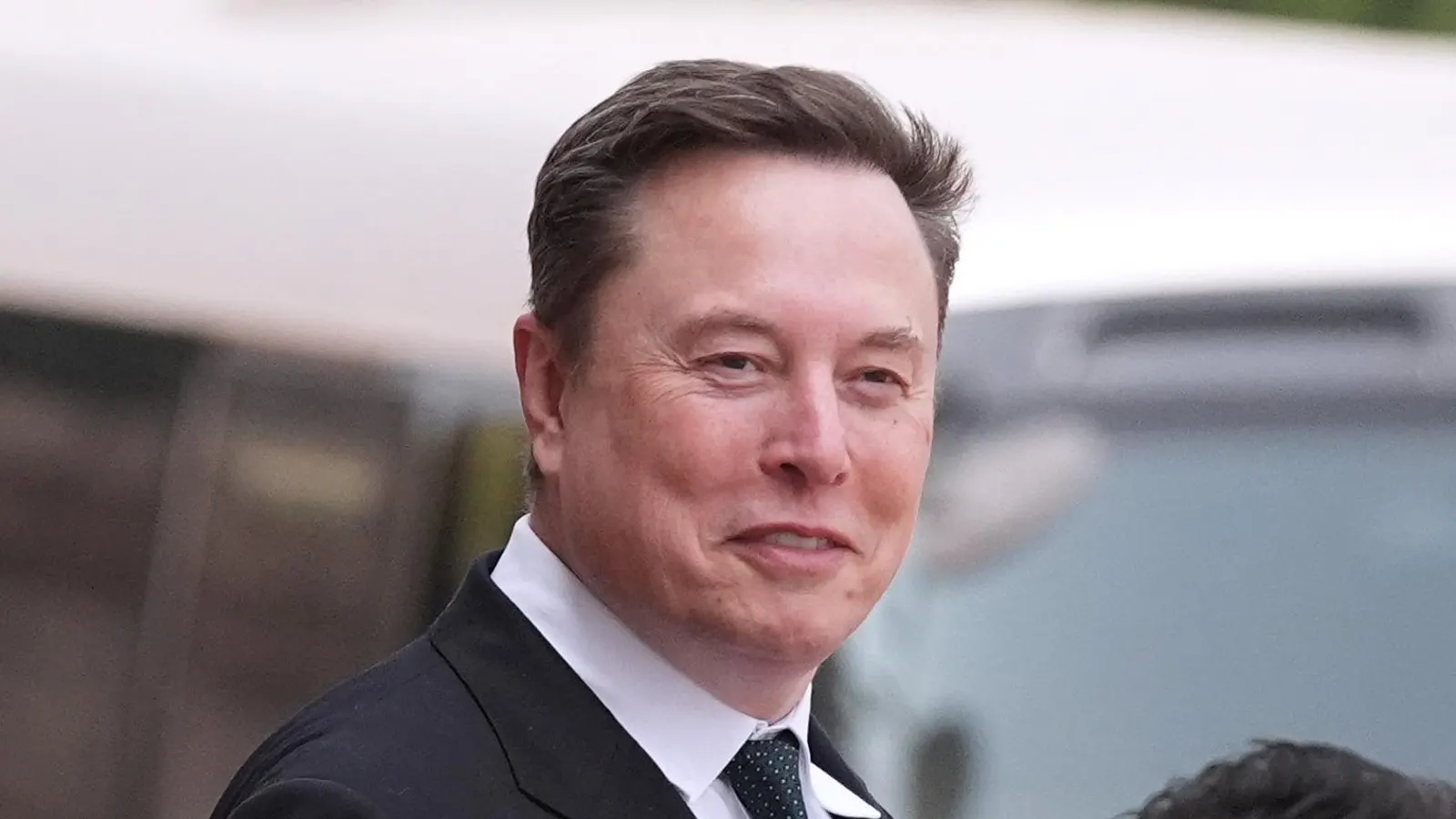
Some of the most striking spending comes from the tech and crypto crowd, whose interests are deeply intertwined with the future of digital assets and artificial intelligence. Marc Andreessen, the venture capitalist valued by Forbes at $1.9 billion, and his partner Ben Horowitz have donated a combined $115.3 million this cycle, according to the Times. Andreessen personally has given around $42.2 million, with the largest checks going to PACs supporting crypto and AI, along with Trump’s MAGA Inc. This is not dispassionate investing; it is ideological warfare. Andreessen has long argued that technology is the answer to every problem, and he now wants elected officials who share that zeal. Elon Musk, the world’s richest man with a Forbes valuation of $876 billion, has contributed about $90.5 million so far, overwhelmingly to his own America PAC, which he has reportedly authorized to spend up to $120 million on battleground Senate and House races. Musk’s giving has turned him into a de facto kingmaker, and his social media platform amplifies his political preferences to hundreds of millions of followers. Then there are the Winklevoss twins, Cameron and Tyler, jointly worth $2.9 billion. They have routed a combined $42.7 million into midterm races, including $16.1 million each personally, plus donations from their Winklevoss Capital firm. Their money has flowed into pro-crypto super PACs like the Digital Freedom Fund, Trump’s MAGA Inc., and Republican-supporting funds. The twins are not shy about their motivations: they want a regulatory environment where crypto can flourish, and they see Trump as the vehicle. Ripple Labs co-founder Chris Larsen, a longtime Democratic donor valued at $12.6 billion, has given a combined $65.7 million with his company, according to the Times. His personal donations of $15.2 million went largely to pro-clean energy PACs and Democratic candidates, including failed New York House candidate Alex Bores, while Ripple’s money went to Fairshake, a crypto-friendly super PAC that supports candidates from both parties. The pattern is unmistakable: billionaires are not just betting on parties; they are betting on policies that will affect their fortunes for decades. OpenAI President Greg Brockman and his wife Anna have also entered the top 20, giving $50 million to Trump’s MAGA Inc. and an AI-focused super PAC. Brockman has described himself as a billionaire in court, though Forbes doesn’t officially classify him as one. The human reality is that these are mostly brilliant, extremely wealthy people who believe they have a better idea about how to run the world. They are no longer content to build products. They want to build governments.
On the Republican side, the donor class is a mix of true believers, business pragmatists, and culture warriors. Jeff Yass, the Trump-aligned billionaire worth $67.4 billion, has poured $93.8 million into the midterms so far. The bulk of that—$20 million—went to the super PAC supporting fellow billionaire Vivek Ramaswamy’s gubernatorial bid in Ohio. Yass has long advocated for TikTok and free-market causes, but his political spending suggests he wants to anoint candidates who align with his anti-tax, libertarian-leaning vision. Richard and Elizabeth Uihlein, jointly worth $7.7 billion, are longtime GOP megadonors who have kept their foot on the gas with a combined $70 million in donations to Republican super PACs, including funds supporting judicial races and a Wisconsin House candidate who lost her primary. The Uihleins are often described as ideologically pure conservatives; they don’t demand much in return beyond a commitment to conservative principles. Miriam Adelson, the widow of casino magnate Sheldon Adelson and worth $33.8 billion, has spent about $67.6 million, with $25 million going to Trump’s MAGA Inc. and $40 million supporting House and Senate Republicans. Adelson’s giving is partly personal—she and her husband were close to Republican leaders—but also strategic: she has been a champion of Israel and pro-business policies. Then there is Paul Singer, the hedge fund manager worth $6.7 billion, who has given $52.5 million so far. Notably, $15 million of that went to STW PAC Inc., a newly formed super PAC that appears to be entirely bankrolled by Singer and has not yet spent any money on midterm races. That’s a sign of billionaire patience: they can park money in vehicles, waiting to deploy it when it will have the most impact. Ken Griffin, the hedge fund leader worth $53.2 billion, has been publicly critical of Trump, but he has still given $32.2 million to PACs backing Republican candidates. Griffin’s giving shows that the GOP donor base is not monolithic. Some billionaires are buying influence for specific industries; others are simply trying to preserve low taxes and limited regulation. The human angle is that these are often self-made men and women who remember what it was like before they were rich, and they genuinely believe that Republican policies are better for the country. They also enjoy being in the room where it happens. Contributions buy access, access buys relationships, and relationships buy influence. It’s an old story, but the scale is new.
Democrats, meanwhile, are being kept afloat by a smaller but remarkably generous set of billionaires who believe they are fighting to protect democracy, social programs, and the climate. George Soros, the legendary investor worth $7.5 billion, and his son Alex have given a combined $103.7 million to Democratic-aligned super PACs through the family and groups they control. The elder Soros personally has given just under $1 million directly to Democratic candidates and the Democratic Senatorial Campaign Committee, but his network’s influence is far larger. To conservatives, Soros is a bogeyman; to progressives, he is a benefactor who funds human rights and liberal causes. The father-son duo represents something human: the desire to pass on not just wealth but values. Chris Larsen, despite giving heavily to crypto super PACs, has also been a generous Democratic donor. Philanthropist Amos Hofstetter Jr., hedge fund manager Stephen Mandel, and real estate broker George Marcus have supported the Senate Majority PAC, while Michael Bloomberg, the former New York City mayor, has donated between $13 million and $26 million this cycle. Netflix cofounder Reed Hastings and Illinois Gov. J.B. Pritzker, worth $4.2 billion, have also opened their wallets, with Pritzker bankrolling his own reelection bid. Perhaps the most interesting Democratic donor is Connie Ballmer, wife of former Microsoft CEO Steve Ballmer; she breaks the stereotype of the reluctant wealthy donor by being an active, vocal supporter of Democratic causes. These donors are often quieter than their Republican counterparts, but they are no less determined. They see themselves as standing against the tide of authoritarianism and corporate capture. Many made their fortunes in finance, tech, and media, and they have absorbed the coastal, educated, socially liberal worldview that dominates those industries. Their giving is not purely altruistic, of course. They also benefit from stable markets, an educated workforce, and a functioning government. Yet in an age of growing inequality, the sight of billionaires funding both sides of the political divide is a reminder that the system is built to serve the people who can afford to pay for it. The human question—what does it mean for democracy when a small group of unelected billionaires can effectively choose the menu of candidates?—hangs over every dollar.
Beyond the top ten, a wider ecosystem of billionaires is spending heavily in ways that are less visible but no less consequential. Charles Koch’s Koch Inc. has given $35 million in the midterms, although Koch himself personally gave only about $17,000 to the company’s super PAC. The Koch network is famous for its decentralized, data-driven approach; it’s less about one billionaire’s ego and more about a coordinated infrastructure of think tanks, advocacy groups, and donor networks. Trump’s MAGA Inc. has attracted seven-figure checks from oil tycoon Kelcy Warren, who gave $25 million in February 2025 split between himself and his company Energy Transfer LP. Mortgage lender Mat Ishiba and his companies, Blackstone founder Stephen Schwarzman, Small Business Administrator Kelly Loeffler and her husband Jeff Sprecher, and Estee Lauder heir Ron Lauder have also given millions. Lauder, who reportedly suggested to Trump that the U.S. buy Greenland, gave MAGA Inc. $5 million in March 2025, though he has reportedly now decided to bow out of political giving after decades as a top GOP donor. The Senate Leadership Fund has attracted donations from Schwarzman, Steve Wynn, Jude and Christopher Reyes, and Walmart heirs Rob and Jim Walton, while the Congressional Leadership Fund has drawn support from Commerce Secretary Howard Lutnick. On the Democratic side, the House Majority PAC has received support from George Marcus, Connie Ballmer, Reed Hastings, and J.B. Pritzker, among others. Other billionaires spending between $13 million and $26 million include ABC Supply cofounder Diane Hendricks and Ameritrade founder J. Joe Ricketts. What we don’t know is far greater than what we do. These figures only cover federal election spending; state-level races, ballot measures, and darker channels remain largely opaque. Billionaires have been active in Alaska’s ranked-choice voting ballot measure, with Musk, Yass, Uihlein, Timothy Mellon, and Hilcorp cofounder Jefferey Hildebrand all spending to influence the outcome. They have also poured money into defeating California’s proposed wealth tax on billionaires, with opponents including Sergey Brin, Eric Schmidt, Peter Thiel, and Patrick Collison. Gubernatorial races are drawing attention too, with Bloomberg giving to Pennsylvania Gov. Josh Shapiro and Griffin backing Florida’s Byron Donalds. This is not just about Washington. Billionaires are trying to reshape state constitutions, tax codes, and electoral rules at every level of government. The human story here is one of boundless ambition. Wealth offers these individuals the chance to mold the world in their image, and many are taking it. They may not all be seeking office themselves, but they are seeking something perhaps more enduring: a country that rewards their values, protects their fortunes, and honors their legacies.
The biggest unknown in this election cycle is what Trump’s MAGA Inc. does with its enormous bankroll. The super PAC has assembled a $400 million war chest, almost entirely from wealthy donors; the Brennan Center for Justice reported that 96% of its funds came from donations of $1 million or more. Yet the PAC has spent very little so far, which has begun to unsettle Republican candidates. It did back Darline Graham in her primary race, but many candidates are waiting anxiously for a tidal wave of advertising that hasn’t yet materialized. Politico reported last month that Republican candidates have grown antsy over the PAC’s unwillingness to spend or give clear signals about its plans. Trump has promised to spend “a lot” of the money on candidates he deems “good, Republican candidates,” telling reporters in August, “I’ll be spending a lot of that money.” But The Atlantic reported that the president also wants to use a large portion of the funds for an advertising “blitz” touting his own record, with ads focused on “nationalizing the midterms broadly around his victories.” That tension—between helping individual candidates and polishing his own image—could define the final weeks of the campaign. For the billionaires who wrote the checks, this is the moment of truth. They have placed enormous bets on a president who may or may not deploy their money in ways they would prefer. Some may not care. For them, the act of giving is itself a form of participation in history. But for the rest of the country, the implications are staggering. A handful of individuals with no popular mandate are able to shape the political landscape more powerfully than millions of voters. The numbers are so large that they strain the imagination: $734 million from just ten people, $1.2 billion poured into the midterms by megadonors overall, and as much as $1.6 billion by the time the 2026 elections are over, according to The Washington Post. Behind these figures are flesh-and-blood people with wins and losses, grudges and hopes, and an unshakeable belief that they know what is best for the nation. Some are motivated by fear of decline, others by dreams of progress. Some want to protect their companies, others want to transform society. What unites them is money and certainty. In a democracy that likes to pretend everyone has an equal voice, the reality of the 2026 midterms is that a group of billionaires has already spent more on politics than most countries spend on elections. The question is not whether they will have influence. They already have. The question is whether the rest of us can still make our voices heard above the roar of their checkbooks.