


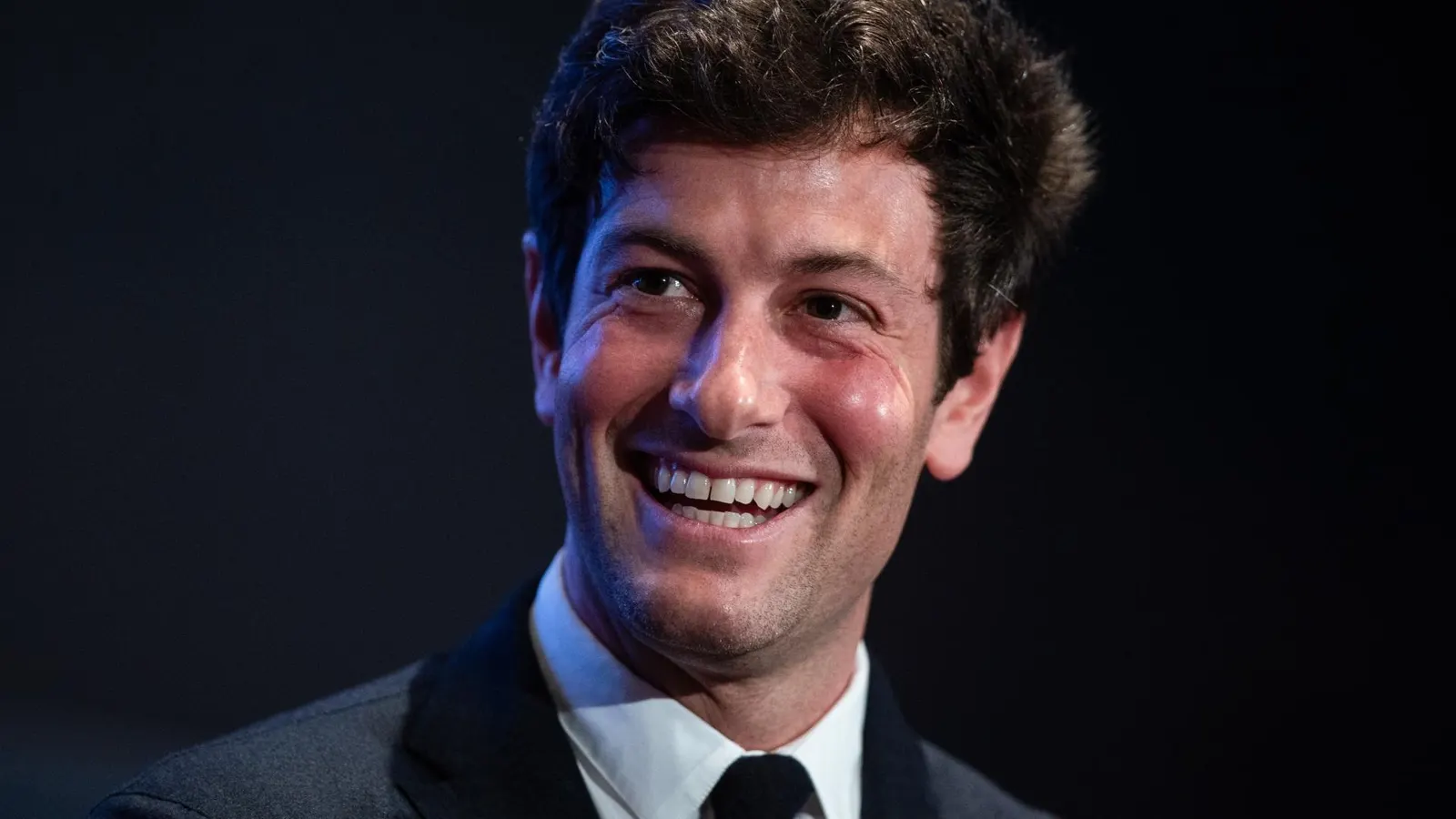
On the surface, the biggest news of Josh Kushner’s summer should have been the Los Angeles Lakers. On August 12, reports broke that the NBA franchise was being sold to the 41-year-old venture capitalist and former Disney CEO Bob Iger for a record $12.5 billion, a deal that would make the younger Kushner brother part-owner of one of the most iconic teams in sports history. But if you checked his X account that day, you wouldn’t have seen a single mention of basketball. Instead, Kushner was celebrating another milestone that closed on the very same day: Thrive Holdings, the AI-focused acquisition company he founded in 2025, had raised $2 billion from investors including SoftBank at a valuation of $12.5 billion. “We feel extraordinarily fortunate to be building during a period of such profound innovation,” he wrote, as if purchasing the Lakers were merely a footnote to a much grander technological mission. It was a moment that perfectly captures where Kushner now stands—a man so deeply embedded in the worlds of tech, finance, and celebrity that a record-shattering sports deal barely registers as the highlight of his day.
That sense of surreal privilege has defined Kushner’s entire summer. In early July, he was spotted attending the star-studded wedding of Taylor Swift and NFL star Travis Kelce at Madison Square Garden, rubbing shoulders with his supermodel wife, Karlie Kloss. Days later, he was in Sun Valley, Idaho, at Allen & Co.’s exclusive conference—often called the “summer camp for billionaires”—where photographers caught him in conversation with OpenAI president Greg Brockman. As if to underscore his growing status as a powerbroker, Elon Musk’s SpaceX went public in June, suddenly valuing Thrive Capital’s stake in the rocket company at a reported $10 billion. Four days after that, SpaceX announced a $60 billion deal to acquire AI coding startup Cursor, a company in which Thrive holds a 7% stake worth $4.2 billion. In July, Kushner and Thrive were entangled in a controversial attempt to buy a stake in the FIFA World Cup at a $20 billion valuation, a deal that spectacularly collapsed within three days. And the news hasn’t stopped: less than a week after the Lakers announcement, a lawyer for Jeanie Buss, the team’s controlling governor, denied that she had agreed with her five siblings to sell their collective 17.8% stake, casting doubt on whether the deal will ever reach the championship parade route. Yet through all this turbulence, one thing is unmistakable: Josh Kushner’s wealth and influence are rising at a pace that leaves even the most seasoned billionaires in awe.
Forbes now estimates Kushner is worth $16.7 billion, a staggering leap from $5.2 billion just a year ago, driven by the ballooning assets of Thrive Capital and the newly minted valuation of Thrive Holdings. That figure doesn’t even include his prospective Lakers stake, which couldn’t be calculated because the deal hasn’t closed. But it does reveal a family dynamic that borders on the comical. Josh is nearly 17 times richer than his older brother Jared, President Donald Trump’s son-in-law and special peace envoy, who built his fortune through private equity firm Affinity Partners. He is also nearly three times as wealthy as the president himself. The political contrast is even more striking: Josh is a lifelong Democrat, while Jared and their father Charles—who was convicted of tax evasion, illegal campaign contributions, and witness tampering in 2005 before being pardoned by Trump in 2020 and now serving as Trump’s ambassador to France—sit firmly inside the president’s orbit. It’s a family drama that could fill a book, but Josh seems content to let his money do the talking.
The core of that wealth is Thrive Capital, the New York-based venture firm Kushner founded in 2010 with a $5 million fund seeded by Joel Cutler, cofounder of General Catalyst. At the time, Kushner was just 25, fresh off a one-year stint on Goldman Sachs’ private equity desk after graduating from Harvard Business School. The firm has since raised ten flagship funds, with the latest, Thrive X, closing in March with more than $10 billion in committed capital. An August letter to investors, obtained by Bloomberg, revealed Thrive had over $65 billion in assets under management—nearly triple the $23 billion it held in December 2024 and $15 billion more than it disclosed just a month earlier. Kushner wrote that more than half of that growth came from investment gains, and that the firm’s funds have returned an average of 33% per year after fees, a figure that leaves the S&P 500’s roughly 14% annual gain in the dust. Over the years, Thrive has taken a slice of some of the world’s most valuable startups. His first major win came in 2012, when Facebook acquired Instagram for $1 billion just days after Thrive invested at a $500 million valuation. Since then, the firm has backed a who’s who of tech: Cursor, Instacart, Nubank, Robinhood, Spotify, and SpaceX, along with private giants like Anduril (valued at $61 billion), Databricks ($190 billion), and Stripe ($159 billion). Then there’s OpenAI, last valued at $852 billion in March, with an IPO expected within the next year. As Kushner wrote in the investor letter, “We have long believed that a small number of exceptional companies create a disproportionate amount of value and can compound their advantages for far longer than the market expects.”
Forbes first estimated Josh’s net worth at $500 million in 2016, when his stake in Thrive was worth about $240 million. By 2021, he had sold a 3% stake in the firm to Goldman Sachs unit Petershill Partners at a $3.6 billion valuation, making him a billionaire with an estimated $2 billion fortune. Two years later, Thrive repurchased that stake and sold it to a consortium of investors—including Iger, KKR cofounder Henry Kravis, Asia’s richest man Mukesh Ambani, French telecoms mogul Xavier Niel, and Brazilian billionaire Jorge Paulo Lemann—for $175 million, valuing Thrive at $5.3 billion and pushing Kushner’s net worth to $3.6 billion. Now, with assets under management climbing past $65 billion, his personal wealth has followed. That includes his own cash invested in Thrive’s funds, which grew from an estimated $186 million in 2024 to $500 million by end of June, plus his cut of the firm’s 2% to 2.5% annual management fees and a share of carried interest. In his August letter, Kushner boasted that “over the last 12 months, we have generated more than $1 billion of liquidity and believe there may be an opportunity for billions of dollars in additional liquidity in the coming quarters.” Much of that could come from OpenAI’s IPO, which might value the company at over $1 trillion. Thrive has also been active in public markets, revealing a $215 million stake in Amazon and a $100 million investment in Shopify in March, now worth $130 million. Even his oldest investment—Oscar Health, the Obamacare-based insurance startup Kushner founded in 2012—has surged 114% this year, making his stake worth about $200 million.
All this potential cash flow presents a problem most of us would love to have: a massive tax bill on capital gains. That’s where the Lakers deal gets interesting. If Kushner and Iger meet certain criteria—such as taking an active role in running the team and structuring the purchase in a specific way—they could allocate up to 90% of that $12.5 billion purchase price as “intangible” assets under the tax code. These can be amortized over 15 years, potentially lowering their personal tax bills by as much as $750 million per year. It’s a playbook that former Microsoft CEO Steve Ballmer used after buying the L.A. Clippers for $2 billion in 2014. The difference is the price tag: the Lakers are breaking the record for the most expensive sports team sale twice in two years, after Mark Walter bought them for $10 billion in 2023. But there are still unknowns. Funds like Thrive Capital and its sports-focused Thrive Eternal unit can only acquire up to 20% of an NBA team, and the Buss heirs plus biotech billionaire Patrick Soon-Shiong may retain stakes. The Buss family denial could throw the whole deal into doubt. Still, with Kushner’s fortune growing at breakneck speed, he seems likely to find a way. As his AI-adjacent investments keep getting acquired or going public at ever-higher valuations, Josh Kushner appears set to keep raking in profits—and maybe, just maybe, to hoist a Lakers banner in Los Angeles. For a kid from a family of political royalty, he’s writing his own very different playbook, one dollar at a time.