


On a blinding 100-degree summer day in Scottsdale, Arizona, Bob Parsons guides his golf cart along the twisting, dusty roads of the golf course he built in the Sonoran Desert. Lizards skitter across the path, rabbits dart between thorny bushes, and giant saguaros rise like ancient guardians against the impossibly blue sky. He stops near the ninth hole, called Catfish, which overlooks a man-made lake surrounded by three million acres of preserved wilderness. In the center of the lake sits a small black hut with the words “Suggestion Box” painted in white. Parsons, 75, chuckles at the absurdity of it. “This is a marvelous spot to put a suggestion box,” he says. “The vent is painted on. I guess you could try.” The joke tells you almost everything about him: he did not become a billionaire by taking anyone’s suggestions. Scottsdale National, his desert playground, is a monument to that stubbornness. He bought the struggling Golf Club of Scottsdale in 2013 for just $600,000, then poured more than $300 million into transforming it—blowing up mountainsides with dynamite, reshaping the land, and building two 18-hole courses plus the “Bad Little Nine,” a brutally difficult nine-hole par-three course designed to humiliate even good golfers. Today, membership costs $1 million, plus $80,000 a year in dues, and the course is almost always empty. There are only about 155 members, so no one needs to schedule a tee time. “I will be raising it,” Parsons says of the initiation fee. “I haven’t decided it yet, but when I do it’ll get people’s attention.” He laughs at his own audacity, then steers the cart toward another hole, a man who has built his entire life on doing exactly what he wants, when he wants.
Parsons has always been a force of relentless motion. He built his first fortune through sheer, almost inhuman hustle, often working 60 hours or more without stopping. In 1994, he sold Parsons Technology, his personal finance and tax software company, to Intuit for $64 million—about $165 million in today’s dollars. Three years later, he founded GoDaddy, a domain name registrar that made him a household name and eventually a billionaire. In 2011, he sold a 71 percent stake in the company for $2.3 billion, roughly $3.4 billion today. But he never retired, because retiring is not in his nature. Instead, he built a sprawling empire of eight companies under YAM Worldwide, an acronym that stands, characteristically, for “You’re a Mess.” The portfolio includes Scottsdale National, a real estate operation with three million square feet of strip malls, a video production company, a metal manufacturing business, a chain of motorcycle dealerships, the largest Harley-Davidson dealership in the world—complete with a wedding chapel, a tattoo parlor, and a small movie theater—his golf equipment company PXG, and a hedge fund. All of it is fueled by the same instinct that made GoDaddy famous. In 2005, during Super Bowl XXXIX, GoDaddy aired a racy commercial starring former Playboy model Candice Michelle, spoofing Janet Jackson’s infamous halftime-show “wardrobe malfunction.” The ad ignited a national controversy, and GoDaddy’s market share jumped from 16 percent to 25 percent overnight. The following year, he did it again with NASCAR driver Danica Patrick. Critics slammed him, but Parsons didn’t care. “I took a beating for them,” he says, “but fine, I laughed all the way to the bank.” He describes domain names as something “as interesting as sawdust,” yet he turned them into a cultural phenomenon.
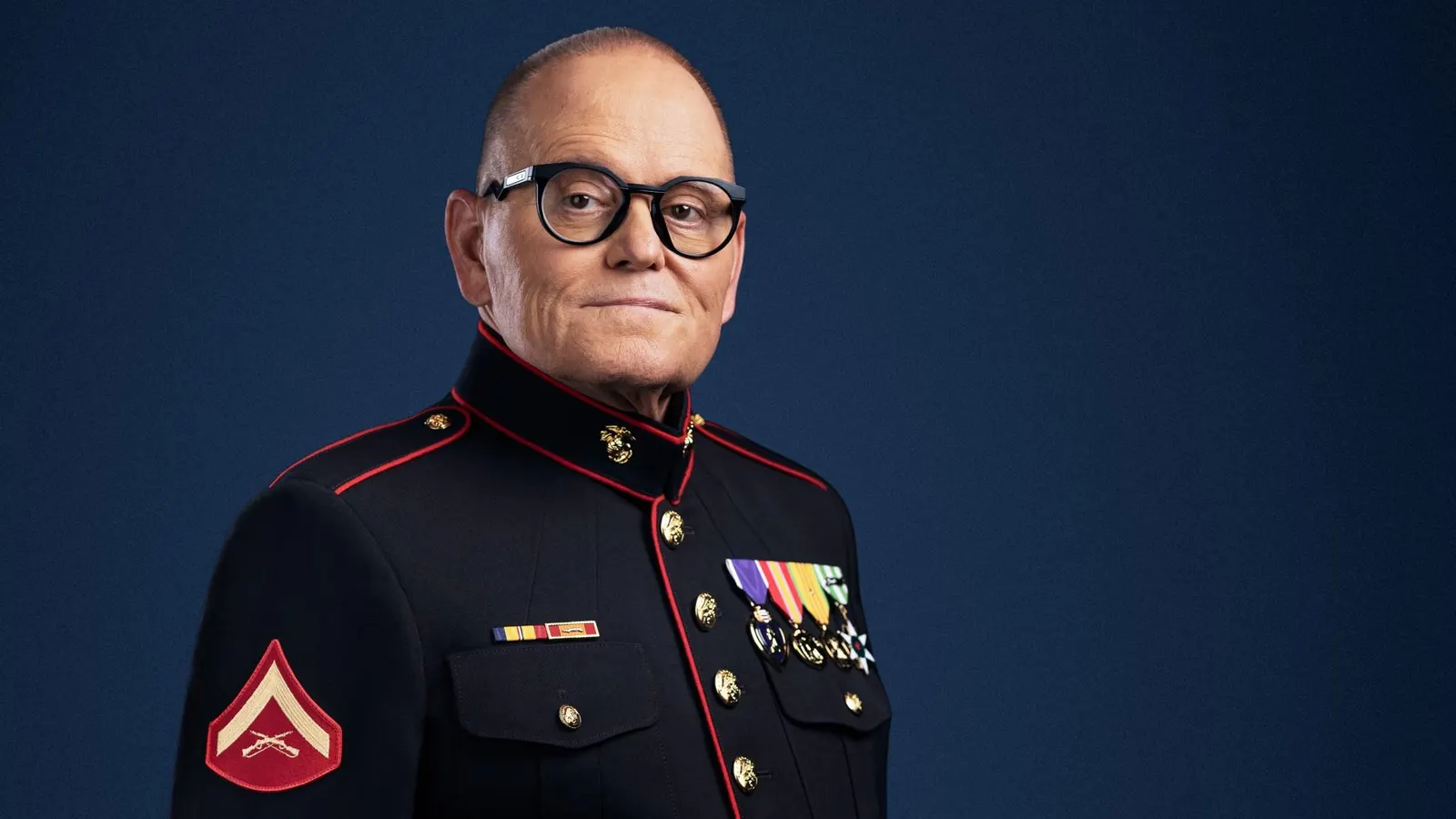
But long before the billions and the Super Bowl ads, Parsons’ life was a study in struggle. He grew up in East Baltimore in a chaotic household. His father was a furniture salesman who spent most of his free time betting on horses at the Timonium Fairgrounds. His mother, sharp-witted but unstable, loved gambling in Baltimore’s bingo halls. School offered no refuge. Parsons failed the fifth grade and somehow avoided repeating it. He barely graduated from high school in 1968, and with no clear path forward, he enlisted in the Marines. In March 1969, he was an 18-year-old infantryman with Delta Company, 1st Battalion, 26th Marines, huddled in a rice paddy in Vietnam, clutching a machine gun. What he witnessed on Hill 190 would never leave him: a fellow infantryman lost an arm to a mine, another was killed, and Parsons himself was struck by shrapnel and evacuated to a hospital. He was awarded the Combat Action Ribbon, the Vietnam Cross of Gallantry for saving the life of a fellow Marine, and a Purple Heart. Decades later, in March, the Marine Corps gave him its highest honor, the Semper Fidelis Award, which recognizes an American who embodies the Corps’ core values of honor, courage, and commitment. Parsons credits the Marines with everything he has become. When he first arrived in Vietnam, he was sure he might die there. To survive, he made a simple deal with himself: the only thing he had to do was make it to mail call the next morning. Day after day, he did. “One day at a time can get you through anything,” he says. “The Marine Corps taught me responsibility is sacred.”
The war, however, did not end when he left Vietnam. For decades, Parsons carried the weight of what he had seen, living with post-traumatic stress disorder that conventional therapy could not ease. He tried counseling, but nothing reached the deep, secret place where the memories lived. Then, in 2018, he read Michael Pollan’s book How to Change Your Mind, about psychedelic-assisted therapy, and began to wonder if mind-altering drugs could do what traditional treatment could not. His third wife, Renee, helped arrange a multiday therapy session in Hawaii, where they own a home. Over four intense days, he worked with a trained therapist. “The first day it was ayahuasca, the second day mushrooms,” Parsons says. “The third day, I just played golf. I’d never putted so good in my whole life, before or since.” The experience changed him on a fundamental level. He says it made him less of an “asshole,” and easier to be around. It also gave him a peace he had not known since he was a teenager. “The thing I like to say is that it’s been 48 years since the war and I finally came home,” he says, his voice dropping. “That is no bullshit.” For a man whose entire identity has been built on discipline, control, and relentless forward motion, this admission is remarkable. The psychedelic therapy did not make him weak or unfocused; it simply dissolved some of the armor he had worn for half a century.
Since that breakthrough, Parsons has become a passionate and generous advocate for psychedelic research. He gave $5 million to create the Parsons Research Center for Psychedelic Healing at the Icahn School of Medicine at Mount Sinai in New York City, and another $2 million to the Multidisciplinary Association for Psychedelic Studies. Yet he carefully avoids any personal financial stake in the field. “I purposely do not invest in any psychedelics,” he explains. “If I do that, I have less credibility. And to be honest with you, well, I don’t need the money.” It is a rare thing for a billionaire to fund a controversial cause while refusing to profit from it, but Parsons has never cared what other people think. His advocacy is deeply personal: he wants other veterans to know that there may be a way out of the darkness, a path to healing that lies beyond conventional medicine. Meanwhile, he continues to run his empire with undiminished energy. The golf course alone is a testament to his obsession and his resources. He once joked that the dynamite he used to tear down mountains and raze the land could have “cleared a lot of tunnels in Vietnam,” a dark reference to his own service in Quảng Nam province. But the course is also a kind of memorial. Scattered across the fairways are plaques honoring different Marine units, small monuments that turn a luxury golf property into a personal meditation on sacrifice, brotherhood, and survival.
As the afternoon heat begins to soften, Parsons drives his cart from The Mineshaft course to the one he simply calls The Other Course. He waves at a foursome on the 12th hole. “Look here, we have some rare golfers,” he jokes. The emptiness of the course is exactly what he wanted—a sanctuary for a few hundred people who can afford to escape the world. He stops at a plaque honoring his own unit, the 0311 riflemen, and stands silently for a long moment. “Everything I accomplished I owe to the Marine Corps,” he says. “They were my first real family. They taught me everything I know.” It is a striking confession from a man worth $4.1 billion, a man who has built companies, blown up mountains, and provoked national outrage, yet still measures his life in terms of honor, courage, and commitment. He is 75 years old, soon to be 76, and has no intention of slowing down. “When I stop, my nickname will be ‘Mumbles,’” he says. “I just like to be in the game. This is what I do.” In the Sonoran Desert, surrounded by cacti and silence and ghosts, Bob Parsons has built himself a place where he can keep playing. And he will keep playing, he says, until the game is done.