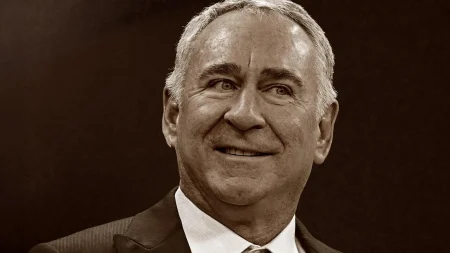






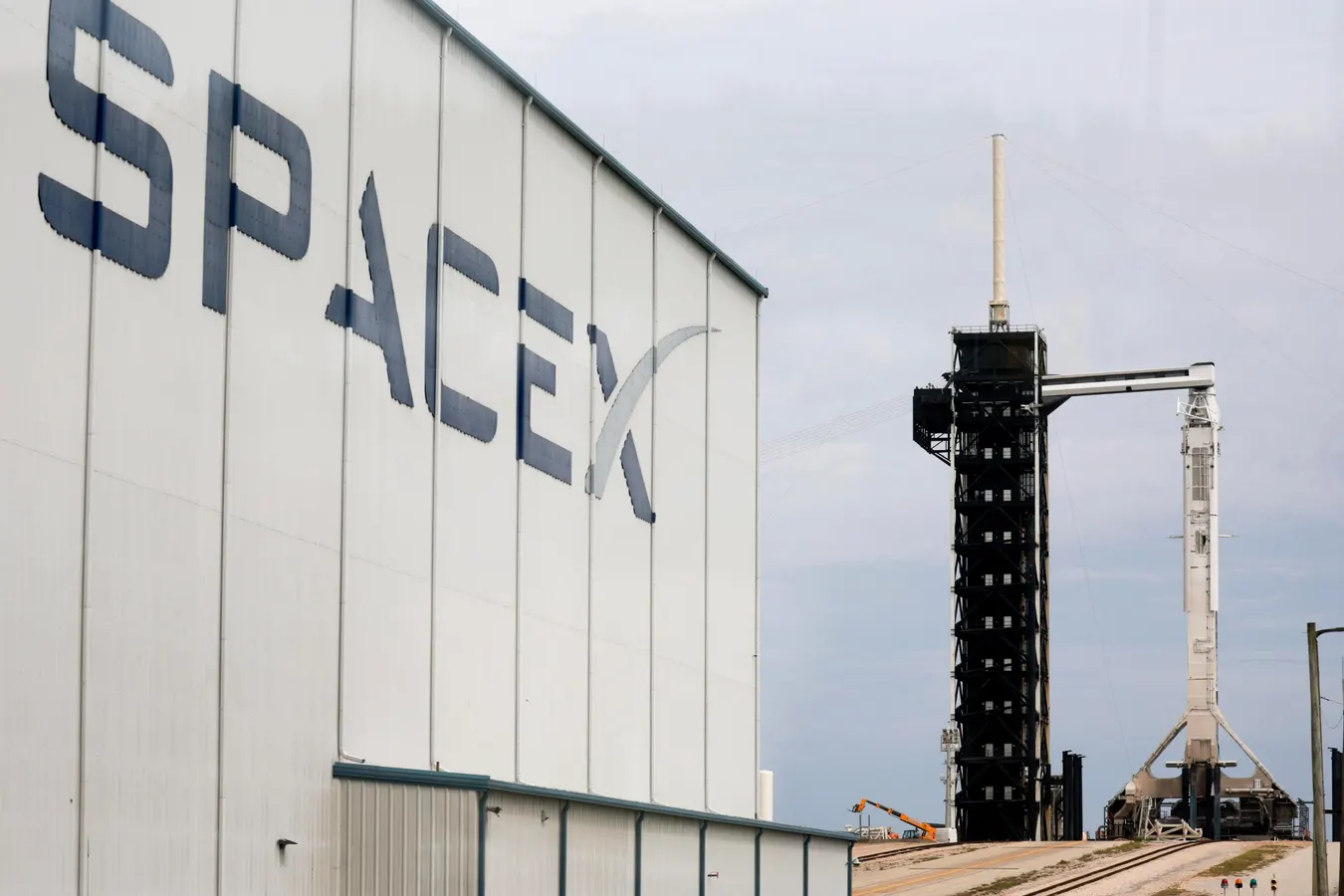
The filing of the SpaceX initial public offering (IPO) prospectus on Wednesday did far more than signal a historic milestone for the commercial spaceflight industry; it pulled back the velvet curtain on the immense personal fortunes of the quiet visionaries who have spent decades banking on humanity’s future among the stars. Among the most striking revelations in the extensive regulatory document is the official entry of Luke Nosek into the exclusive “three-comma club.” Nosek, a low-profile yet profoundly influential figure in Silicon Valley, is a longtime SpaceX board member and a trusted partner of Peter Thiel. According to initial estimates, Nosek’s personal net worth has surged to at least $2.7 billion, largely powered by his direct 0.22% equity stake in the rocketmaking powerhouse. This valuation is anchored by a monumental corporate restructure in February, when SpaceX merged with xAI Holdings—another of Elon Musk’s high-stakes ventures centered on artificial intelligence—cementing the aerospace giant’s private market valuation at an astonishing $1.25 trillion. However, the true scale of Nosek’s wealth likely extends well beyond this estimate. Analysts note that an additional 0.07% stake in SpaceX, valued at approximately $860 million, is held by an independent entity known as Nosek Capital, LLC. Because of the opaque nature of private investments, financial watchdogs excluded these holding-vehicle shares from his baseline net worth, as it remains unclear how many external passengers might share ownership of that specific vehicle. Neither SpaceX nor Gigafund, the venture capital firm where Nosek currently operates as managing partner, were immediately available to comment on these staggering figures, but the data speaks for itself. For Nosek, this financial apex is the culmination of a quarter-century of calculated risk-taking, transforming him from a curious Midwestern engineering student into an architect of the modern technological landscape.
To truly understand how a quiet engineer compiled such a massive empire, one must travel back to the late 1990s, when the foundations of the contemporary internet were being poured by a small, hyper-ambitious group of young men known today as the “PayPal Mafia.” While studying computer engineering at the University of Illinois Urbana-Champaign, the now 50-year-old Nosek developed a deep fascination with software architecture and systemic disruption. This passion led him to cofound PayPal in 1998 alongside fellow billionaire Peter Thiel and a handful of other brilliant eccentrics who refused to accept the limitations of legacy banking. Nosek served as the young company’s Vice President of Business Development, Marketing, and Strategy, guiding its explosive growth through the dot-com bubble. A pivotal moment occurred in 2000 when PayPal merged with X.com, an innovative online bank cofounded by a relentless young entrepreneur named Elon Musk. This fateful union forged a friendship and business alliance that would endure for decades. After eBay acquired PayPal for a historic $1.5 billion in 2002, Nosek did not retire to a quiet life of luxury; instead, he reinvested his hard-earned capital and intellect into backing the next generation of world-changing ideas. In 2006, he teamed up with Thiel again to establish Founders Fund, a venture capital firm that rejected safe, consumer-facing software in favor of “hard tech” enterprises tackling physical reality. He served as a general partner there until 2017, when he stepped away to cofound Gigafund, a venture vehicle specifically optimized to provide long-term, patient capital to companies with multi-decade timelines, most notably SpaceX, where Nosek has served as a trusted director on the board since 2008.
The breathtaking numbers visible in the IPO prospectus emphasize how the sheer scale of SpaceX’s commercial dominance has redefined the metrics of private wealth creation. To the average observer, a 0.22% stake might seem like a modest slice of a corporate pie, yet when applied to a trillion-dollar company, it yields a sum that dwarfs the GDP of entire nations. This financial architecture is further complicated by the strategic overlapping of modern tech ecosystems, as demonstrated by the February merger with xAI Holdings. By marrying the capital structures of his aerospace juggernaut and his artificial intelligence laboratory, Musk has built a unified ecosystem where computation and heavy manufacturing reinforce one another. For Nosek, navigating this stratosphere of wealth requires a sophisticated array of trusts, holding companies, and strategic vehicles like Nosek Capital, LLC, which serve to shield assets and manage liability. This complex corporate infrastructure is designed to survive the transition from the secluded harbor of private equity to the rigorous, highly scrutinized public markets. Nosek’s diverse portfolio extends far beyond orbital mechanics; his board seats at entities like Last Energy, a pioneer in small modular nuclear reactors, and Emerald Cloud Lab, which builds autonomous life-science laboratories, demonstrate a lifework devoted to translating complex physics into commercial platforms. His previous role as a director at the artificial intelligence research lab DeepMind, prior to its acquisition by Google in 2014, further highlights his unique ability to identify and scale paradigm-shifting ideas years before they capture the public imagination.
While Nosek’s multi-billion-dollar valuation captures headlines, the IPO prospectus also illuminates the fascinating human dynamics, operational hierarchies, and financial disparities among the executive team responsible for keeping SpaceX’s rockets flying. Most notably, Nosek’s estimated stake in the company is double that of Gwynne Shotwell, the 62-year-old president and chief operating officer who has run the company’s daily operations for decades. Shotwell, widely regarded as the stabilizing force behind Musk’s legendary volatility, holds a 0.11% stake worth an estimated $1.3 billion. This disparity highlights a classic Silicon Valley truth: the enormous financial premium awarded to the earliest venture backers and founders who absorb the initial systemic risk, relative to the executive stewards who join later to build the operational machine. Meanwhile, Chief Financial Officer Bret Johnsen, who left his comfortable position at the publicly traded semiconductor firm Mindspeed Technologies in 2011 to manage SpaceX’s highly complex balance sheet, holds an estimated 0.06% stake worth $700 million. If SpaceX achieves its highly anticipated $2 trillion target valuation once it enters the public market as soon as next month, Johnsen’s options and performance grants could easily push him past the billion-dollar mark. Additionally, billionaire investor and long-serving board director Antonio Gracias is listed with an immense 4.3% stake worth $54.3 billion. However, because nearly all of those shares are held by his venture capital and private equity firm, Valor Equity Partners, his personal cut remains a confidential variable, embodying the intricate web of institutional finance that operates behind the scenes of humanity’s journey to the stars.
Towering over this landscape of immense wealth is the gargantuan financial profile of the company’s founder, chairman, chief executive officer, and chief technical officer, Elon Musk. Valued at an estimated $822 billion, Musk stands as a historically anomalous figure, with his personal fortune driven in massive part by his 41% stake in SpaceX, which is valued at roughly $514 billion alone. This number is dizzying by itself, yet it deliberately excludes a treasure trove of performance-based options and restricted stock units that could eventually boost his ownership to an even 50%. However, in a twist that reads more like science fiction than corporate governance, these lucrative incentives are not tied to standard corporate profits or share prices. Instead, the prospectus reveals that unlocking these ultimate tranches requires SpaceX to achieve monumental targets, specifically a staggering $7.5 trillion market capitalization and the successful “establishment of a permanent human colony on Mars with at least one million inhabitants.” This extraordinary clause bridges the gap between capitalist ambition and cosmic exploration, aligning the financial incentives of the world’s wealthiest man with the survival of our species on another planet. It reframes areology from a speculative scientific pursuit into a binding corporate objective, signaling to prospective Wall Street investors that buying into SpaceX is not merely an investment in communications satellites, but a direct deposit into a colonial pipeline to the red planet.
As the financial world braces for the public debut of SpaceX, this IPO represents the absolute triumph of a shared, long-term conviction forged by a small circle of friends who refused to accept the conventional limits of business. The story of Luke Nosek’s ascent to the billionaire class is a testament to the power of backing radical ideas over multi-decade horizons, showing that the most profound financial rewards often go to those willing to leave the safety of standard consumer software to invest in hard, physical realities. What started in 1998 as a group of young programmers writing payment code in a cramped Silicon Valley office has evolved into a sovereign-scale enterprise capable of launching humans into orbit, placing thousands of satellites in the sky, and laying the groundwork for interplanetary civilization. When the public finally gets the opportunity to purchase shares in SpaceX next month, they will not just be buying into a highly profitable launch business; they will be purchasing a stake in a grand, generational mission. For Nosek, Musk, Shotwell, and the rest of the pioneers who risked their reputations and fortunes on a dream that the world initially laughed at, the upcoming public offering is a validation of their lifework, proving that with enough capital, operational brilliance, and absolute audacity, the stars are no longer a distant dream, but the next logical step in human history.