





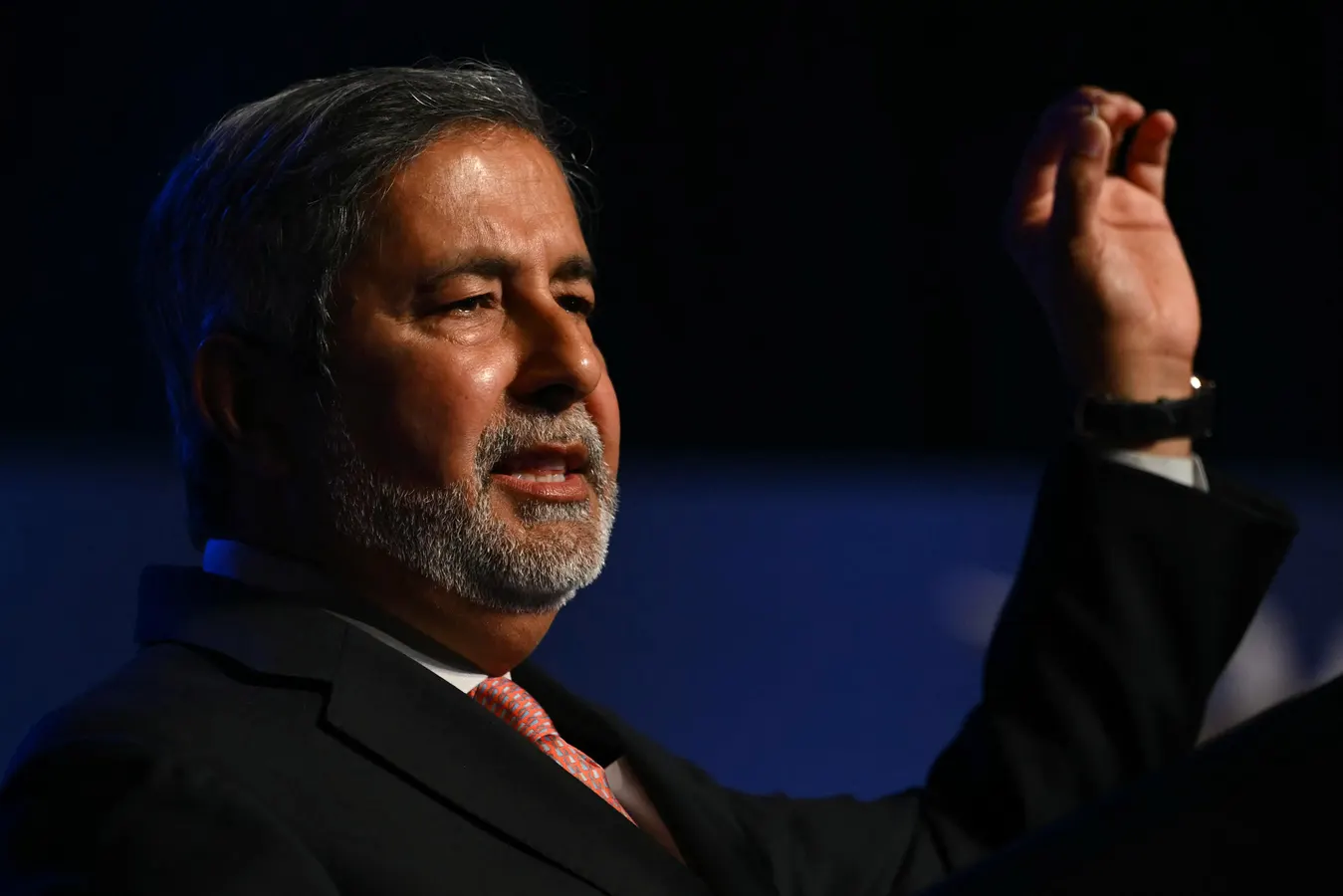
In the high-stakes, fast-moving world of global technology, few stories are as compelling as the quiet rise of Sanjay Mehrotra, the 67-year-old chairman, president, and CEO of Micron Technology, who has officially joined the ranks of the world’s billionaires. This milestone comes on the heels of an unprecedented surge in Micron’s stock, which has pushed his personal net worth to an estimated $1.2 billion and propelled the Boise, Idaho-based memory chipmaker into an elite $1 trillion valuation club. For decades, Micron operated in the shadow of sexier Silicon Valley giants, producing the essential but often underappreciated memory components that keep our computers running. Today, however, the explosive demand for high-performance memory chips tailored for artificial intelligence has triggered a massive market re-evaluation. Micron’s stock has climbed a jaw-topping 194% this year and an astronomical 863% over the past twelve months. By crossing the trillion-dollar threshold, Micron has secured its position as the third major global memory player to join this exclusive four-comma club, following hot on the heels of South Korean giants Samsung and SK Hynix. This financial triumph is not just a corporate victory; it is a testament to Mehrotra’s steady stewardship and a reflection of a hardware gold rush that is fundamentally reshaping the global geopolitical and economic landscape.
To truly understand Mehrotra’s ascent to the billionaire class, one must look beyond the sterile columns of stock charts and peer into a deeply human journey of determination, immigrant ambition, and relentless innovation that began thousands of miles away. Born in Kanpur, India, in 1958, Mehrotra grew up with a passion for science and technology, a drive that eventually led him to immigrate to the United States at the tender age of 18 to study electrical engineering and computer sciences at the prestigious University of California, Berkeley. After honing his skills in the early, rugged days of the semiconductor industry, he cofounded SanDisk in 1988 alongside Eli Harari and Jack Yuan, pioneering the flash memory technology that now sits inside billions of smartphones, cameras, and laptops worldwide. Mehrotra’s business acumen and technical vision eventually culminated in a massive $16 billion acquisition of SanDisk by Western Digital in 2016, a blockbuster deal he helped engineer as CEO. When he was tapped to steer the ship at Micron the following year, the company’s stock was trading at a modest $30 per share. Through years of strategic positioning, calculated risks, and massive stock-based compensation packages that aligned his personal fortune with the company’s performance, Mehrotra has overseen a staggering 3,000% increase in Micron’s share price, turning what was once a cyclical manufacturer into an indispensable titan of the modern technological age.
The driving force behind this incredible wealth creation is the relentless, insatiable buildout of artificial intelligence infrastructure, which has completely rewired the global semiconductor industry. Historically, the memory chip business was notorious for its brutal, highly cyclical patterns of feast and famine. However, the emergence of incredibly complex generative AI models—such as OpenAI’s ChatGPT and Anthropic’s Claude—has forever changed the equation. These sophisticated digital brains require vast mountains of structured and unstructured data to be fed into specialized graphics processing units (GPUs), primarily designed by Nvidia, at near-instantaneous speeds. Standard processing power is useless if the system suffers from a data bottleneck, which is where ultra-fast, high-bandwidth memory chips come into play. Micron, Samsung, and SK Hynix form a tight, highly technical global oligopoly that possesses the specialized manufacturing capabilities required to produce these cutting-edge memory chips at scale. As tech giants scramble to secure their hardware supply chains for the next decade, memory has transitioned from a basic commodity into a highly coveted premium asset, unleashing a historic windfall of capital that has dramatically enriched shareholders, executives, and the corporate entities that control these vital channels of production.
This unprecedented AI-driven market rally has not only elevated Sanjay Mehrotra to billionaire status but has also minted and expanded astronomical fortunes across the entire memory sector, particularly in South Korea where the industry’s roots run deep. The sheer volume of capital flowing into the space has consolidated the power of traditional corporate dynasties, most notably the Lee family, which controls the sprawling Samsung empire. Today, four members of this single family occupy the top four spots on South Korea’s wealthiest list, spearheaded by Samsung’s executive chairman, Jay Y. Lee, whose personal net worth has more than doubled to nearly $35 billion in less than six months. His sisters, Boo-jin and Seo-hyun, along with their mother, Hong Ra-hee, round out this elite circle with individual fortunes hovering between $12 billion and $13 billion each. Simultaneously, Chey Tae-won, the influential chairman of SK Group—the massive conglomerate that controls SK Hynix—has witnessed his personal fortune skyrocket to $5.6 billion, more than tripling his net worth of $1.7 billion recorded just earlier this year. This dramatic concentration of wealth underscores how the physical architecture of the virtual AI revolution is concentrating immense economic power and societal influence into the hands of a select few visionary leaders and legacy industrial dynasties across the globe.
As these companies have mutated into macroeconomic powerhouses, their leaders have increasingly found themselves thrust into the center of geopolitical theater, national security debates, and high-profile domestic political arenas. Micron’s strategic importance to the United States was recently highlighted on the political stage when former President Donald Trump publicly praised the company at a high-profile campaign rally in New York, drawing attention to Micron’s commitment to investing hundreds of billions of dollars in domestic manufacturing facilities. This high-profile political shoutout had an immediate, tangible impact on Wall Street, driving Micron’s shares up by more than 18% on the very next trading day and signaling the immense influence that political rhetoric now wields over technology stocks. Mehrotra’s influence also extends into the highest corridors of global diplomacy; he recently joined other top tech royalty, including Tesla’s Elon Musk, Nvidia’s Jensen Huang, and Apple’s Tim Cook, on a highly publicized state visit to China. This fusion of corporate stewardship, national industrial policy, and global diplomacy emphasizes that the silicon trade is no longer just about consumer electronics; it is now an instrument of national sovereignty, diplomatic leverage, and global economic dominance.
Yet, amid the heady atmosphere of trillion-dollar valuations and newly minted billionaires, seasoned industry analysts and veteran observers urge a note of historical caution, reminding the market of the fundamental truth that what goes up must eventually come down. The memory business has always been defined by its dramatic, stomach-churning cycles where periods of extreme undersupply and skyrocketing prices inevitably lead to overinvestment, massive gluts of unsold inventory, and catastrophic price collapses. Optimists passionately argue that this time is different, pointing to the structural, long-term nature of the AI revolution and the infinite applications of machine learning as a permanent driver of demand. However, skeptics point to the painful lessons of the late 1990s, when the explosive rise of the personal computer and the early consumer internet sparked a similar production frenzy, only for a sudden drop in demand to leave the industry holding billions of dollars in worthless, obsolete hardware. As Sanjay Mehrotra guides Micron through this uncharted golden era, his ultimate legacy will likely depend on his ability to successfully navigate these treacherous economic currents, proving whether this historic AI boom is a permanent structural shift in global computing or simply the highest peak of yet another inevitable, gravity-defying cycle.